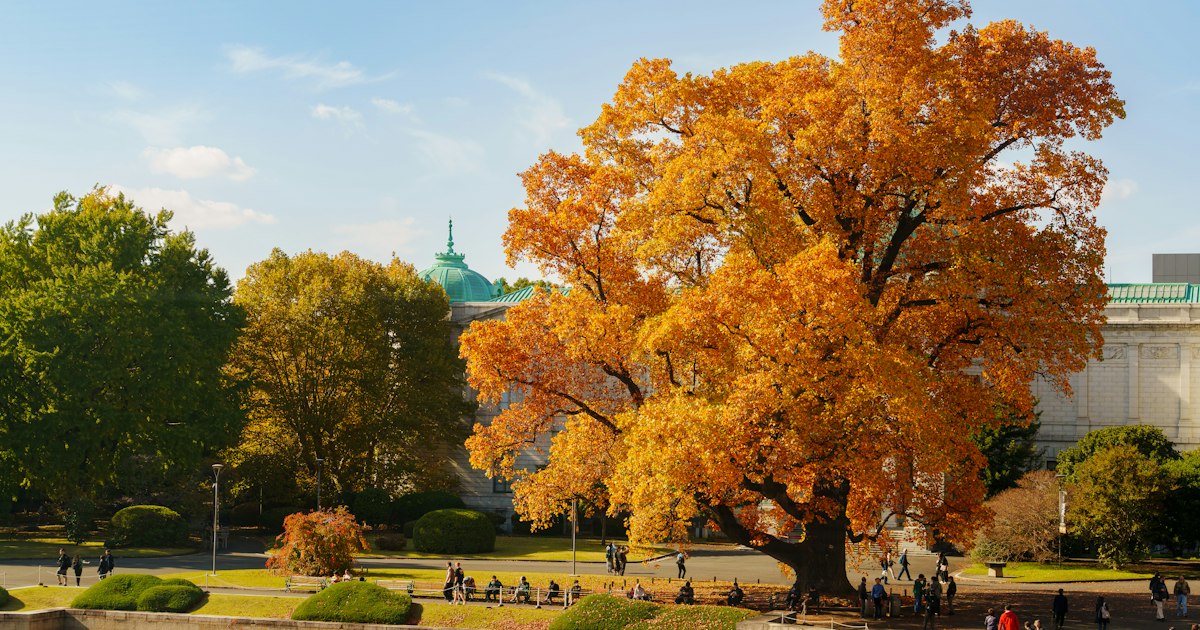
Photo by Alex Wicks on Unsplash
Ueno Park is famous for its art museums, but tucked between the Tokyo National Museum and the zoo is a building that gets overlooked by most first-time visitors: the National Museum of Nature and Science (Kokuritsu Kagaku Hakubutsu-kan). It’s the closest thing Tokyo has to a Smithsonian-style natural history and science museum, with a life-size blue whale model guarding the entrance, dinosaur skeletons, a real Apollo-era space capsule replica, and enough hands-on physics exhibits to keep kids occupied for hours. If you’ve already done the Tokyo National Museum and are looking for something that doesn’t require reading wall text in a quiet room, this is it.
What Makes This Museum Different From Ueno’s Art Museums
Most of Ueno Park’s heavyweight museums — the Tokyo National Museum, the National Museum of Western Art — are about looking, not touching. The Science Museum is built around the opposite idea. It’s split into two main wings connected by an underground passage: the Japan Gallery (Nihon-kan), which focuses on Japan’s natural history, biodiversity, and the Japanese people’s scientific and technological development, and the Global Gallery (Chikyu-kan), a taller building covering dinosaurs, space exploration, physics, and engineering. If you enjoy quieter, curated spaces that focus on craft and everyday objects rather than big interactive displays, the Nihon Mingeikan on the other side of the city offers a very different, slower museum experience worth comparing against this one.
Hours, Admission, and Getting There
The museum is open 9:00 to 17:00 (last entry 16:30), and closed on Mondays — if a Monday falls on a public holiday, it closes the following weekday instead. It also closes for the New Year period, roughly December 28 to January 1. Always check the museum’s official calendar before you go, since hours and closure days shift around special exhibitions and long holiday weekends.
General admission is ¥630 for adults, with free entry for anyone 18 and under (bring ID or a passport showing age, especially for teens) and for visitors 65 and over. University and high school groups sometimes get discounted rates with ID. The 360-degree dome theater inside the Global Gallery charges a small extra fee (around ¥520 last time it was checked) and is worth it if you have 15 spare minutes — the seating is limited, so grab a timed ticket as soon as you arrive rather than circling back later.
Getting there is easy: it’s about a 5-8 minute walk from the Ueno Park side exit of JR Ueno Station, or a similar walk from Keisei Ueno Station or Nezu Station on the Chiyoda Line. Just follow the main park path past the fountain — the blue whale model outside the entrance is impossible to miss.
Must-See Exhibits for First-Time Visitors
If you only have ninety minutes, prioritize these:
- The life-size blue whale model outside the main entrance — a classic photo stop before you even go in.
- The dinosaur hall in the Global Gallery, with mounted skeletons including Tyrannosaurus and Triceratops specimens, displayed with minimal barriers so you can get close.
- The Foucault pendulum, a quiet but genuinely satisfying demonstration of the Earth’s rotation, swinging slowly in one of the atrium spaces.
- The space exploration section, which includes a replica of the Hayabusa asteroid-sample-return capsule and displays on Japan’s space program (JAXA has been a major contributor to the museum’s space content).
- The D51 steam locomotive and vintage aircraft on display in the Japan Gallery, a nod to Japan’s industrial and engineering history.
Most exhibit labels are bilingual (Japanese and English), though some of the older Japan Gallery sections lean more heavily Japanese-only. Free English audio guide apps and QR-code translations exist for parts of the museum, but don’t expect full English coverage everywhere.
The Hands-On Sections Kids (and Adults) Actually Touch
This is the museum’s real selling point over the art-focused institutions nearby. The physics and engineering floors in the Global Gallery include working models you can crank, buttons that trigger small demonstrations, and basic principles of mechanics, electricity, and optics explained through things you physically operate rather than read about. There’s also a dedicated area aimed at younger children with simpler, more tactile displays — expect this zone to get crowded on weekends and during Japanese school holidays (late July–August, late December–early January, and spring break in late March). If you’re traveling with young kids, aim for a weekday morning right at opening to get a clear run at the interactive stations before tour groups and school field trips arrive.
Best Time to Visit and Common Mistakes
Weekday mornings, right after the 9:00 opening, are by far the calmest time to visit. Weekends, Japanese public holidays, and the summer school break turn the museum into a genuine crowd scene, especially around the hands-on physics exhibits and the dome theater ticket counter. Rainy days in Tokyo also push a lot of outdoor sightseeing indoors, so the museum tends to fill up fast when the forecast is bad — plan around that if you can.
A few mistakes worth avoiding:
- Underestimating the size. Between the two galleries there’s a lot of ground to cover; budget at least two hours if you want to see both buildings properly, and closer to three if you’re doing the dome theater too.
- Skipping the basement and upper floors. A lot of visitors stick to the ground floor and miss the dinosaur hall or the top-floor space exhibits because the layout isn’t immediately obvious — pick up the floor map (available in English) at the entrance.
- Forgetting cash for the locker and dome theater. While most purchases take IC cards now, it’s worth having some coins on hand for lockers near the entrance.
- Trying to photograph everything with a tripod. Tripods and large camera setups generally aren’t allowed inside without prior arrangement — if serious photography is part of your trip, it’s worth reading up on permits for shooting inside Japanese public buildings and shrines before assuming you can set up gear freely.
Nearby Combos: Pairing It With the Rest of Ueno Park
Because the museum sits inside Ueno Park, it’s easy to build a full day around it. The Tokyo National Museum, Ueno Zoo, and the National Museum of Western Art are all a short walk away, so pick one or two more stops depending on your interests rather than trying to do everything in one day — museum fatigue is real. If you need a snack break between buildings, keep an eye out for street vendors selling daigaku imo, the candied fried sweet potato snack that shows up around park areas and shotengai near Ueno — a good low-cost, high-reward way to refuel before tackling the rest of the park.
For most foreign visitors, the National Museum of Nature and Science works best as a half-day stop rather than the headline reason to visit Ueno — but if you’re traveling with curious kids, or you simply want a break from glass-case art viewing, it earns its spot on the itinerary on its own merits.