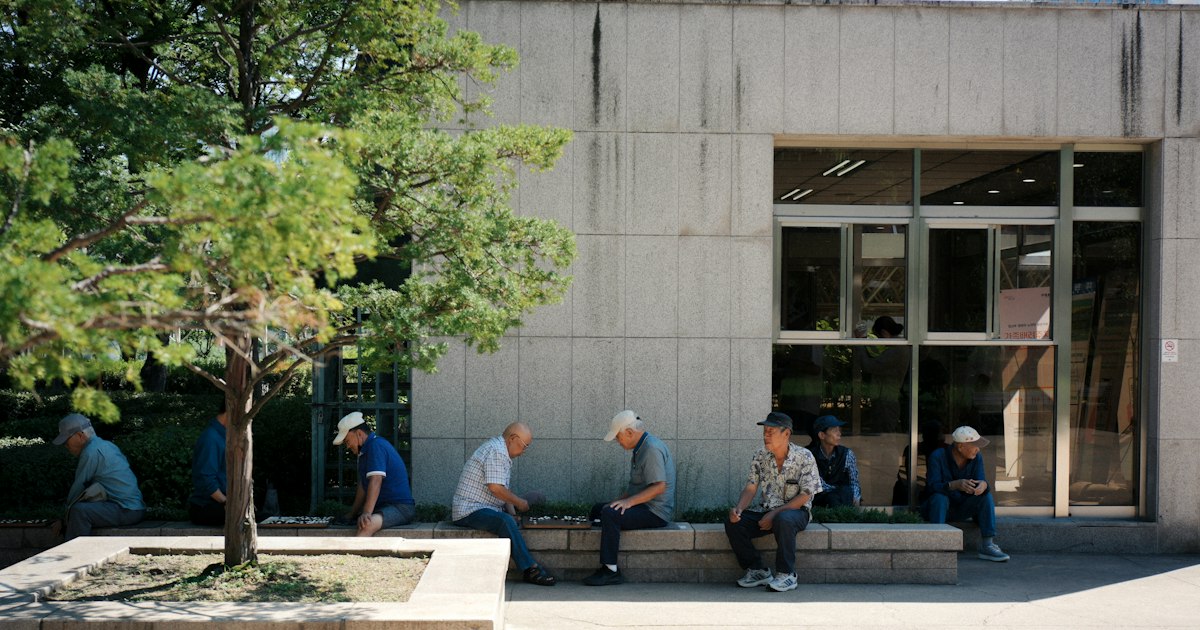
Photo by Manki Kim on Unsplash
Long before smartphones, Tokyo’s retirees had their own version of a social network: a folding board, a tin of pieces, and a bench in the shade. That culture hasn’t disappeared. Walk through the right park or station underpass on a weekday afternoon and you’ll still find knots of mostly older men — and a growing number of younger players and curious tourists — hunched over shogi (Japanese chess) or go boards, sometimes four deep with spectators who never say a word but clearly have opinions. Western-style chess is rarer in public outdoor spaces here than shogi or go, but it does turn up, especially among Tokyo’s international community. Here’s where to actually find these scenes, how to watch respectfully, and where to try a game yourself.
Why Tokyo’s Park Benches Are an Unofficial Chess and Shogi Museum
Shogi and go have been fixtures of Japanese public leisure since the Edo period, and the postwar decades cemented a specific ritual: retired men gathering daily at a fixed spot, often the same bench for years, with regulars who know each other’s openings by heart. These aren’t organized clubs — there’s no sign-up sheet, no fee, no set start time. People simply show up, and games run as long as they run, sometimes with no clock at all. That informality is exactly what makes it worth seeking out; you’re watching a living habit, not a staged tourist attraction, which also means you should treat it with the same courtesy you’d show someone’s regular coffee-shop table.
Ueno Park and Shinobazu Pond: The Classic Outdoor Shogi Corner
The best-known spot is the cluster of benches near Shinobazu Pond in Ueno Park, on the paths south and west of the water, within a few minutes’ walk of Ueno Station’s park exit (JR Yamanote/Keihin-Tohoku Lines, or Keisei Ueno Station). Shogi and go boards appear here most days with decent weather, typically from mid-morning into late afternoon, and the crowd skews elderly and local. Entry to the park is free and it’s open around the clock, but the players themselves keep informal hours — go on a clear spring or autumn afternoon (March–May or October–November) rather than the brutal mid-summer heat or the damp chill of January, when the benches empty out fast. Bring your own folding stool if you want to sit and watch for a while; there usually isn’t extra seating.
Under the Tracks: Ameyoko’s Old-School Go and Shogi Benches
A few minutes south of Ueno Park, the covered market street Ameyoko and the elevated rail arches nearby have long sheltered a grittier, more Showa-era version of the same scene — men playing on upturned crates in the shade of the JR tracks, often with a thermos of tea and a transistor radio. This isn’t a curated attraction and the exact corner shifts slightly over the years as shops rotate, so treat it as a “keep your eyes open while you browse Ameyoko’s dried-snack and sneaker stalls” bonus rather than a fixed destination. Weekday afternoons are your best bet; weekends bring heavier shopping crowds that push informal gatherers elsewhere.
Shogi Kaikan: Where the Professionals Play, in Sendagaya
If you want the formal, institutional side of shogi rather than a park bench, head to the Japan Shogi Association’s headquarters hall (Shogi Kaikan) in Sendagaya, a short walk from Sendagaya Station on the JR Chuo-Sobu Line. The ground floor has a shop selling shogi sets, books, and goods ranging from a simple cardboard-and-paper starter board for a few thousand yen up to museum-quality kaya-wood boards costing well into six figures of yen, so there’s something for a cheap souvenir and something for a real splurge in the same room. The association periodically opens parts of the building for title-match viewings and events, though these are usually ticketed or require advance notice rather than walk-in access, so check the current schedule posted at the entrance or on-site before planning your visit around a specific match. Staff don’t typically speak much English, so having a translation app ready helps — if your current phone can’t get online easily, our guide on buying a SIM-free handset mid-trip covers how to get connected fast.
Nihon Ki-in: Try a Game Yourself, No Reservation Needed
For go specifically, the Nihon Ki-in (Japan Go Association) headquarters near Ichigaya Station has a public playing salon that welcomes visitors, including beginners and foreigners, to rent a board and play for a modest flat fee generally in the low thousands of yen per session — small enough that it’s worth doing even if you only know the rules loosely. Staff can pair you with another visitor or just let you and your travel companion use a set. This is genuinely one of the few places in Tokyo where an outsider can sit down and play rather than only watch from the sidelines, so it’s worth the detour if you’ve ever wanted to actually try the game instead of just photographing it.
Best Times, Budget Tips, and Buying Your Own Set to Take Home
For watching outdoor games, aim for weekday afternoons in spring or autumn — comfortable temperatures bring out the regulars, and weekdays mean fewer tourist crowds competing for bench space. Everything described in the parks and underpasses is free to watch; the only costs are at the formal venues. On a budget, skip the institutional shops and pick up a compact magnetic or pocket-size shogi or go set at a Daiso — the flagship Harajuku store carries a wider stock than neighborhood branches, including travel game sets, for a few hundred yen. Mid-range shoppers should browse the Shogi Kaikan or Nihon Ki-in shops directly for a proper wooden board and lacquered pieces. If you want to go further into Japanese tabletop learning culture rather than just the game itself, the same instinct that makes soroban workbooks and flashcards a popular educational souvenir applies here — a shogi or go starter set makes a similarly compact, meaningful gift. And if you fall in love with a heavy kaya-wood board that’s impractical to carry through the rest of your trip, it’s worth knowing that Japan’s mail-order and catalog culture means many specialty shops can ship goods domestically or arrange overseas delivery, so you don’t have to lug it in your suitcase.
Common Mistakes to Avoid
Don’t walk up and start a conversation mid-game — wait for a natural break, and even then, a nod and a quiet “yoroshii desu ka” (is it okay?) goes further than launching into English. Don’t photograph players’ faces up close without asking; a wide shot of the scene is usually fine, a zoomed-in portrait is not. Don’t expect English signage or spoken English at Shogi Kaikan or Nihon Ki-in — bring a translation app loaded in advance. Don’t assume a casual park game follows tournament rules or has a clock; these games can run for hours and spectators are expected to stay silent, not offer commentary or “helpful” suggestions. Finally, don’t go looking for this scene in the rain or deep winter — it’s an outdoor, fair-weather habit, and the benches will simply be empty.