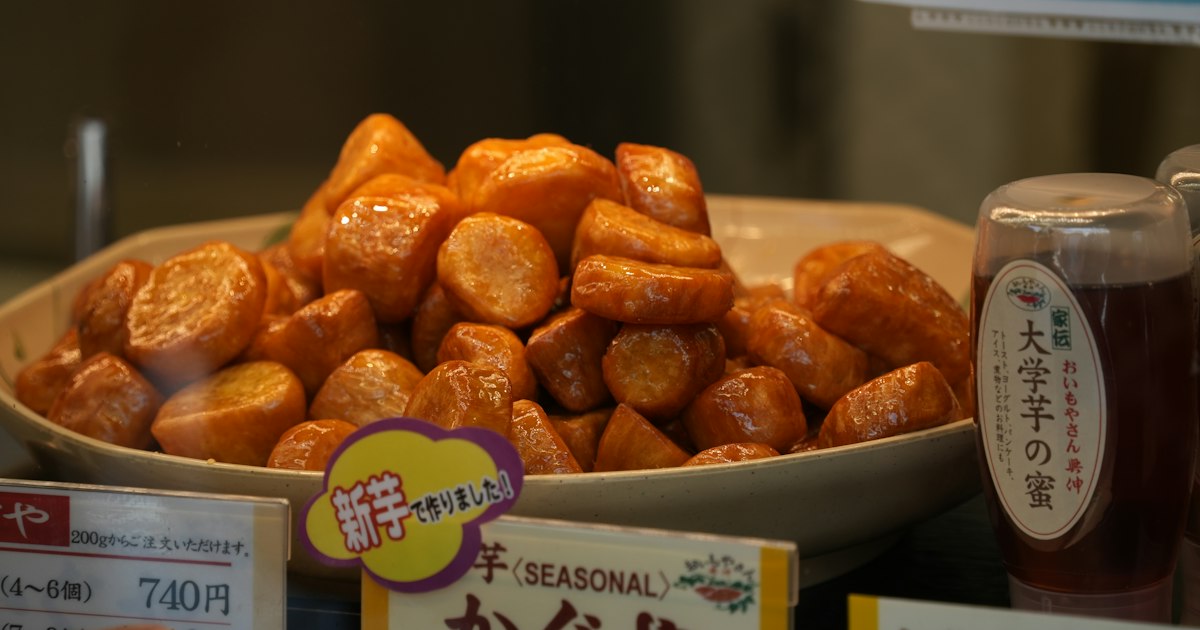
Photo by Liang Chuang on Unsplash
Glossy, dark-amber chunks of sweet potato glazed in caramelized sugar and soy, finished with a scatter of black sesame seeds — daigaku imo (大学芋, literally “university potato”) is one of Japan’s most underrated snacks for visitors who only know yaki-imo, the roasted whole sweet potatoes sold from truck speakers in winter. Daigaku imo is a different animal: fried, candied, and sold in shops and food halls all year. Here’s what it is, how to spot the good versions, and exactly where to buy it.
What Daigaku Imo Actually Is
Daigaku imo starts with satsumaimo, Japan’s purple-skinned, yellow-fleshed sweet potato, cut into bite-sized wedges or chunks. The pieces are deep-fried until the edges crisp and the inside turns soft and starchy-sweet, then tossed in a hot syrup of sugar, soy sauce, and sometimes a little vinegar or mirin, which hardens into a thin, crackly candy shell as it cools. Black sesame seeds are pressed on at the end for a nutty contrast to the sweetness. The result is somewhere between a candy apple and a yakiimo — crunchy shell, tender inside, savory-sweet rather than purely sugary.
The name’s origin is debated but the most repeated story is that it was sold near Tokyo’s university district (around Waseda and the old Hongo/Kanda area) in the early 1900s as a cheap, filling treat for students, which is where “university potato” stuck. It has nothing to do with being served at any actual university today — you won’t find it on a campus, but you will find it in old-fashioned shopping streets and department store basements.
Where to Buy It in Tokyo
The single best-known spot is Sugamo Jizo-dori, a shopping street nicknamed “Obaachan no Harajuku” (Grandma’s Harajuku) for its older clientele and old-school shops. Several shops along the street sell daigaku imo and other imo sweets from open-front counters, with trays of the glazed potato visible from outside — look for the shine and the dark glaze color, which tells you it’s fresh rather than sitting under a heat lamp all day. Get there via JR Yamanote Line or the Toei Mita subway line to Sugamo Station; the shopping street starts just a few minutes’ walk from the north exit. Most shops here open around 9:30–10am and close by 6–7pm, and many close on irregular days, so don’t make it your only stop if you’re visiting on a weekday afternoon.
In Asakusa, a few stalls along Nakamise-dori (the approach to Sensoji Temple) and the side streets around it sell daigaku imo alongside imo-related snacks like sweet potato chips. Shops here tend to stay open daily, roughly 9am–6pm, which makes Asakusa a more reliable bet if your schedule is tight. Ueno’s Ameyoko market occasionally has stalls too, though selection varies more than in Sugamo or Asakusa.
Depachika, Supermarkets, and Festival Stalls
If you don’t have time for a dedicated shopping-street trip, department store basement food halls (depachika) are a reliable backup. Isetan Shinjuku, Mitsukoshi Nihombashi, and most major depachika have a prepared-foods counter that sells packaged daigaku imo, usually priced around ¥400–¥800 for a 150–200g tray. It won’t be piping hot off the fryer, but it’s consistently good and easy to grab on your way to or from a train station, since most depachika sit directly under or beside major stations.
Ordinary supermarkets also carry it in the prepared side-dish (sozai) section, often cheaper at ¥300–¥500 per pack, though quality is more hit-or-miss — check the glaze color and avoid anything that looks pale or sticky-wet rather than glossy. At summer and autumn matsuri (festivals), you’ll sometimes see daigaku imo sold from food stalls in paper cups for ¥300–¥500, candied fresh in front of you in a wok of bubbling syrup — this is the best version you’ll find, if you happen to catch a festival. If you’re planning your trip around festival food stalls in general, it’s worth building that into your itinerary the way you would for other seasonal foods, the same logic covered in regional Japanese comfort food guides that are tied to a specific time and place rather than available everywhere.
Best Season and Timing
Daigaku imo is sold year-round in shops and depachika, but it’s at its best from late autumn through winter (roughly October to February), when the new satsumaimo harvest is at its sweetest after a few weeks of curing. Shops in Sugamo and Asakusa sell it in summer too, but the potato itself tends to be less sweet earlier in the season. If you’re visiting specifically to try it, aim for a weekday morning to early afternoon — shops restock and fry fresh batches through the morning, and by late afternoon what’s left may have gone a bit soft or chewy rather than crisp.
Common Mistakes to Avoid
- Confusing it with yaki-imo. Yaki-imo is a whole roasted sweet potato with no glaze, usually sold hot from a truck or oven in winter. Daigaku imo is fried and candied — sweeter, crunchier, and sold in shops rather than from mobile carts.
- Confusing it with imo-kenpi. Imo-kenpi, a specialty of Kochi Prefecture, is thin candied sweet potato sticks, drier and more like a cookie than daigaku imo’s soft, wedge-cut chunks. Both are worth trying, but they’re not the same snack, and shops sometimes stock both side by side.
- Buying from a display that’s been sitting all day. The glaze dulls and the potato dries out after several hours under a heat lamp. If a shop lets you choose between a fresh tray and an older one, always ask for the fresher batch — most shopkeepers will understand “atsui no, arimasu ka?” (do you have a hot one?) even with minimal Japanese.
- Assuming it keeps well. Daigaku imo is best eaten within a few hours of purchase; the glaze turns tacky and the fried texture softens by the next day, so it’s not a great souvenir to carry home — treat it as something to eat during your visit, not to pack in your suitcase.
Budget, Mid-Range, and Splurge Options
For budget eating, supermarket packs at ¥300–¥500 are the cheapest way to try it, even if the quality is average. Mid-range means a shop counter in Sugamo or Asakusa, typically ¥300–¥600 for a cup or small bag made fresh that day — this is the sweet spot for flavor versus cost. For a splurge, some specialty imo shops sell daigaku imo made with premium sweet potato varieties like Beniharuka or Annou-imo, priced closer to ¥700–¥1,000 for a smaller portion; these use naturally sweeter potatoes that need less sugar in the glaze, so the flavor is rounder rather than just sugary. If you’re the type of traveler who likes tracking down specific regional or specialty snack versions rather than settling for whatever’s nearest, the same hunting approach used for tracking down a specific snack flavor outside its release region applies here — ask shop staff which potato variety they use, since the better shops are often happy to say.
If you’re already building a food-focused day around market tastings — say, comparing pickles at Nishiki or Omicho Market — daigaku imo is an easy, inexpensive add-on that doesn’t require a reservation or a long wait, just a shopping street with a working fryer and a good glaze.