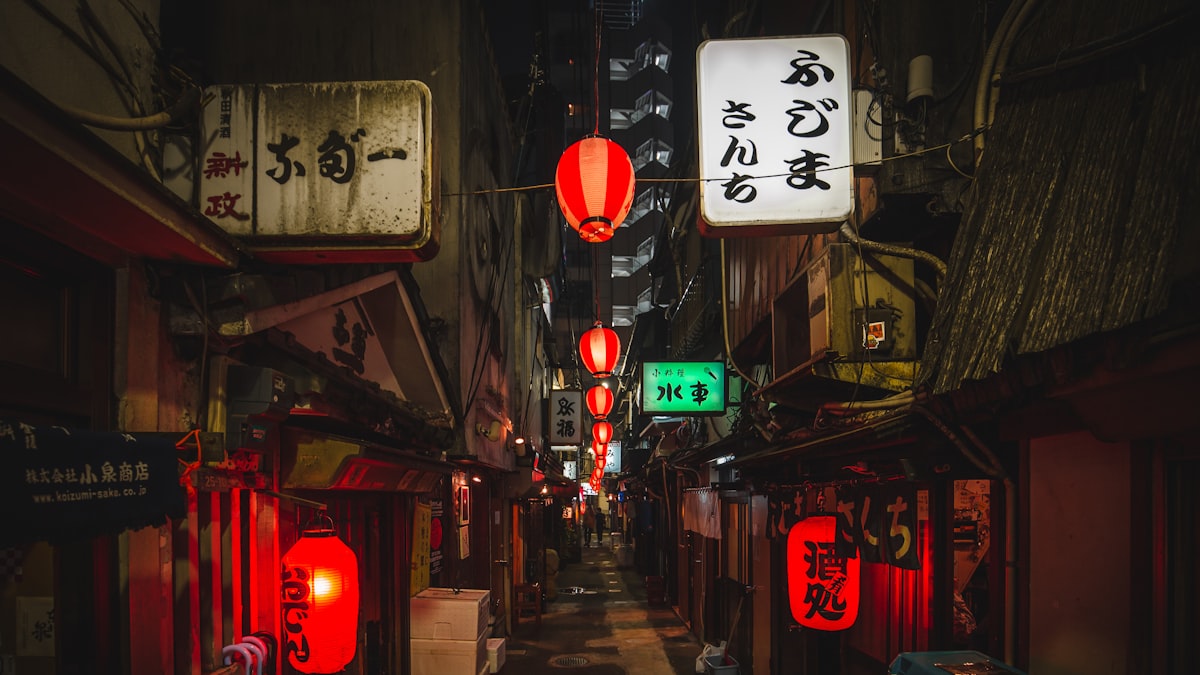
You don’t need to speak Japanese to travel Japan — English signage and translation apps cover a lot. But a handful of phrases go a long way and are genuinely appreciated. Here are the ones actually worth memorizing.
The essentials
- Arigatou gozaimasu — thank you (polite). The single most useful phrase.
- Sumimasen — excuse me / sorry / thank you (to get attention or apologize). Incredibly versatile.
- Konnichiwa — hello (daytime).
- Onegaishimasu — please (when requesting something).
- Hai / Iie — yes / no.
Eating out
- Kore o kudasai — “this one, please” (point at the menu).
- Oishii! — delicious!
- Okaikei onegaishimasu — the bill, please.
- Gochisousama deshita — “thank you for the meal” (as you leave).
- Vegetarian desu / ___ arerugī desu — “I’m vegetarian” / “I’m allergic to ___”.
Getting around & shopping
- ___ wa doko desu ka? — “where is ___?”
- Ikura desu ka? — “how much is it?”
- Eigo o hanasemasu ka? — “do you speak English?”
- Daijoubu desu — “it’s fine / no thanks / I’m okay.” Very handy.
Pronunciation tips
Japanese is pronounced consistently: vowels are a (ah), i (ee), u (oo), e (eh), o (oh). Keep it flat and even — no strong stress. Even a rough attempt is warmly received.
Tech that helps
Download a translation app with camera mode for menus and signs, and set up an eSIM so it works everywhere. For the cultural side of communicating politely, see our etiquette guide.
Ready to plan? Start with our first-timer tips and 7-day itinerary.
Phrases for specific situations
- At a ryokan or onsen: “Sumimasen, taoru wa arimasu ka?” — “Excuse me, do you have a towel?” — useful shorthand for asking staff about any missing item using the same simple pattern.
- At a train station: “Kono densha wa ___ ni ikimasu ka?” — “Does this train go to ___?” — a quick way to confirm you’re boarding correctly before the doors close.
- Shopping: “Kore, chiisai/ookii saizu arimasu ka?” — “Do you have this in a smaller/bigger size?” — handy for clothing shops where sizing runs differently than expected.
Common mistakes to avoid
- Over-relying on formal textbook phrasing — real interactions move faster than a phrasebook; single words like “sumimasen” plus pointing usually communicate intent just as well as a full grammatically perfect sentence.
- Assuming louder or slower English helps — speaking clearly at normal volume, paired with a translation app for anything complex, generally works better than repeating English more forcefully.
- Skipping numbers — learning to count to 10 in Japanese (ichi, ni, san…) helps with everything from ordering quantities to understanding prices read aloud, and is a quick, useful addition to a basic phrase list.
Using translation apps effectively
Camera-mode translation (pointing your phone at a menu or sign) works remarkably well for printed Japanese text, but voice translation for live conversation can struggle with fast or accented speech — typing into a translation app rather than relying on voice recognition often produces a cleaner, more accurate result in a noisy restaurant or station.
Phrases that build goodwill, not just function
Beyond purely functional phrases, small courtesy expressions — “osaki ni shitsurei shimasu” when leaving a room before others, or a simple “otsukaresama desu” to acknowledge someone’s effort — aren’t strictly necessary for a tourist to know, but locals notice and appreciate them enough that even one used correctly can visibly improve an interaction.