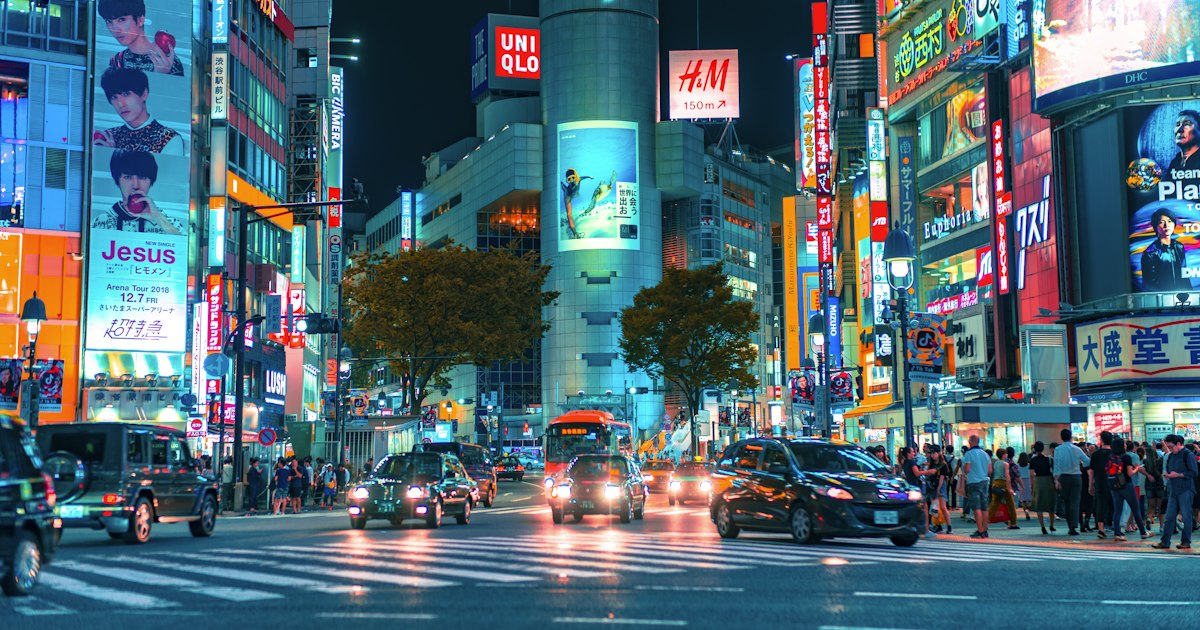
Photo by Jezael Melgoza on Unsplash
Most visitors ride straight through Hachioji on the way to Mount Takao, glance at the mountain’s cable car signs, and never set foot in the city itself. That’s a missed opportunity. Hachioji spent over a century as one of Japan’s major silk-weaving and silk-trading hubs — locals still call it “Kinu no Machi” (Silk Town) — and today it’s also home to more than 20 universities and colleges, which means a dense, cheap, genuinely local nightlife district that never shows up on a Shinjuku-and-Shibuya itinerary. It’s about 40 minutes from central Tokyo by train, which makes it an easy half-day add-on or a budget-friendly base for a Takao hike.
Getting There and When to Go
Hachioji Station and the adjacent JR Hachioji Station are served by the JR Chuo Line rapid service from Shinjuku (about 40–45 minutes, roughly ¥580 one-way) and by the Keio Line from Shinjuku via Keio-Hachioji Station (a few minutes further but often cheaper off-peak). If you’re coming from Mount Takao or Lake Okutama, Hachioji sits right on the way back into Tokyo, so it’s a natural stop to break up the return trip rather than a dedicated day trip.
Spring (April, when university students are fresh off enrollment and bars run welcome-party deals) and autumn (October–November, festival season) are the liveliest times. Summer is brutally humid like the rest of the Kanto plain, and the silk museum and older shopping arcades have limited air conditioning in places, so plan for midday heat if visiting July–August.
The Silk-Trading Legacy
From the late Edo period through the early Showa era, Hachioji was a key relay point on the “Kinu no Michi” (Silk Road) route that carried raw silk from mountain villages in Yamanashi and Nagano down to the port at Yokohama for export. The city’s own weavers specialized in a striped and checked silk textile called Hachioji Ori, which is still produced in small workshops today.
The Tokyo Silk Hat Museum area and several working weaving studios around the city occasionally open for public tours or small-batch sales, though hours vary by workshop and it’s worth calling ahead in Japanese or asking your hotel to confirm, since many are family-run and not set up for drop-in tourism. A more reliable stop is the discount textile and kimono shops clustered near the Yokayado shopping street (a short walk north of JR Hachioji Station), where end-of-roll Hachioji Ori fabric and secondhand silk kimono turn up for a fraction of department-store prices — budget ¥1,000–¥3,000 for fabric offcuts and ¥3,000–¥8,000 for a decent used kimono, versus ¥20,000+ new in central Tokyo. If you’re assembling a broader Japan souvenir list that leans toward textiles and small-batch goods rather than typical snack-aisle souvenirs, this is a good complement to a stop at a place like Kaki no Tane for the food side of your shopping list.
Common Mistakes Visitors Make
- Treating it as only a Takao gateway. Many tourists exit the station, transfer straight to the Takao-bound bus or train, and never look at the city center. The silk shops and arcades close by early evening (most by 19:00–20:00), so do this part before you head to the mountain or on your way back, not as an afterthought at 9pm.
- Assuming English signage. Hachioji is a working city, not a tourist zone — menus and shop signs are overwhelmingly Japanese-only. A translation app helps more here than in Shinjuku.
- Underestimating how spread out the nightlife district is. Unlike Shinjuku’s compact Golden Gai, Hachioji’s bar streets (centered around the south exit of JR Hachioji Station, in the blocks toward Yokayado and Kosuge-dori) sprawl over several blocks of mixed izakaya, karaoke boxes, and student-priced bars. Give yourself time to wander rather than expecting one dense alley.
Student Nightlife Beyond Shinjuku
With Tokyo-area campuses like Hosei University, Tokyo University of Agriculture and Technology, and several art and design colleges nearby, Hachioji has one of the highest student populations of any Tokyo satellite city. That shows up directly in prices: izakaya here routinely run ¥2,500–¥3,500 for a full meal with drinks, versus ¥4,000–¥6,000 for an equivalent night in Shinjuku. Nomihodai (all-you-can-drink) deals for 2 hours at ¥1,500–¥2,000 are common on weeknights, aimed squarely at student budgets.
The streets south of the station (toward Yokayado-dori and the covered Isekawa shopping arcade) are the core bar zone. Expect standing bars, cheap yakitori counters, and karaoke chains like Big Echo and Karaoke Kan with rooms from around ¥300–¥500 per person per 30 minutes on weekday off-peak hours. This isn’t a flashy scene — there’s no themed bar district or neon spectacle — but it’s an honest look at how Tokyo’s university-age residents actually spend a Friday night, and English is spoken rarely enough that a few phrases or a translation app go a long way.
Budget option: a standing bar (tachinomi) near the station, ¥1,500–¥2,500 for drinks and small plates. Mid-range: a sit-down izakaya with nomihodai, ¥3,000–¥4,000 per person. Splurge: a few higher-end yakiniku and sushi spots near Keio-Hachioji Station run ¥6,000–¥10,000 per person and are popular with local professionals rather than students, giving a quieter, more polished alternative if the bar-street scene isn’t your pace.
Festivals Worth Timing a Visit Around
The Hachioji Festival (Hachioji Matsuri), held in early August, is one of the larger float festivals in the Tokyo area and draws crowds from well beyond the city, with elaborate dashi floats and taiko performances filling the main street in front of the station over a weekend. If your dates don’t line up with that, check whether your trip overlaps with Culture Day in early November, since some Hachioji municipal facilities participate in free or discounted admission that day as well.
Practical Tips
Coin lockers at JR Hachioji Station (¥300–¥700 depending on size) make it easy to stash a daypack if you’re combining a silk-shop wander with a Takao hike afterward. ATMs and convenience stores are plentiful around both station exits, but smaller silk workshops and some standing bars are cash-only, so carry ¥5,000–¥10,000 in small bills rather than relying on cards. If you’re navigating by train map and find line colors hard to distinguish, the Chuo Line’s orange and the Keio Line’s separate signage are usually labeled with route names as well as colors, which helps — see this guide on reading Japanese train maps and line colors for more on cross-checking station signage beyond color alone.
Hachioji won’t replace a night in Shinjuku or Shibuya, and it isn’t trying to. What it offers instead is a cheaper, more local, more historically layered evening — one where you can hold a scrap of hand-woven Hachioji Ori silk in a shop that’s been selling it for generations, then walk two blocks and split a ¥1,800 all-you-can-drink deal with university students who actually live there.