Photo by Jeswin Thomas on Unsplash
Japan has one of the strictest animal entry systems in the world, and that catches a lot of travelers with service animals off guard. The good news is that Japan has a real, enforceable law protecting the rights of people with guide dogs, hearing dogs, and service dogs — but the law only covers those three categories, and getting your dog into the country at all requires paperwork that most visitors don’t realize they need to start nearly a year in advance. Here’s what’s actually true, not what people assume.
Which animals Japan’s law actually protects
Japan’s Act on Assistance Dogs for Physically Disabled Persons (身体障害者補助犬法) recognizes exactly three categories: guide dogs (盲導犬, moudouken), hearing dogs (聴導犬, choudouken), and service dogs for physical/mobility assistance (介助犬, kaijoken). Under this law, hotels, restaurants, shops, trains, buses, taxis, hospitals, and workplaces are legally required to allow these dogs to accompany their handler, regardless of business size — a 2021 revision closed the old loophole that let small businesses opt out.
Emotional support animals and therapy animals are not covered. There is no legal obligation for a restaurant, hotel, or airline in Japan to admit an ESA, and most won’t, since they’re treated the same as a pet. If your animal’s role is emotional support rather than a trained task (guiding, alerting, retrieving, bracing), plan your trip assuming you’ll need pet-friendly accommodation rather than general access rights.
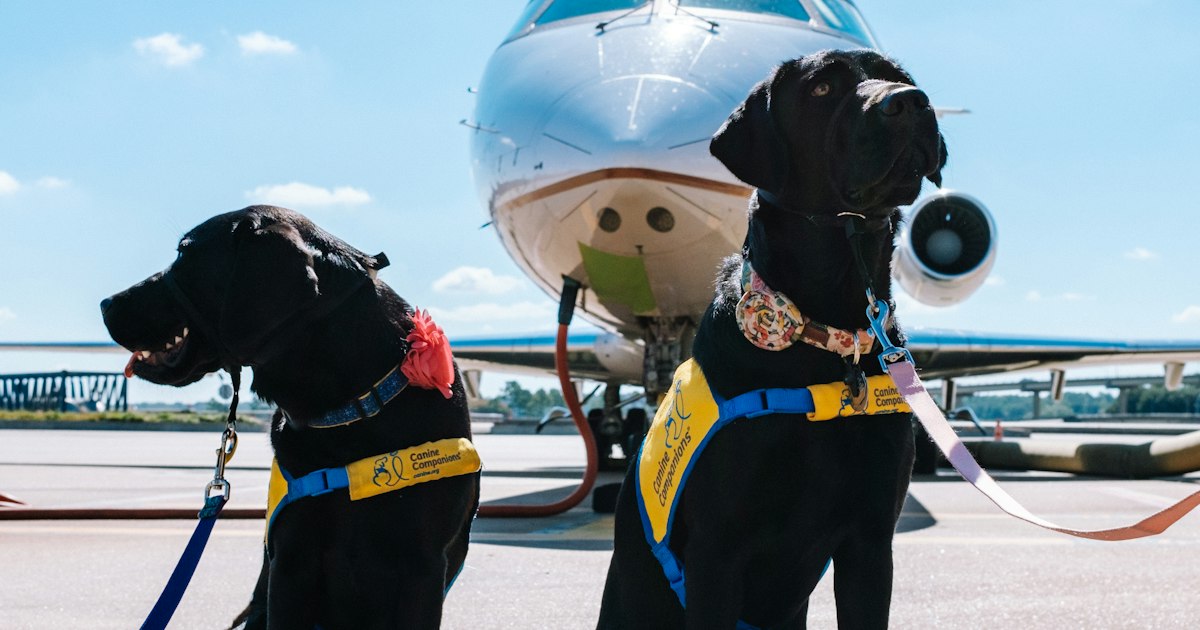
A legitimate assistance dog in Japan is expected to wear an identifying cape or vest marked 補助犬 (hojoken) and the handler typically carries a certification booklet issued by a Ministry of Health, Labour and Welfare-registered training body. Carrying your home country’s certification (ADI, IGDF, or similar) plus photos of your dog’s training record helps smooth over situations where staff are unfamiliar with the law — it still happens, even though refusal is technically illegal.
Bringing your dog into Japan: the part people underestimate
Japan is rabies-free and guards that status aggressively through its Animal Quarantine Service, and there’s no “service animal exemption” from this process the way there might be in other countries — every dog, including certified service dogs, goes through it. The timeline depends on where you’re flying from.
If you’re arriving from a short list of rabies-free or rabies-controlled “designated regions” (the UK, Ireland, Iceland, Hawaii, Guam, Fiji, Australia, New Zealand, and a few Nordic countries, with conditions), the process is relatively light: a microchip, two rabies vaccinations, and advance notification to the Animal Quarantine Service at least 40 days before arrival.
If you’re coming from the US, Canada, continental Europe, or almost anywhere else — which is most tourists — the process is longer: a microchip, two rabies vaccinations at least 30 days apart, a blood sample sent to a Ministry-designated laboratory for a FAVN rabies antibody test (lab fees typically run $150–$300 depending on the country), and then a mandatory 180-day wait after that blood draw before your dog can land in Japan. You also still need to submit advance notification to the quarantine service at the airport you’re flying into at least 40 days before arrival. Realistically, start this process seven to eight months before your trip, not seven weeks.
If every document is filed correctly and matches on arrival, inspection at the airport quarantine counter (Narita, Haneda, Kansai, Chubu, and other major international airports all have one, staffed to meet every arriving flight carrying an animal) takes well under an hour and your dog clears with you. If paperwork is missing or doesn’t match, your dog can be held in quarantine at the airport facility for up to 180 days, with daily boarding fees — this is the outcome the advance process exists to prevent, so don’t treat the 40-day notification as optional paperwork.
Flying with a service dog to Japan
Most Japanese carriers, including ANA and JAL, allow one certified guide, hearing, or service dog in the cabin at no additional charge, with advance notice required (often 48 hours or more — check your specific airline, as policies and minimum notice periods vary). Emotional support animals are generally not accepted as cabin service animals and will be booked as pets, which usually means a pet carrier, a fee, and sometimes the cargo hold depending on size and airline. If you’re connecting through a US airport, note that US and Japanese rules differ: a dog that qualifies as a service animal under the ADA at your departure airport still needs full Japanese quarantine clearance to enter Japan — being a “service animal” doesn’t bypass animal import law.
Narita and Haneda both have designated pet relief areas near the international terminals, useful after a long flight before you even reach immigration. If you’re pre-registering your own customs and immigration details to save time at the airport, the Visit Japan Web system handles your entry paperwork, though it’s separate from and doesn’t replace the Animal Quarantine Service notification — you’ll need to do both.
Your rights once you’ve landed
Once your guide, hearing, or service dog has cleared quarantine, the Act on Assistance Dogs applies the same way it does for Japanese citizens with disabilities. Hotels cannot refuse you a room because of the dog; restaurants and shops cannot turn you away at the door; and public transport, including the subway, JR lines, and buses, must let the dog travel with you, generally at your feet rather than in a carrier. On busy lines like the Yamanote Line, there’s no special ticketing or designated car for assistance dogs — you simply board as a passenger with your dog beside you, same as anywhere else.
In practice, enforcement is strongest in Tokyo, Osaka, and other major cities where staff have likely encountered assistance dogs before; smaller, family-run restaurants and traditional ryokan in rural areas are more likely to hesitate, usually out of unfamiliarity with the law rather than outright refusal. Having a short explanation card (in Japanese) describing the law and your dog’s certification status, which groups like the Japan Service Dog Association can help you prepare, resolves most of these situations on the spot. If a business still refuses after you explain, that is a legal violation you can report, though for a short trip your priority is usually just finding a workaround and moving on.
Planning the logistics around your dog
Traveling with any assistance animal adds planning overhead that’s worth building into your itinerary rather than discovering mid-trip. Confirm with each hotel in advance that they’re aware a certified assistance dog is legally distinct from a pet — some properties that otherwise ban pets still get confused on this point, and a quick email avoids a desk argument at check-in. If you’re already coordinating delivery of other travel gear to your hotel, the same model used for renting baby gear delivered directly to your room is worth knowing about, since several of those same delivery services also handle pet/assistance-animal supplies like food and crates between cities, saving you from carrying everything yourself on the shinkansen.
Common mistakes to avoid
- Starting the import process too late. The 180-day wait after the FAVN blood test is the single biggest scheduling trap — if you’re not from a designated region, count backward from your travel date and start immediately.
- Assuming an ESA has the same access rights as a service dog. It doesn’t, under Japanese law. Book pet-friendly lodging if your animal is for emotional support rather than trained task work.
- Not notifying the airline early enough. Cabin space and documentation review for service animals often needs more lead time than a standard seat booking.
- Forgetting the identifying vest or certification booklet. Staff unfamiliar with the law are far more likely to comply quickly when the dog is visibly marked and you can show documentation.
- Skipping advance quarantine notification because the vaccines and microchip are done. All four pieces — microchip, vaccinations, test (if required), and the 40-day advance notice — have to be filed; missing just the notification can still mean delay at the airport.
With the paperwork handled early, Japan is a genuinely workable destination for travelers with legitimate guide, hearing, or service dogs — the legal protections are real and the infrastructure (relief areas, accessible transit, a clear statute) is there. The friction is almost entirely at the import stage, so treat the quarantine timeline as the true start date of your trip.