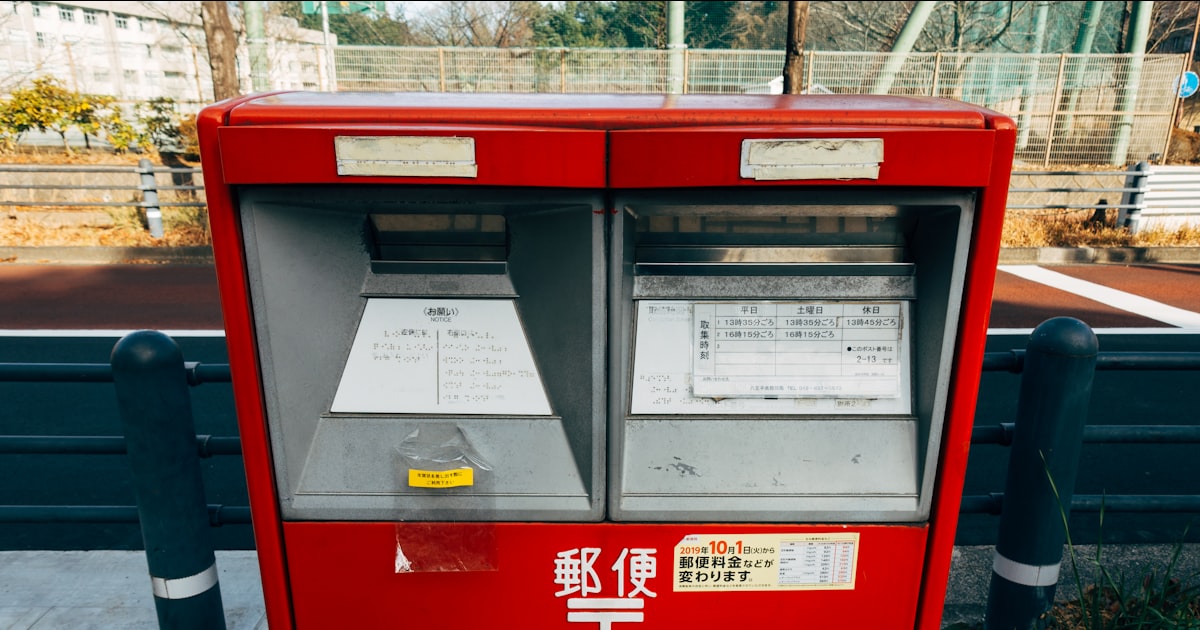
Photo by Markus Winkler on Unsplash
You’ve filled your suitcase with Kutani ware, a set of chopsticks, maybe a pair of Akoya pearl earrings — and now it won’t close. Shipping souvenirs home is often cheaper and safer than checking an overstuffed bag, but Japan gives you two very different systems to choose from: Japan Post’s international mail and private couriers like DHL, FedEx, and UPS. Here’s how to pick the right one, what it actually costs, and how to avoid the packing mistakes that ruin fragile gifts in transit.
Why Ship Instead of Carry?
Airlines charge steep excess-baggage fees (often ¥15,000–¥30,000 or more per extra bag depending on route and carrier), and fragile items like ceramics or glass wind chimes rarely survive being crammed into checked luggage. Shipping also frees up suitcase space mid-trip — useful if you’re buying bulky items early, like Kutani ware in Kanazawa (see our Kutani Ware buying guide) or a full haul of sealed Pokémon booster boxes (see our Pokémon cards in Japan guide) with weeks of travel still ahead of you.
Japan Post: EMS, Airmail, and Surface Mail Explained
Japan Post (Yu-Bin) is the budget-friendly default and has three international speed tiers:
- EMS (Express Mail Service) — the fastest and most reliable option, with tracking and up to ¥6 million of automatic compensation coverage on request. Delivery typically takes 2–5 business days to the US, Europe, or Australia. As a rough guide from recent rate tables, a 5kg box runs about ¥11,000–13,000 to North America and ¥13,000–15,000 to Europe — always confirm current rates with the clerk or Japan Post’s online EMS calculator, since they’re revised periodically.
- Airmail (small packet or parcel) — cheaper than EMS, no tracking guarantee on the cheapest tier, and delivery takes roughly 1–2 weeks. Good for lightweight, low-value items like postcards or textiles.
- Surface mail — the cheapest option by far but painfully slow (6–12 weeks) and not offered to every country; ask the counter clerk whether it’s currently available on your route.
Post offices sell their own EMS-branded cardboard boxes in several sizes for roughly ¥260–¥600, which is worth doing since the box dimensions are pre-approved for shipping and save you guesswork.
International Couriers: DHL, FedEx, and UPS
Private couriers cost more but offer real advantages: door-to-door pickup (from your hotel in some cases), better real-time tracking, English-language customer service, and stronger insurance options for high-value items. Expect a similarly sized 5kg box to run ¥15,000–¥25,000+ for express service, depending on destination and speed tier. This is the better choice for genuinely valuable purchases — a Mikimoto pearl necklace (see our Mikimoto & Akoya pearls guide) or graded trading cards — where you want full insured value and a guaranteed delivery window rather than the cheapest possible rate. Drop-off locations exist in most major cities, though pickup requests usually need to be booked a day ahead via each courier’s website or phone line.
Packing Fragile and High-Value Souvenirs
This is where most shipments go wrong. A few concrete rules:
- Ceramics and glassware (Kutani ware, Arita porcelain, glass furin wind chimes) need double-boxing: wrap each piece individually in bubble wrap, nest it in a smaller box with padding on all six sides, then place that box inside a larger one with more cushioning around it. A single layer of newspaper is not enough — Japan Post and couriers both explicitly limit liability for inadequately packed fragile goods.
- Flat items like ukiyo-e woodblock prints should go in a rigid mailer tube or flat cardboard mailer, never folded.
- Sealed collectibles like Pokémon booster boxes should be padded on all sides to prevent corner crushing, and always declare the actual purchase value — undervaluing to dodge duty can void insurance claims if the box is damaged or lost.
- Ask the post office or courier counter for extra packing tape and filler material on the spot; most keep some behind the counter even if it’s not openly displayed.
Customs Forms, Duty, and Restricted Items
Every international parcel needs a customs declaration (form CN22 for lower-value items, CN23 for higher-value or heavier ones). List contents specifically (“ceramic tableware,” “trading cards,” “pearl jewelry”) and the real purchase price — vague descriptions like “gift” or “souvenir” can trigger customs holds. Check your home country’s duty-free personal import allowance before shipping, since exceeding it means you may owe duty on arrival. Alcohol (sake, whisky) and certain foods have their own restrictions both for export from Japan and import into your home country, so verify before buying in bulk.
Where and When to Ship
Neighborhood post offices generally keep counter hours of 9:00–17:00 on weekdays only, but larger central post offices in big cities (Tokyo Central Post Office near Tokyo Station, for example) stay open later on weekdays and often open Saturdays too — worth seeking out if you’re shipping on a tight schedule. Avoid shipping right around New Year’s (late December–early January) and Golden Week (late April–early May), when Japan Post processing slows significantly due to national holidays. If you’re picking up regional souvenirs on a longer rail itinerary — say, ceramics in Kanazawa or lacquerware along the Nakasendo route through Tsumago and Magome — it’s often easier to ship each purchase home in stages rather than carrying everything to a single shipping point at the end of your trip.
Post Office vs Courier: Which Should You Choose?
Budget: Japan Post airmail or surface mail for lightweight, low-value items you’re not in a hurry to receive. Mid-range: Japan Post EMS — the sweet spot for most travelers, balancing speed, tracking, and cost for a standard box of souvenirs. Splurge: DHL, FedEx, or UPS for high-value, fragile, or time-sensitive shipments where guaranteed insurance and door-to-door pickup are worth the premium. Whichever you choose, weigh and measure your box before you go to the counter, bring your passport for the customs form, and keep the tracking receipt until the package arrives — it’s your only proof if something goes missing.