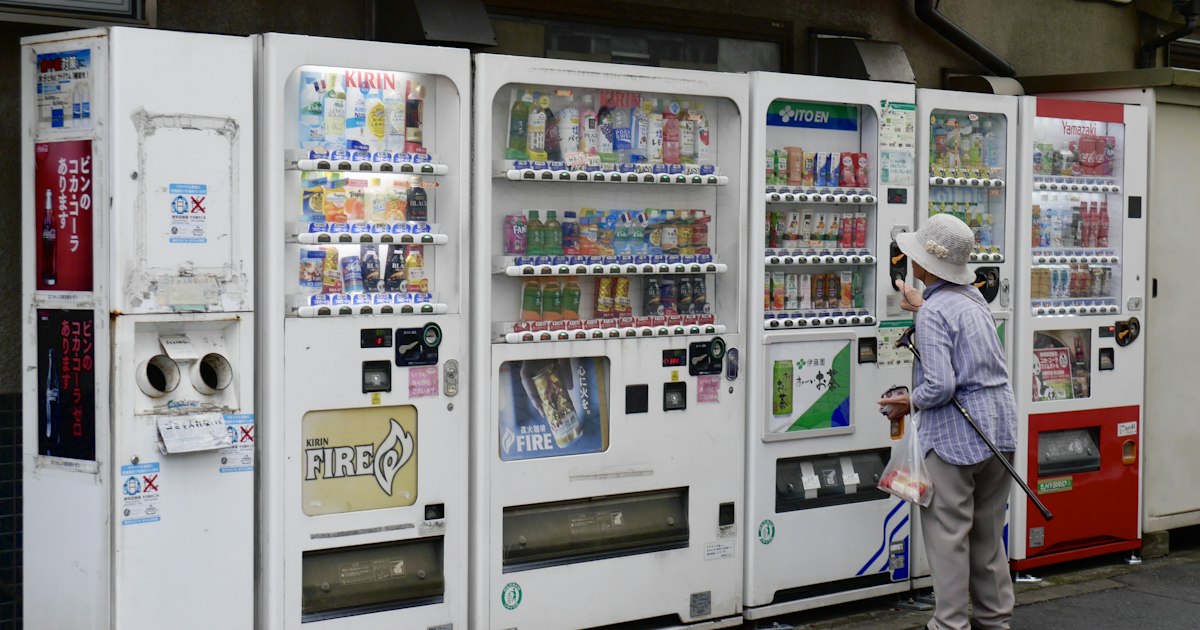
Photo by catrina farrell on Unsplash
Japan’s vending machines sell everything from hot coffee to fried food, but the one category tourists almost never get to use is cigarettes. If you’re a smoker planning a trip, it’s worth knowing upfront: the cigarette vending machine on the street corner outside your hotel is, for practical purposes, off-limits to you. Here’s why, and what to do instead.
Why You Can’t Just Buy Cigarettes from a Machine
Since 2008, Japan has required an age-verification IC card called Taspo to buy cigarettes from vending machines. The card was introduced to curb underage smoking after it became clear that honor-system age buttons on machines weren’t stopping minors. Every street-side cigarette vending machine now has a sensor that reads a Taspo card before it will dispense anything.
Taspo cards are issued only to residents of Japan with a registered Japanese address, through an application process involving a mailed photo ID and a processing wait of several weeks. There is no tourist or short-term version. In short: as a visitor, you will not be able to get a Taspo card, and without one, the vending machine simply won’t work for you, no matter how much cash you feed it.
Where Tourists Should Actually Buy Cigarettes
The good news is that vending machines were never the main channel for buying tobacco in Japan anyway — convenience stores are. Any konbini (7-Eleven, Lawson, FamilyMart) sells cigarettes over the counter, no Taspo required, because the clerk handles age verification visually or by asking you to confirm you’re over 20 on a touchscreen prompt. This is the route every visitor uses.
- Convenience stores: Open 24 hours in most urban areas. Tell the clerk the brand name (cigarettes are usually displayed on a board behind the counter, numbered or named) and they’ll pull it down for you.
- Supermarkets and drugstores: Many larger supermarkets and drugstore chains (Don Quijote, Matsumoto Kiyoshi, some Aeon stores) also sell cigarettes at a dedicated counter or register.
- Duty-free at airports: Narita, Haneda, Kansai, and Chubu airports sell cigarettes duty-free in departure areas, often cheaper than convenience store prices and with a wider range of international brands.
Expect to pay roughly ¥500–¥650 for a pack of 20 at a convenience store, depending on the brand — Japanese brands like Mevius (formerly Mild Seven) and Seven Stars tend to sit at the lower end, while imported brands like Marlboro run slightly higher. Prices are fixed nationwide by law, so you won’t find better deals by shopping around domestically, though duty-free prices at the airport can undercut convenience stores by ¥100–¥150 per pack.
What If You Still Encounter a Cigarette Vending Machine
You’ll still spot the machines in older neighborhoods, outside small bars, and in some rural areas — they’re a fading but not extinct part of the streetscape. If you want to try your luck, look for the Taspo card reader, usually a small panel near the coin slot. Without a card to tap, the machine will reject your money or simply not activate the purchase buttons. Don’t waste time trying; walk to the nearest convenience store instead, which is almost always within a few minutes on foot in any city or town center.
One workaround some long-term residents use is asking a Japanese friend or colleague to lend their Taspo card, but this isn’t something you can arrange as a short-term visitor, and it’s not worth the social awkwardness of asking a stranger.
Smoking Rules You’ll Need to Navigate
Buying cigarettes is only half the picture — where you can actually smoke them has gotten considerably more restrictive. Japan’s 2020 revision to the Health Promotion Act banned smoking inside restaurants, bars, and offices nationwide, with exceptions only for designated smoking rooms or venues that register as smoking-permitted (usually marked with signage at the entrance). Many cities, including Tokyo’s central wards, also ban smoking on ordinary streets and sidewalks — smoking is generally confined to designated outdoor smoking areas, which you’ll find near train stations, in parks, and outside office buildings, marked by ashtray stands and sometimes enclosed in glass booths.
Practical tips:
- Look for small glass-walled smoking booths near major stations like Shinjuku, Shibuya, and Ikebukuro — these are free to use and the most reliable legal option in central Tokyo.
- Some cafes and bars still have smoking sections, often indicated by a cigarette icon near the entrance; ask “tabako, OK?” if you’re unsure.
- Fines for smoking on banned streets are enforced in some wards (Chiyoda and Shibuya have issued on-the-spot fines of around ¥2,000), so don’t assume a quiet side street is fair game just because no one’s watching.
- Hotel rooms are mixed — many hotels now offer only non-smoking rooms, so if you need a smoking room, specify it when booking rather than assuming one will be available.
Bringing Your Own Cigarettes Into Japan
If you’d rather not deal with brand-name hunting in a foreign language, Japan’s duty-free allowance lets visitors bring in up to 200 cigarettes (or equivalent in other tobacco products) without declaring them, which covers most people’s trip-length needs. Vapes and heated tobacco products like IQOS and Glo are a separate consideration — IQOS in particular is extremely popular in Japan and sold at convenience stores and dedicated IQOS stores, but devices and compatible heat-sticks purchased abroad aren’t always compatible with the Japanese market versions, so frequent IQOS users sometimes buy a Japan-market device on arrival rather than relying on one brought from home.
A Quick Note on Cash and Payment
Cigarette vending machines, where they do work for Taspo holders, are coin- and bill-only — no IC cards or QR payments. Convenience store cigarette purchases, on the other hand, can usually be paid for the same way as everything else in Japan these days: cash, IC transit cards like Suica, or QR code payment apps like PayPay. If you’re running low on yen, remember that Japan Post Bank ATMs reliably accept foreign cards for withdrawals, which is handy since not every corner ATM in Japan does.
The Bottom Line
Don’t plan around vending machines — as a tourist without a Taspo card, they’re essentially decorative. Buy your cigarettes at any convenience store or airport duty-free counter instead, keep an eye out for designated smoking areas since street smoking is increasingly restricted, and bring up to 200 cigarettes duty-free if you want to skip the shopping altogether. It’s a minor logistical quirk of Japan travel, but one worth knowing before you land rather than discovering at a machine that won’t take your coins.