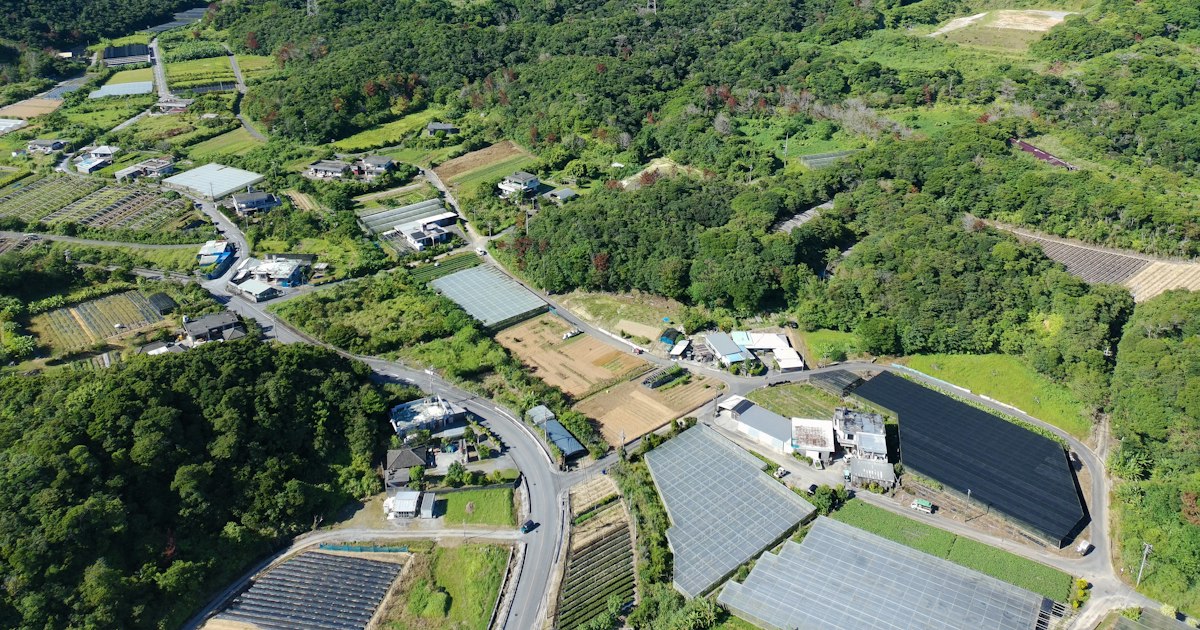
Photo by Erik Groh on Unsplash
Japan looks made for drone photography — terraced rice fields, volcanic coastlines, snow-dusted castle towns — but it’s also one of the more tightly regulated countries in Asia for flying one. The rules changed significantly in 2022 with a new national registration system, and most visitors don’t discover the details until their drone is confiscated at customs or a park ranger flags them down mid-flight. Here’s what actually applies to a traveler bringing a drone into Japan, not just the headline law.
The 100-gram threshold that decides everything
Japan’s Civil Aeronautics Act regulates any drone weighing 100 grams or more (including battery), which covers almost every consumer model — even the DJI Mini series sits well above that line. Drones under 100g are exempt from national registration and most Aviation Act flight restrictions, though they’re still subject to local park rules, the Small Unmanned Aircraft Flight Prohibition Act around sensitive sites, and Radio Law rules on frequency use. If your drone is 100g or heavier, assume the full rulebook below applies to you.
Registering your drone before you fly
Any drone 100g+ must be registered with Japan’s Ministry of Land, Infrastructure, Transport and Tourism (MLIT) through the online DIPS2.0 system before its first flight in Japan — this applies to foreign visitors, not just residents. You’ll need a passport, a credit card, and the drone’s serial number; registration for overseas addresses is permitted. Fees run roughly ¥900–2,400 per drone depending on the method, and you’ll receive a registration number that must be displayed on the aircraft (a sticker or engraving works). Processing has historically taken anywhere from a few days to a couple of weeks, so apply well before your trip — do not plan to register at the airport. Flying an unregistered drone can carry a fine of up to ¥500,000.
Unlike some countries, Japan does not require a pilot license (the national Level 1/2 qualification introduced in December 2022) for ordinary recreational flying. That license only matters for advanced operations like flying beyond visual line of sight over people — well outside what a typical traveler attempts.
No-fly zones that catch almost every tourist
Even with a registered drone, you need prior approval from MLIT (also filed through DIPS2.0, ideally submitted at least 10 business days ahead) to fly:
- Inside a Densely Inhabited District (DID) — which covers the vast majority of central Tokyo, Kyoto, Osaka, and every other major city
- Above 150 meters altitude
- At night
- Beyond your visual line of sight
- Within 30 meters of people, vehicles, or buildings not involved in the flight
- Over crowds or events
Separately, the Small Unmanned Aircraft Flight Prohibition Act bans flying near the Imperial Palace, the Diet building, ministries, nuclear facilities, US and Self-Defense Force bases, and airports, regardless of DID status — no permit process gets you around this one. Violations here can mean fines up to ¥500,000 and, in serious cases, criminal penalties. Practically speaking, this means the postcard shots of Kinkaku-ji, Shibuya Crossing, or Fushimi Inari’s torii tunnels are off-limits by drone without a hard-to-obtain permit — and many of these sites also have their own outright bans on private property, so permission from MLIT wouldn’t help anyway.
Where you can actually fly legally
The good news: rural and less-populated Japan is wide open. Farmland, coastline, and mountain areas outside DID zones generally don’t require the special permission described above, only registration. Hokkaido is the classic choice — the rolling lavender fields and patchwork hills around Furano & Biei are largely outside dense urban districts and reward aerial shots of the color-block terrain, especially in July when the lavender peaks. Further north, the remote flower islands of Rebun & Rishiri off Wakkanai offer coastal cliffs and near-total quiet, though check conditions carefully since strong sea winds are common even in summer.
Smaller castle towns can also work well if you check local ordinances first — somewhere like Tsuwano in the San’in region has far less air traffic and foot traffic than Kyoto, making it easier to plan a compliant flight, though you should still confirm you’re outside any DID boundary using MLIT’s public map viewer on the DIPS2.0 site before taking off.
One important caveat: national parks are a separate layer of regulation. Many, including parts of Fuji-Hakone-Izu, the Japan Alps, and Shiretoko, restrict or ban drones in their special protection zones under Ministry of Environment rules, independent of the Aviation Act. Always check with the specific park office, not just the aviation map, before flying in protected nature areas.
If you’re driving to a remote shooting location
Many of the best legal drone spots — coastal cliffs, farmland ridges, mountain passes — are only practical to reach by rental car, since trains won’t get you to the exact vantage point. If that’s your plan, budget for expressway tolls, which add up fast on long rural routes; renting an ETC card at the counter saves you from fumbling cash at toll gates and often unlocks discounted rates. Our guide to ETC cards and expressway tolls covers what it costs and how to set it up.
Beyond drones: general photography permit rules
Drones aren’t the only thing that needs clearance. Tripods and monopods are banned or restricted at many shrines, temples, museums, and train stations, both for safety and to keep pathways clear during busy hours. Commercial or professional shoots (anything involving a crew, models, or clear commercial intent) at public gardens and parks — Shinjuku Gyoen and the Tokyo Metropolitan Gardens among them — require a separate advance application and fee, even without a drone involved. If you’re shooting content for work rather than personal memories, check the specific venue’s website before you show up with gear.
Common mistakes that get travelers fined or stopped
- Assuming a “toy” drone is exempt. Most beginner and mid-range consumer drones exceed 100g once the battery is in.
- Registering after arrival. DIPS2.0 processing isn’t instant — start it from home.
- Trusting Google Maps instead of the official DID map. City boundaries don’t match DID boundaries; use MLIT’s map tool to check your exact launch point.
- Flying near a shrine or temple “because it’s outside the city.” Religious sites frequently have their own private bans regardless of aviation law.
- Skipping travel insurance with liability coverage. It’s not legally required for basic flights, but damage to a parked car or a stranger’s property comes out of your pocket otherwise.
None of this makes drone photography in Japan impossible — it just rewards planning. Register before you leave home, stick to areas clearly outside DID zones and national park restrictions, and treat rural Hokkaido and quieter regional towns as your friendliest legal options.