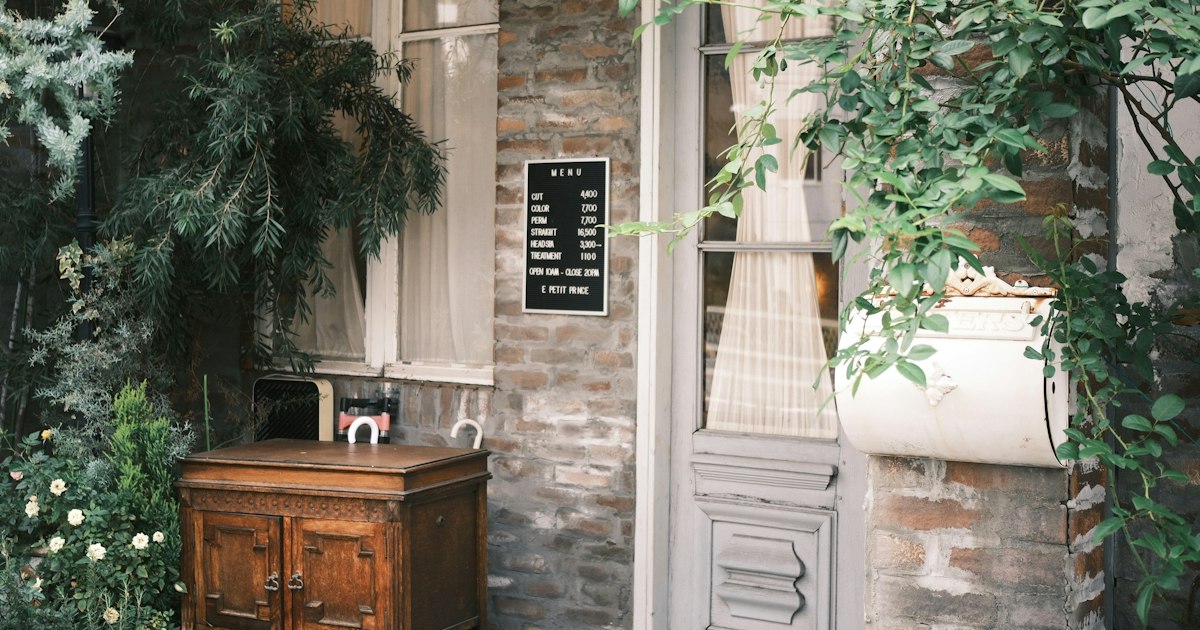
Photo by Hongwei FAN on Unsplash
Running out of road before your flight home and realizing you need a trim is one of the more underrated travel stresses in Japan. The good news: Japanese salons range from ten-minute, no-frills cuts to elaborate two-hour experiences with a head massage thrown in, and most of the system is navigable even if you don’t speak Japanese. Here’s how to figure out which kind of haircut you actually want, how to book it, and what happens once you sit down in the chair.
The Three Tiers of Haircuts in Japan
Japan’s hair industry splits roughly into three categories, and picking the right one matters more than picking the right salon.
- Quick-cut chains (budget): QB House is the best known, with branches inside train stations across Tokyo, Osaka, and other major cities. Cuts run about ¥1,200–¥1,500, take roughly 10 minutes, use an air-suction system instead of a wash, and are walk-in only—no reservation possible or needed. There’s no shampoo, no styling, and usually no English, but the process (sit, point at a length guide, done) is simple enough to manage with gestures.
- Neighborhood salons (mid-range): A standard unisex salon (biyoin) or traditional barbershop (tokoya) charges around ¥3,500–¥6,000 for a men’s cut and ¥6,000–¥9,000 for a women’s cut, including shampoo and blow-dry. These are the most common salons in any residential area and are where most long-term residents go.
- Designer salons (splurge): Concentrated in Harajuku, Omotesando, and Shibuya, these salons charge ¥8,000–¥20,000+ for a cut with a senior stylist, often more if you add color or a perm. Many have at least one English-speaking stylist and cater specifically to foreign clients.
How to Book: Hot Pepper Beauty and Walk-Ins
The dominant booking platform is Hot Pepper Beauty (Hotpepper Beauty), a website and app used by the vast majority of Japanese salons. You can browse by neighborhood, see stylist portfolios and prices, and book specific time slots—though the interface is mostly in Japanese, so a translation app or your phone’s built-in page translation helps. Some larger salons in tourist-heavy areas also take bookings directly via Instagram DM or a simple English booking form on their own website.
Walk-ins work at QB House-style chains and many traditional tokoya barbershops, but trendy salons in Harajuku or Omotesando generally require a reservation, especially on weekends—showing up without one often means being turned away or told to come back in several hours. If you want a specific well-reviewed stylist, book 3–5 days ahead; for weekend slots at popular salons, a week out is safer.
What a Typical Salon Visit Looks Like
Budget more time than you would at home. A full-service cut at a mid-range or designer salon typically includes a consultation, shampoo (often with a scalp massage), the cut itself, and a blow-dry styling—the whole thing commonly takes 60–90 minutes, sometimes longer for women’s cuts with styling. Many salons also offer an optional head spa add-on (a deeper scalp massage and conditioning treatment) for an extra ¥1,000–¥3,000, which is worth trying at least once even if you’re not usually a spa person.
Staff will usually hand you a tablet or paper form asking about allergies and hair concerns, and the stylist will do a consultation before touching scissors—this is the moment to communicate clearly, since cutting too much is hard to undo.
Bridging the Language Gap
Bring 2–3 reference photos on your phone showing the length and style you want, ideally from multiple angles. Japanese stylists are generally precise and will try to match a photo closely, which makes this far more reliable than verbal description alone. Useful phrases to have ready or typed into a translation app: “sukoshi” (a little), “mijikaku” (shorter), “onaji gurai” (about the same length), and “maegami” (bangs/fringe). If a salon’s listing on Hot Pepper Beauty or its own site explicitly says “English OK” or lists an English-speaking stylist, it’s worth paying slightly more for the peace of mind, particularly for a first visit or anything beyond a simple trim.
Timing, Hours, and Common Mistakes
Most salons open around 10:00 and close between 19:00 and 20:00, and nearly all close one weekday—commonly Monday or Tuesday—so don’t assume every salon is open daily. Avoid the turn-of-year period (roughly December 28 to January 3), when many salons close entirely and the rest are booked solid with people getting a fresh look before New Year visits to family or shrines. Weekday afternoons are the easiest slots to get on short notice; Saturdays fill up fastest.
The most common mistakes travelers make: assuming any salon takes walk-ins (many don’t), underestimating how long a full-service visit takes and scheduling it too close to a train or flight, and not bringing a photo, which can lead to miscommunication on length or layering. It’s also worth knowing that tipping is not expected or practiced at any tier of salon in Japan—the listed price is the full price, though color, perm, or extra-long hair often carry a surcharge that’s usually disclosed on the booking page.
Beyond the Cut: Traditional Hair Culture
If you’re interested in Japanese hair care beyond a modern salon visit, it’s worth seeking out traditional tools and styling culture rather than just the haircut itself. Kyoto is the best place to see this up close—see our guide to Tsuge Kushi: Kyoto’s Boxwood Combs and Traditional Hair Accessories for where to find hand-carved boxwood combs still used by geiko and maiko today. For a more alternative, street-style take on Japanese hair and fashion, Tokyo’s Koenji vintage and punk rock neighborhood has salons that lean into bold color and cuts rather than the polished Omotesando look. And if you’re based near Tokyo’s old geisha quarter, the atmospheric streets of Kagurazaka are a pleasant place to wander while you wait for a nearby appointment.
Which Option to Pick
For a simple maintenance trim with no language ability and no time to spare, QB House or a similar quick-cut chain is hard to beat. For a proper cut with wash and style at a fair price, any neighborhood biyoin booked through Hot Pepper Beauty will do the job well. And if you want the full experience—head spa, a stylist who speaks English, and a result worth photographing—book a designer salon in Harajuku or Omotesando several days ahead and treat it as part of the trip rather than an errand.