Some links below are affiliate links. If you buy through them, Japan Trove may earn a small commission at no extra cost to you.
Japanese homeware is a souvenir sweet spot — beautiful, functional, and often affordable. From ceramics to knives to clever kitchen tools, here’s what to buy to bring a little Japan home.
Ceramics & tableware
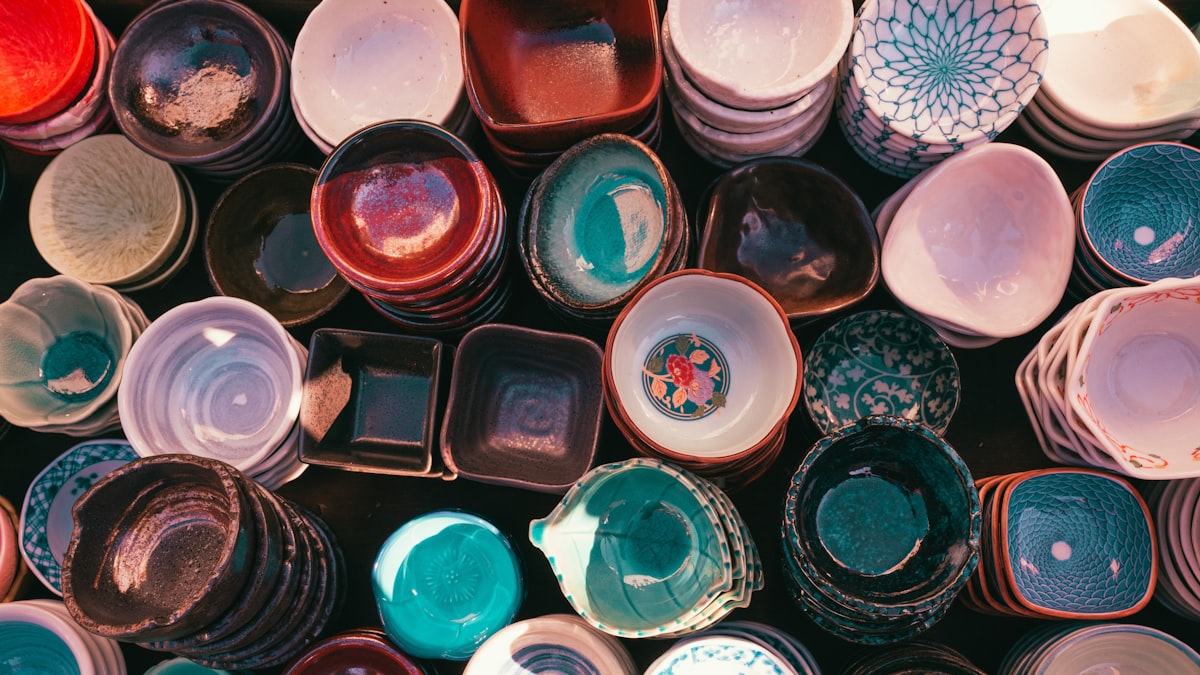
- Rice bowls, small plates (mamezara), and teacups — endlessly collectible and easy to pack.
- Regional pottery — Arita, Hagi, Mino, Kutani, and more; see our Japanese tea set & ceramics guide.
- Lacquerware (shikki) — bowls and trays with a deep, glossy finish.
Kitchen tools
- Knives — world-class blades; see our kitchen knives guide.
- Graters, mandolines, and gadgets — clever, well-made, and cheap at 100-yen shops.
- Cast iron & tetsubin teapots (heavier — plan your packing).
Textiles & living
- Furoshiki — versatile wrapping cloths that double as gift wrap and padding.
- Tenugui — thin cotton hand towels with lovely prints.
- Noren curtains, incense, and simple storage goods.
Where to shop
- Department-store housewares floors and specialty shops.
- Kappabashi (Tokyo) — the kitchenware street, including realistic food samples.
- Muji & Loft/Tokyu Hands for modern designs — see Muji must-buys.
- From abroad: ceramics and knives on Amazon , or a proxy service for artisan pieces.
Packing tips
- Wrap ceramics in a furoshiki or clothing; hard-side luggage helps.
- Buy tax-free with your passport on bigger purchases.
- Shipping fragile or heavy items? Consider forwarding or a proxy. Great gifts, too.
What things typically cost
- Everyday ceramics (rice bowls, small plates) run JPY 500-3,000 at department stores and craft shops, while collectible regional pottery from named kilns (Arita, Hagi, Kutani) can run JPY 5,000-30,000+ for a signed piece.
- Furoshiki wrapping cloths run JPY 800-3,000 depending on fabric and size, and double as reusable gift wrap and protective padding for other fragile purchases in your luggage.
- A quality tetsubin cast-iron teapot runs JPY 8,000-25,000 and adds real weight to luggage — factor this in if you’re already carrying knives or ceramics home in the same bag.
Common mistakes to avoid
- Buying fragile ceramics without a plan to pack them safely — wrap each piece individually in clothing or a furoshiki, pack centrally in your suitcase away from the sides, and consider a hard-side case if you’re buying several pieces.
- Overlooking weight limits when buying cast iron or multiple ceramic pieces — these add up fast; weigh your bag partway through a shopping trip if homeware is a big part of your list.
- Assuming all “Japanese ceramics” sold in tourist areas are handmade or regional — some souvenir shops carry mass-produced imports; buying from a department store’s craft floor or a named regional shop is a safer bet for authenticity.
Shipping heavier homeware home
For a serious ceramics or cookware haul, international shipping from the store or a forwarding service is often cheaper and safer than checking it as luggage — ask at the point of sale, since many department stores and specialty shops routinely handle this for overseas visitors.
Homeware as a thoughtful, lasting gift
Unlike consumable snacks, a well-chosen ceramic piece or set of tenugui cloths is a gift the recipient will keep and use for years — worth the extra care in packing and the modest price premium over a disposable souvenir, especially for someone who already appreciates home goods or cooking.