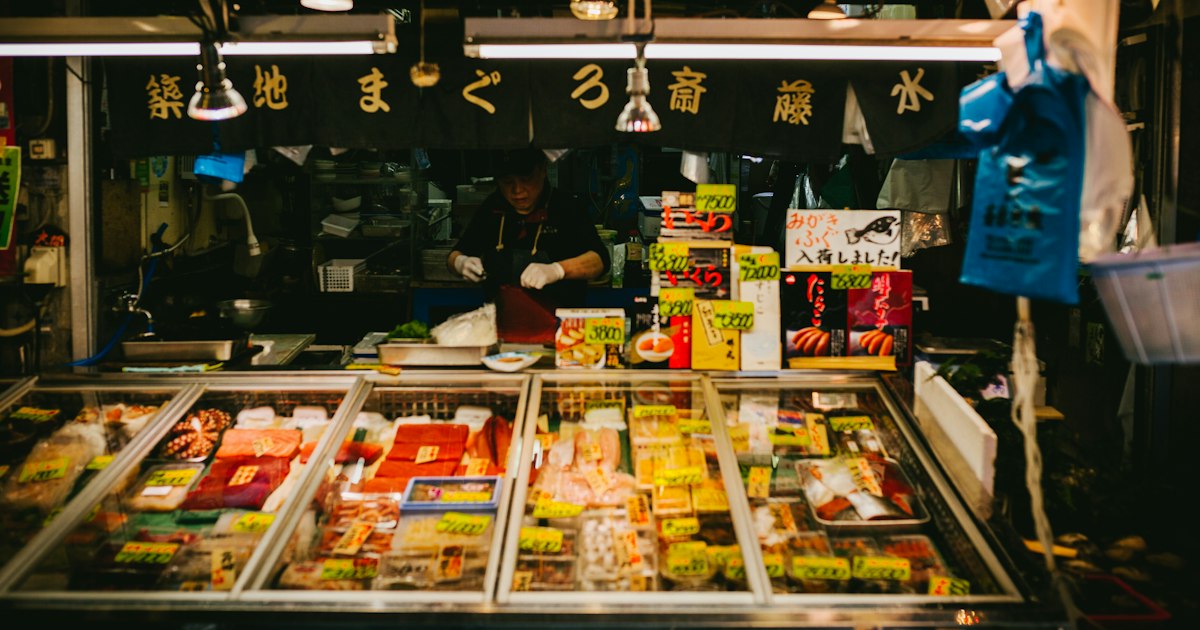
Photo by Karsten Gohm on Unsplash
The predawn tuna auction at Toyosu Market is one of Tokyo’s most-requested — and most misunderstood — experiences. Since the market moved from Tsukiji in 2018, tourists can no longer simply wander onto the auction floor the way they used to. There’s now a formal system with a free viewing deck, a competitive lottery, and a strict calendar of closures. Here’s how to actually see it, step by step.
What the Tuna Auction Actually Is
Every morning except Sundays, most Wednesdays, and designated market holidays, hundreds of whole frozen and fresh tuna — some weighing over 200 kg — are laid out on the wholesale floor for licensed buyers to inspect and bid on. Auctioneers call out prices in rapid, chant-like Japanese while buyers signal bids with hand gestures. The real bidding is fast and over within an hour, usually running between roughly 5:30 and 6:30 AM, which is why any viewing plan has to start before sunrise.
This isn’t a tourist show — it’s the actual supply chain for sushi restaurants across Tokyo, including the famous shops whose owners fly in daily to hand-pick fish. That authenticity is exactly why it draws visitors, but it also means the market prioritizes working buyers over sightseers, which shapes everything about how you’re allowed to watch.
Two Ways to Watch: Free Deck vs. the Lottery Tour
There are two distinct viewing options, and mixing them up is the most common tourist mistake.
- The free observation deck: A glassed-in corridor on the upper floor of the wholesale fish market building overlooks the auction floor from a distance. It’s open to anyone during market hours, no reservation needed, and costs nothing. The catch is that you’re viewing through glass from fairly far away, and the action is tiny — bring a zoom lens or binoculars if you want to actually see the bidding rather than a sea of distant hats.
- The close-up auction floor tour: A small number of visitors are let onto an elevated platform inside the auction area itself, much closer to the action. This is free but strictly limited — around 120 people per day, split into two short viewing sessions — and access is only granted through an advance online lottery, not on a walk-up basis.
If your goal is photos of auctioneers mid-chant with tuna at their feet, you need the lottery tour. If you just want to say you saw it and don’t mind distance, the free deck is enough.
How to Apply for the Observation Lottery
Applications open on the Tokyo Metropolitan Central Wholesale Market’s official website roughly two months before your travel dates, in a short application window each month. You submit your preferred date, number of visitors (usually capped at a handful per application), and contact details; winners are chosen by random draw rather than first-come-first-served, and notified by email a few weeks before the visit date. Bring the confirmation email plus photo ID — a passport is fine for foreign visitors — and arrive at the designated check-in point by the specified time, typically well before 5:30 AM, since latecomers forfeit their slot.
Demand far outstrips supply, especially for weekend dates and the first week of January, so apply the moment the window opens and have backup dates ready. If you don’t win, the free deck remains a solid fallback, and it’s worth building your Tokyo trip logistics — including customs and tax-free shopping registration through Visit Japan Web — before you land, since early mornings leave little time to sort paperwork once you’re jet-lagged.
Opening Hours, Closures, and Best Timing
Toyosu Market’s public areas generally run from around 5:00 AM, with most sushi breakfast counters and shops winding down by early afternoon. The market is closed on Sundays, most Wednesdays, and a published list of holidays — always check the official calendar for your exact travel dates, since the Wednesday closures rotate and aren’t the same every week. The auction itself is also suspended around the New Year holiday period.
The one exception worth planning around is the New Year’s first auction (hatsu-zeri) in early January, when the season’s first bluefin tuna sells for eye-watering, headline-making prices. It’s a fun spectacle but also the single most crowded and competitive day to get a lottery slot, so expect it to be nearly impossible to win on short notice.
Outside that, any weekday morning is a good bet, and winter months tend to have slightly better tuna quality and variety than peak summer.
Getting to Toyosu Market
The easiest route is the Yurikamome automated line to Shijo-mae Station, which sits directly across from the market entrance — a near door-to-door trip. Alternatively, take the Yurikamome or Tokyo Metro Yurakucho Line to Toyosu Station and walk about 10 minutes via the covered pedestrian bridge connecting to the Senkyaku Banrai complex next to the market. Since you’ll be arriving before dawn, note that Yurikamome’s first trains start running quite early but not at 4 AM — check the first-train time against your check-in deadline, and budget for a taxi from central Tokyo if your lottery slot requires an earlier arrival than public transit allows.
Common Mistakes Tourists Make
- Assuming it works like old Tsukiji. At the former Tsukiji site, visitors could often just show up. Toyosu is far stricter — the auction floor is off-limits without a lottery win.
- Applying too late. Because the window opens two months out and fills immediately, booking a week before your trip essentially guarantees a loss in the draw.
- Dressing wrong. The auction floor is a cold, wet, working fish market — closed-toe shoes and a warm layer matter, even in the glassed viewing areas.
- Forgetting the market’s closure calendar. Showing up on a closed Wednesday or Sunday after an early wake-up is a frustrating way to start the day — double-check before you set an alarm.
- Expecting a long show. The close-up viewing session is brief, often just 10–15 minutes per group, so have your camera ready rather than fumbling with settings once inside.
Where to Eat Breakfast After
Toyosu’s upper-floor “gourmet” area is packed with restaurants that source directly from the market below, making it the logical next stop after the auction.
- Budget (¥1,500–2,500): Counter-style donburi shops serving fresh sashimi rice bowls — filling, fast, and good value for the quality.
- Mid-range (¥4,000–6,000): Sit-down sushi sets with seasonal nigiri courses, a step up in variety and presentation.
- Splurge (¥8,000–15,000+): The relocated branches of famous Tsukiji-era sushi counters draw queues from before 4 AM for omakase courses built around that morning’s auction catch.
If seafood is turning into a theme of your trip, it’s worth comparing Toyosu’s bluefin to the regional specialty covered in Kanburi: Toyama’s Prized Winter Yellowtail, and if you want a very different, lower-key food-and-drink scene for the same evening, the retro grilled-skewer stalls at Yurakucho’s Gado-Shita are a short ride away near Ginza.