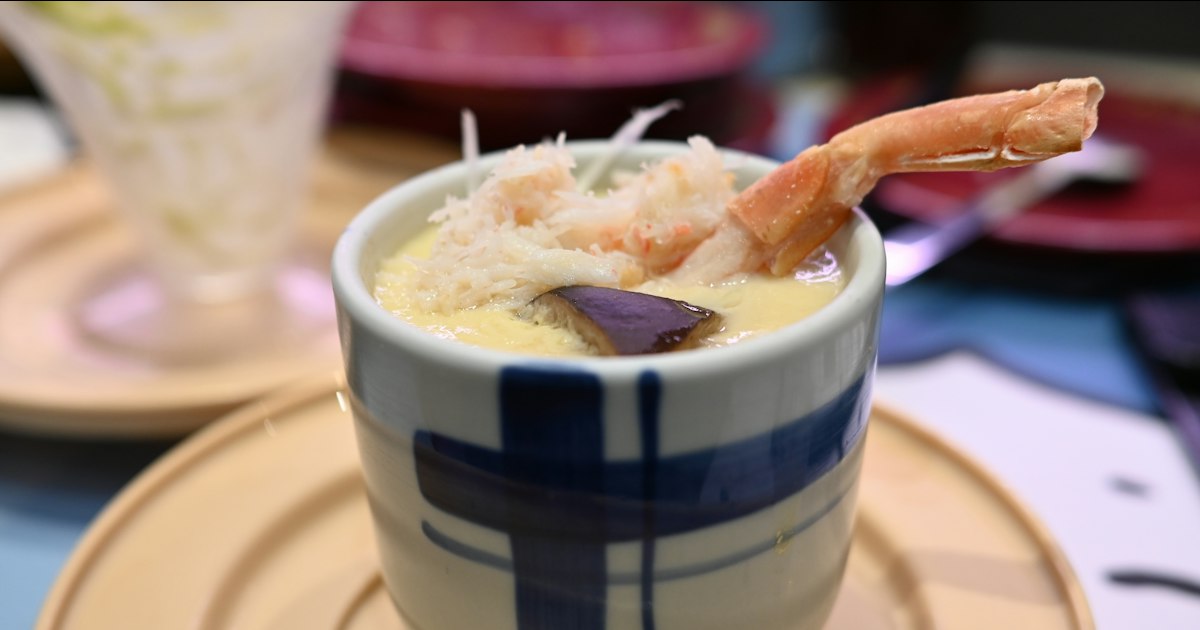
Photo by Zhang Ziyu on Unsplash
Chawanmushi doesn’t look like much when it arrives — a small lidded cup, often ceramic, sometimes with a wisp of steam escaping the seam. Lift the lid and you’ll find a pale, trembling custard with a few treasures buried inside: a shrimp, a sliver of chicken, a mushroom cap, maybe a single ginkgo nut. It’s one of the few Japanese dishes designed to be eaten slowly, with a spoon, in near silence. If you’ve only encountered it as an afterthought on a bento tray, it’s worth seeking out the real thing.
What Is Chawanmushi, Exactly?
The name breaks down literally: chawan means teacup or small bowl, and mushi means steamed. Chawanmushi is a savory egg custard made from beaten egg mixed with dashi (Japanese stock), a splash of soy sauce and mirin, then steamed gently over low heat in individual lidded cups until just set. The texture is the whole point — it should be smooth and barely firm, more like silken tofu than a Western quiche or flan, and it’s always savory rather than sweet.
It’s typically served warm, not hot, as a small course rather than a main dish — think of it as sitting somewhere between a soup and a side dish. You eat it with a spoon straight from the cup, scooping down to find the fillings layered at the bottom.
The Classic Ingredients Inside the Cup
A traditional chawanmushi hides several small ingredients beneath the custard surface, chosen as much for color and contrast as for flavor:
- Shrimp — usually one, peeled and deveined
- Chicken — a small cube of thigh meat
- Kamaboko — a slice of steamed fish cake, often pink-edged
- Shiitake mushroom — for an earthy note
- Mitsuba — a trefoil herb leaf, Japan’s answer to parsley, used mainly for color
- Ginkgo nut (ginnan) — a pale, chewy nut that signals autumn on the menu
Regional and seasonal versions swap things around: Kyoto-style kaiseki versions sometimes add a thin layer of thickened dashi sauce (ankake) poured over the top just before serving, while simpler izakaya versions might contain just chicken and mushroom. If you’re the type who enjoys tracking down other quietly comforting Japanese home dishes, chawanmushi sits in the same family as nikujaga and ochazuke — unglamorous dishes that Japanese households and small restaurants have quietly perfected for generations.
Where to Try Chawanmushi in Japan
You don’t need to hunt for a specialist shop — chawanmushi shows up across a wide range of price points:
- Convenience stores and supermarkets (budget, roughly ¥150–¥280): 7-Eleven, Lawson, and FamilyMart all sell individual cups of chawanmushi in the chilled food section, ready to microwave. It’s a legitimate, tasty way to try the dish for the first time with zero commitment.
- Soba and udon restaurants (¥400–¥800 as a side order): Old-fashioned Edo-style soba shops, particularly the long-established ones in Tokyo neighborhoods like Kanda and Asakusa, have served chawanmushi as a standard companion to a soba set for well over a century. Ordering it alongside cold soba and a small plate of tempura is a classic, filling, inexpensive lunch.
- Unagi (eel) specialty restaurants (often ¥500–¥900, sometimes bundled with a set meal): Chawanmushi is one of the most common side dishes paired with grilled eel over rice, since the light custard balances the richness of the unagi sauce.
- Izakayas (¥400–¥700): Many casual pubs include a simple chawanmushi on the menu as a warm, easy-to-share small plate between rounds of drinks and grilled skewers. If you’re exploring Tokyo’s izakaya culture, the alley restaurants at Yurakucho’s Gado-Shita near Ginza are a good place to order one alongside yakitori.
- Sushi counters and omakase courses (included in courses from roughly ¥10,000 upward): Chawanmushi frequently appears as a warm interlude between cold fish courses, giving your palate a break.
- Kaiseki restaurants (splurge, courses often ¥15,000–¥30,000+): Here it’s elevated furthest — truffle, uni, or seasonal matsutake mushroom might be worked into the custard or ladled on top as a garnish, with a delicate dashi sauce finishing the dish.
Best Season and Timing to Order It
Chawanmushi is served year-round, but autumn (September through November) is when it’s at its most interesting. That’s when ginkgo nuts and matsutake mushrooms come into season, and many kaiseki and sushi restaurants rotate them into the custard or as a garnish. In midsummer, some restaurants serve a chilled version — a cooled custard with a light, slightly tart dashi jelly on top — as a refreshing alternative to the standard warm cup. If you’re traveling specifically to chase seasonal Japanese food, autumn menus are worth planning around the same way you might time a trip to see Toyama’s winter yellowtail for a different seasonal specialty.
How to Eat It Properly
There’s a small bit of etiquette worth knowing so you don’t fumble it at a nicer restaurant:
- Remove the lid and set it upside down next to the cup (or balanced on top at an angle) rather than placing it face-down on the table.
- Eat directly from the cup with the small spoon provided — don’t transfer it to a plate.
- Start from the top and work down; the fillings are usually layered toward the bottom, so the last few spoonfuls are the most rewarding.
- It’s meant to be eaten warm, not hot. If it arrives still bubbling, let it sit for a minute — this also helps if the texture seems slightly rubbery, since it will settle as it cools.
Common Mistakes Visitors Make
The biggest mistake is stirring it like a soup — the custard is meant to stay intact as you spoon through distinct layers, not be mixed into a slurry. The second is sending it back (or assuming it’s undercooked) when you see small air holes or a slightly bubbly, pitted surface on a homemade version; that texture flaw is called su ga tatsu in Japanese and happens from steaming at too high a heat, but it’s a minor cosmetic issue, not a food safety one, in any dish a restaurant actually serves you. Finally, don’t assume chawanmushi is a dessert because of its custard-like appearance — it’s firmly savory, and ordering it expecting something sweet is the most common disappointment among first-timers.
Budget to Splurge: A Quick Price Guide
For a no-stakes first taste, grab a convenience store cup for under ¥300. For a proper restaurant version with better texture and fresher fillings, a soba shop, unagi restaurant, or izakaya will run ¥400–¥900 as a side order. For the full experience — matsutake, uni, or truffle worked into a silky custard with a refined dashi sauce — a kaiseki dinner or high-end sushi omakase is where chawanmushi becomes a genuine highlight of the meal rather than a quiet side dish. Whichever end of that range you choose, it’s a dish best eaten in the moment, warm, with no particular hurry.