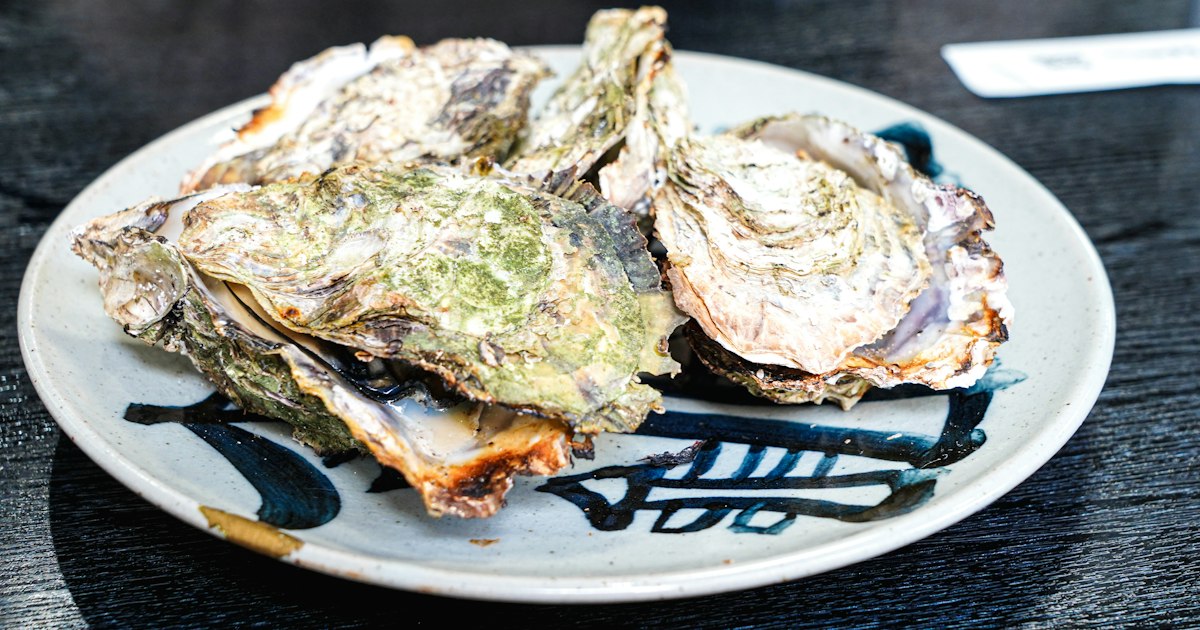
Hiroshima Prefecture produces roughly 60% of Japan’s farmed oysters, and the bay’s calm, nutrient-rich water around Miyajima and Eta Island has been growing them for over 400 years. If you only eat oysters once in Japan, this is where to do it — but timing and location matter more than most visitors expect. Here’s how to plan it.
Why Hiroshima Is Japan’s Oyster Capital
The oysters here are Crassostrea gigas (the Pacific oyster), raised on rope lines hung from rafts in Hiroshima Bay. Compared to the smaller, briny Miyagi oysters from the north, Hiroshima oysters tend to run larger and plumper, with a milder, creamier finish — which is part of why they’re served grilled and in hot pots as often as raw. The main growing areas are around Miyajima, Eta Island (Etajima), and Kure, but most of the harvest ends up on plates in Hiroshima City and on Miyajima itself.
When to Go: Season and Peak Months
Hiroshima oysters are in season roughly from late October through March, with December through February considered the peak for size and flavor. Water temperature drops in winter, which slows the oysters’ metabolism and concentrates their glycogen content — this is what makes them taste sweeter and richer in the cold months. Outside this window (spring through early autumn), many restaurants switch to frozen stock or close their oyster menus entirely, so don’t expect the same experience if you’re visiting in July.
If you’re building an itinerary around winter seafood generally, Hiroshima oysters pair well conceptually with other cold-season specialties like Toyama’s winter yellowtail (kanburi) — both are “wait for the cold water” dishes that reward visiting Japan in December or January rather than peak cherry blossom season.
Eating Them Raw
Raw oysters (nama-gaki) are usually served with a squeeze of lemon, a dab of ponzu-grated-daikon (oroshi ponzu), or just soy sauce. In Hiroshima City, a reliable spot is Kanawa, a floating restaurant moored on the Motoyasu River near Peace Memorial Park — it’s been serving oyster courses since the 1960s from a boat that also houses the prefecture’s own oyster research. A multi-course oyster meal here runs roughly ¥4,000–¥8,000 per person depending on the course, and reservations are strongly recommended in peak winter weekends. It’s typically open for lunch and dinner, closed irregularly, so check the current schedule before going.
A word of caution: raw oyster safety depends on water temperature and the specific farm’s handling, which is exactly why reputable Hiroshima restaurants only serve raw oysters in the cold months — they’re not being coy about freshness, they’re following the same seasonal logic as the fishery itself. If a place offers raw oysters in August, that’s a red flag rather than a bonus.
Grilled Oysters on Miyajima
Miyajima — the island famous for the floating torii gate — is also the easiest place in the region to eat grilled oysters (yaki-gaki) as street food. Along Omotesando shopping street, between the ferry terminal and the shrine, several stalls grill oysters in their shells over charcoal right in front of you. Expect to pay around ¥400–¥600 for a single oyster from a street stall, or set plates of grilled oysters at sit-down shops for roughly ¥1,200–¥2,000. Yakigaki no Hayashi, near the ferry pier, is a long-running specialist worth seeking out if you want a sit-down version rather than a street snack.
Grilled oysters are generally the safer and more forgiving option for anyone nervous about raw shellfish, and they’re also easier to eat while walking around — a reasonable pairing with the kind of grazing you’d do at a grilled-food market stall, similar in spirit to the stand-and-eat grilling culture under Yurakucho’s Gado-Shita in Tokyo, just with a torii gate view instead of train tracks overhead.
Oyster Shacks at Ujina Port
For something more filling, Hiroshima City runs seasonal kaki-goya (oyster shacks) at Ujina Port, usually open from around November through March. These are tent-style restaurants where you grill oysters yourself at a tabletop grill, often as part of an all-you-can-eat or set-course format. Typical pricing is in the ¥3,000–¥5,000 range per person for a time-limited all-you-can-grill session (commonly 90–100 minutes), sometimes with drinks included in a slightly higher tier. Because these shacks are seasonal pop-ups, exact dates, hours, and operators can shift year to year, so confirm the current season’s schedule before building a day around it — a quick search for “Ujina kaki-goya” plus the current year will usually turn up the operating dates.
Getting There
Hiroshima City is about 4 hours from Tokyo and roughly 1.5 hours from Osaka/Shin-Osaka by Shinkansen, both covered by the Japan Rail Pass. From Hiroshima Station, Ujina Port is a short tram or bus ride (around 20–30 minutes). For Miyajima, take the JR Sanyo Line or a tram to Miyajimaguchi, then the JR ferry or Miyajima Matsudai Kisen ferry across — the crossing takes about 10 minutes and the JR ferry is covered by the JR Pass. If you’re planning your broader Japan arrival logistics, it’s worth handling Visit Japan Web registration before you land so customs and immigration go faster on arrival day, leaving more daylight for the oyster crawl.
Common Mistakes to Avoid
- Visiting outside winter and expecting the full raw-oyster experience. Many restaurants quietly scale back or close their raw menus from spring to early autumn.
- Skipping reservations at Kanawa or other sit-down restaurants on weekends in December and January — this is peak season and peak demand overlap, and walk-ins can mean long waits or no seats at all.
- Assuming all oyster stalls are equal. Street-grilled oysters on Miyajima vary in freshness and size between vendors; it’s fine to look at a few stalls before buying, the way you would compare stalls at any Japanese food market.
- Forgetting cash. Smaller street stalls on Miyajima and some kaki-goya operators still prefer cash over card payments, especially for individual ¥400–¥600 purchases.
- Not checking tide times on Miyajima. The famous floating torii is only “floating” at high tide — if you’re timing a day trip around both oysters and the iconic photo, check the tide schedule in advance.
Done right, a Hiroshima oyster day is simple: ferry over to Miyajima in the morning for grilled oysters and the shrine, then back to Hiroshima City in the evening for a raw oyster course on the river. Between November and February, it’s one of the most reliably good seafood days you can build into a Japan itinerary.