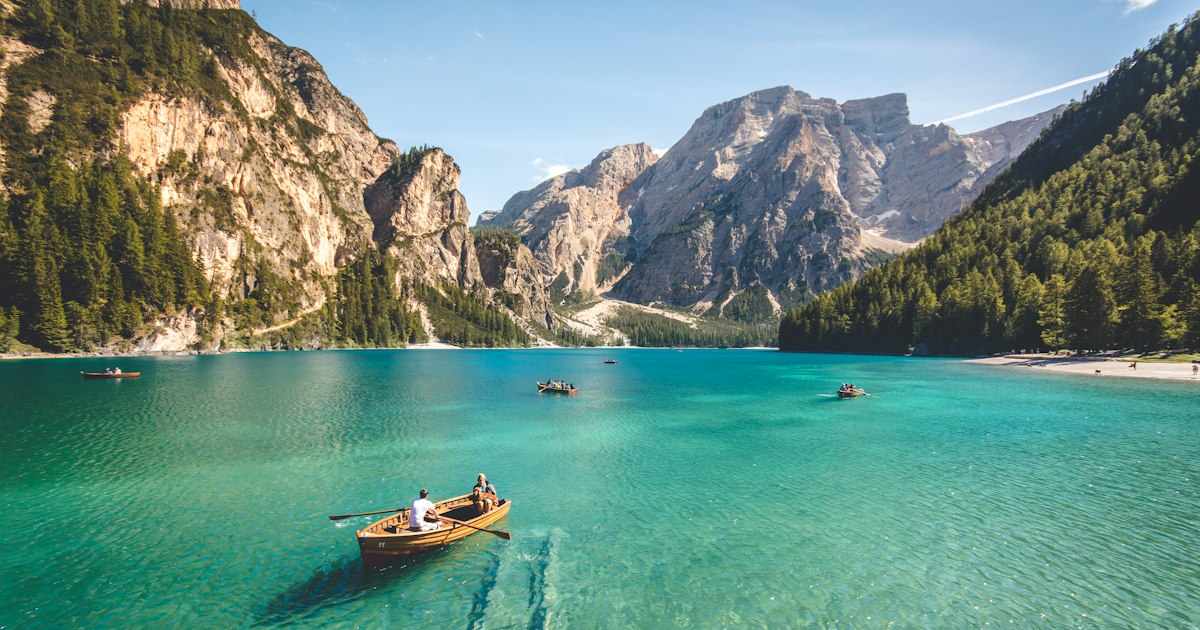
Photo by Pietro De Grandi on Unsplash
Japan’s trains and buses are so good that most visitors never consider renting a vehicle at all — but there’s a whole country that the rail network barely touches, and the camper van (called a “kyampingu-ka” or just “kanpa” locally) is the way locals reach it. You get a rolling kitchen, a bed that erases hotel bookings, and the freedom to chase good weather around Hokkaido or disappear into the Japan Alps for a week. It’s not cheap, and it’s not for everyone — but for the right trip, nothing else comes close.
Who should actually rent one
Camper vans make the most sense for trips that are rural-heavy and multi-stop: Hokkaido’s farmland and coastline, the Noto Peninsula, the Izu or Shimanami Kaido coastal routes, or a loop through the Japan Alps. They make far less sense if your itinerary is Tokyo–Kyoto–Osaka, where trains are faster, cheaper, and parking is a nightmare. If you’re traveling with a baby and weighing a van against hotel-based convenience, it’s worth comparing against simply renting baby gear delivered to your hotel instead — a van solves lodging but adds driving fatigue that doesn’t mix well with young kids on long travel days.
What it actually costs
Prices vary by size and season, but as of 2025 typical daily rental rates run:
- Budget (light camper, 2-berth, pop-top or kei-based): ¥10,000–15,000/day. Companies like Japan Campers and DOCO both run compact models in this range.
- Mid-range (4-berth van with kitchenette, sink, fridge): ¥18,000–28,000/day. This is the sweet spot for couples or families of three.
- Splurge (5-6 berth with shower, larger kitchen, Toyota Coaster-based): ¥30,000–45,000/day, mostly through Japan RV Rental or JAPAN CAMPER NET.
On top of the base rate, budget ¥5,000–8,000/day for fuel (vans aren’t efficient — expect 8-10 km/L), plus a one-way drop-off fee (often ¥20,000-plus) if you don’t return to the pickup city, and an optional damage-waiver insurance of ¥2,000–3,500/day that is strongly worth taking. A one-week mid-range rental, insurance included, typically lands around ¥180,000–220,000 before fuel and campsite fees — comparable to a rental car plus several hotel nights, but with far more flexibility.
License and booking requirements
You need either a valid driver’s license from certain countries (an International Driving Permit under the 1949 Geneva Convention, carried alongside your home license — the US, UK, Canada, Australia and most of Europe qualify) or a Japanese translation of your license if you’re from Switzerland, France, Germany, Belgium, Monaco, or Taiwan. Most rental companies require renters to be 21+ with at least one year of driving experience, and some larger campers (over 2m wide or with a Class 2 weight rating) may require specific license classes — check this when booking, especially for anything Coaster-based. Book 2-3 months ahead for July-August and the New Year period; popular models sell out.
Best season and routes
Late April through early June and September through early November are the best windows — mild temperatures, and in Hokkaido specifically, late June to August avoids the worst of the region’s short but real snow risk at higher elevations. Hokkaido is the single most popular camper-van destination in Japan: wide roads, low traffic, and dozens of “Rider’s House” and RV-friendly michi-no-eki (roadside stations) that welcome overnight parking. Shikoku and the Noto Peninsula are quieter alternatives with excellent seafood stops along the way — if you’re road-tripping toward Hiroshima, timing your route to land there in oyster season is worth planning around; see Hiroshima Oysters: Season, and Where to Eat Them Raw and Grilled for when that is. Winter rentals exist but demand snow tires (usually included Nov–March) and are only advisable for confident cold-climate drivers.
Where to sleep: campsites vs. roadside stations
Japan has two main overnight options for camper vans:
- Auto-campsites (ōtokyanpu-jō): Run sites with power hookups, showers, and dump stations, typically ¥3,000–6,000/night. Book ahead in summer — these fill up, especially in Hokkaido and near Mt. Fuji.
- Michi-no-eki (roadside stations): Free overnight parking is tolerated at many of these highway rest stops, though it’s a courtesy, not a legal right — always check posted signage, park away from the main entrance, avoid running generators late, and never set up tables or chairs outside the vehicle. Some stations now explicitly ban overnight camper parking after tourist complaints, so don’t assume one is fine because another was.
Most rental vans include a portable toilet and basic cookware, but double check whether bedding, dishes, and a cooler are included or rented separately — this varies a lot by company and catches people out.
Common mistakes first-timers make
- Underestimating vehicle width. Rural Japanese roads, especially in mountain or old-town areas, can be startlingly narrow with no shoulder. A 2.1m-wide van feels very different on these roads than it did in the rental lot.
- Ignoring height restrictions. Many car parks, drive-throughs, and older tunnels have 2.0-2.2m clearance limits that a raised-roof camper won’t clear — know your vehicle’s exact height before you leave the lot.
- Assuming you can park anywhere to sleep. Convenience store and supermarket lots are not free campsites; staff will knock on your window at 2am. Use designated michi-no-eki or paid campsites only.
- Forgetting the ETC card and expressway tolls. Most rental vans come with an ETC (toll) card reader but you’ll be billed separately — ask the rental desk how settlement works, since this differs by company.
- Not planning fuel stops in rural areas. Stations can be sparse and close early (many rural stations close by 19:00-20:00) — don’t let the tank run low assuming you’ll find one.
Before you fly, it’s worth completing Visit Japan Web pre-registration so you’re not stuck doing paperwork at the airport on the same day you need to pick up a van and start driving — camper van pickup counters are often outside the main terminal and have their own last-shuttle cutoff times (commonly around 19:00-20:00), so a slow immigration queue can genuinely cost you your first night’s driving plans.
Stocking the mobile kitchen
Most mid-range vans include a single burner, a small fridge, and basic pots, but not food. Convenience stores and supermarkets along your route are your pantry — and if it’s your first time using a self-checkout lane in a Japanese supermarket, it’s worth knowing the quirks in advance so you’re not holding up a rural Lawson at 7am; see Self-Checkout & Bagging Your Own Groceries in Japan for what trips people up. A single burner is plenty for simple one-pot meals, and a cooler stocked with regional finds — Hokkaido corn, Noto seafood, Tohoku apples — is half the fun of doing this by van instead of by train.