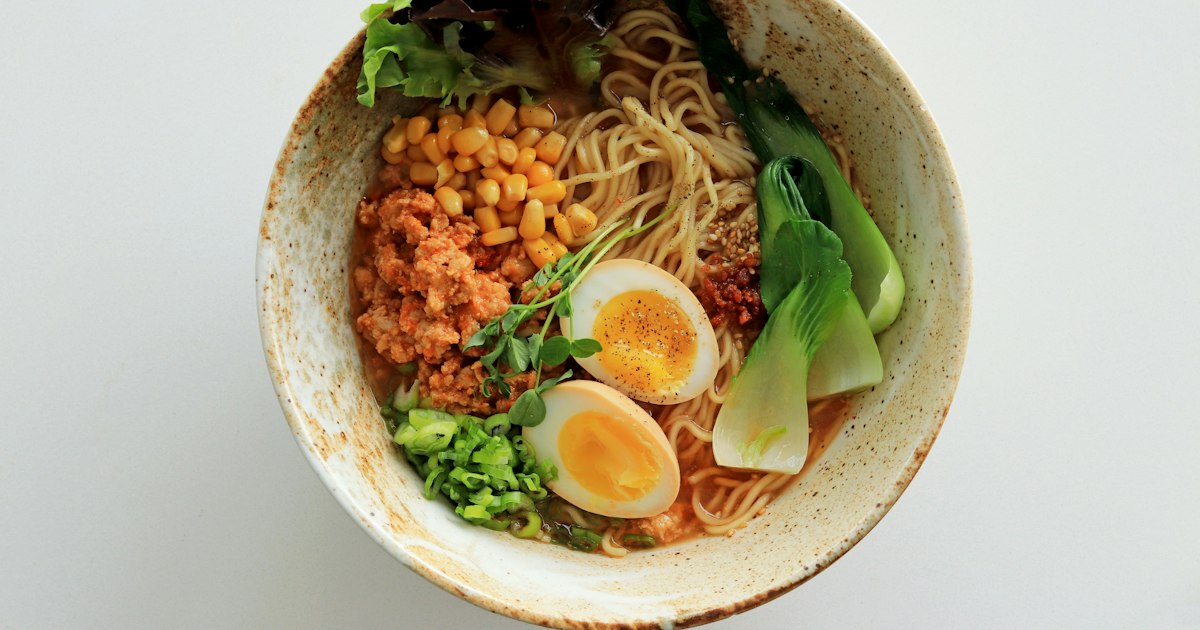
Photo by Cody Chan on Unsplash
If you ask for “Taiwan mazesoba” in Taiwan, you’ll get blank stares. That’s because this garlicky, spicy, soupless noodle bowl has nothing to do with Taiwan at all — it was invented in Nagoya, in central Japan, and has since become one of the city’s signature dishes alongside hitsumabushi grilled eel and miso katsu. For travelers who like their food stories as rich as the food itself, this is a dish worth tracking down.
What Is Taiwan Mazesoba, Exactly?
Mazesoba (混ぜそば) means “mixed noodles” — there’s no broth. Instead, a mound of thick, chewy noodles sits in a shallow bowl topped with a fiery minced-meat sauce (usually pork, cooked with garlic, doubanjiang-style chili paste, and sometimes dried shrimp), a raw egg yolk, a generous pile of chopped nori seaweed, minced garlic, chives, and a dusting of bonito fish powder. You mix everything together with chopsticks until the yolk coats the noodles and the sauce clings to every strand. The result is savory, garlicky, a little fishy from the bonito, and noticeably spicy — but not punishingly so for most Western palates.
It’s easy to confuse with “Taiwan ramen” (台湾ラーメン), an older and completely different Nagoya dish — a soupy, very spicy noodle soup invented in the 1960s–70s at a Nagoya restaurant called Misen by a Taiwanese immigrant chef, loosely based on Tainan-style danzai noodles. Taiwan mazesoba borrowed its name and chili flavor profile from that dish decades later but ditched the soup entirely. Knowing the difference will save you confusion when reading a menu.
Born in Nagoya: The Origin Story
Taiwan mazesoba was created in 2008 at Menya Hanabi (麺屋はなび), a small noodle shop in Nagoya’s Ozone neighborhood. The owner wanted something with the bold, spicy-garlic flavor of Taiwan ramen but in a drier, noodle-forward format that diners could finish faster and mix to their own taste. It caught on quickly within Nagoya, then spread nationwide through copycat shops and chain expansion, eventually reaching Tokyo, Osaka, and beyond. Menya Hanabi’s original Ozone shop is still widely credited and visited as the birthplace of the dish, and it remains a pilgrimage stop for noodle fans visiting Nagoya.
How to Order and Eat It
Most shops offer a standard size (around ¥850–980) and a large size for an extra ¥100–200. You can usually customize with add-ons: extra garlic, chili oil, cheese (a popular modern twist that mellows the spice), or extra egg yolk, each typically ¥100–150. Don’t skip the ending ritual: once you’ve eaten most of the noodles, ask for “shime no gohan” (締めのご飯), a small bowl of rice for about ¥150–200, which you dump into the leftover sauce and mix — nothing goes to waste, and it’s the best part for many regulars. If you’re curious about the rice itself, Japan’s short-grain varieties like those covered in our guide to Koshihikari and Japanese rice are exactly what makes that final bowl so good at soaking up sauce.
A practical tip: mix fast and mix thoroughly. The dish is served deliberately dry, and if you eat it without stirring in the yolk and sauce from the bottom, you’ll get an unbalanced, overly salty first few bites. Staff will often demonstrate or remind first-timers to mix well before eating.
Where to Try It in Nagoya
Budget: Menya Hanabi’s Ozone honten (本店, the original shop) is the obvious starting point and still very affordable, with a basic bowl well under ¥1,000. Expect a short walk from Ozone Station on the Meijo Subway Line or JR Chuo Line. Lunch hours tend to draw queues of 10–20 minutes on weekends, so arriving right at opening (typically around 11:00–11:30) or mid-afternoon helps.
Mid-range: Yamachan and several other Taiwan mazesoba specialists have multiple branches around Nagoya Station and Sakae, Nagoya’s main downtown areas, making them easy to fit into a sightseeing day without a special trip. Expect similar pricing to Hanabi, just with shorter waits and more English-friendly picture menus near the station.
Splurge / variety: Some izakaya and ramen specialty shops in Sakae put their own spin on the dish with premium toppings like additional seafood, truffle oil, or wagyu mince, running ¥1,200–1,800. These aren’t “traditional” but are worth it if you want to taste how far the dish has evolved from its 2008 original.
Because seating at the smaller originator shops is limited, it’s worth checking hours and, where possible, reserving ahead — our guide to restaurant reservations in Japan via Tabelog and the OMAKASE app explains how to book or at least check real-time wait times before you go, which is especially useful for popular, cash-only neighborhood noodle shops that don’t take phone bookings in English.
Getting There and Best Time to Visit
Nagoya is a Shinkansen stop roughly 100 minutes from Tokyo and 50 minutes from Osaka/Kyoto on the Tokaido Shinkansen, making it an easy half-day or full-day add-on to a Kansai–Kanto itinerary rather than a destination requiring its own dedicated trip. There’s no strong seasonal angle to this dish — it’s eaten year-round — but it’s genuinely satisfying as a warming, garlicky lunch on a cold winter visit, or as a quick, filling dinner before an evening train onward. If you’re building out a broader day in the region, Nagoya also makes a convenient base for a side trip to Nagashima Spa Land, Japan’s biggest amusement park, in neighboring Mie Prefecture, roughly 30–40 minutes away by direct bus from Nagoya Station.
Common Mistakes to Avoid
- Confusing it with Taiwan ramen: if you want a soup-based spicy noodle dish, order “Taiwan ramen” instead — mazesoba is intentionally dry.
- Not mixing before eating: the sauce and yolk settle at the bottom; mix thoroughly first or the flavor balance will feel off.
- Skipping the rice finish: the shime gohan add-on is cheap and considered part of the full experience by regulars — don’t leave without trying it at least once.
- Assuming it’s unbearably spicy: it’s garlicky and peppery rather than scorching. Most shops can tone down the chili on request if you ask for “less spicy” (amakuchi or karasa chūkan).
- Going in a large group without checking seating: many of the originator shops are small counter-style spaces with limited tables, so big groups may face a longer wait or need to split up.
Taiwan mazesoba is one of those dishes that rewards a little background knowledge — knowing it’s a 21st-century Nagoya invention, not an import, makes the first bite feel less like trivia and more like tasting a specific moment in the city’s food history. Pair a visit to Ozone or Sakae with a stop at one of the originator shops, mix thoroughly, and don’t forget the rice at the end.