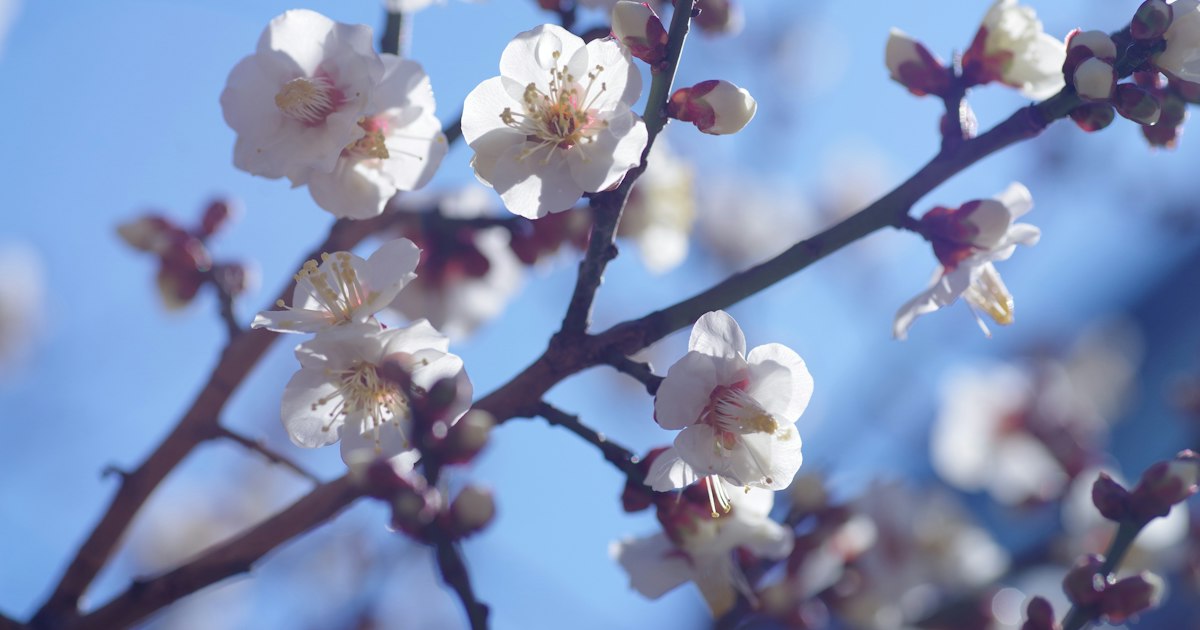
Photo by Hiroshi Tsubono on Unsplash
Thirty minutes outside Fukuoka City, Dazaifu feels like a different century. It’s a small town built almost entirely around one shrine — Dazaifu Tenmangu, dedicated to the ninth-century scholar-poet Sugawara no Michizane, who was exiled here and, after his death, deified as the god of learning. Students across Japan still travel to pray here before exams, and every February the shrine’s thousands of plum trees turn the whole precinct pink and white, tying back to a poem Michizane wrote about the plum tree he left behind in Kyoto. It’s an easy half-day or full-day trip from Fukuoka and one of the better-value destinations in Kyushu.
Why Dazaifu Matters: A Shrine Built for a Scholar
Dazaifu wasn’t always a quiet shrine town — during the Nara and early Heian periods it was the administrative and military headquarters for all of Kyushu, essentially a regional capital. Michizane was sent here in 901 as a political exile, a demotion from his post in the imperial court, and died two years later. Misfortunes back in the capital were blamed on his angry spirit, so the court deified him as Tenjin, god of scholarship, and built Dazaifu Tenmangu over his grave. That origin story is why the shrine is less about grand spectacle and more about the specific, earnest ritual of students writing wishes on wooden ema plaques before entrance exams — you’ll see this year-round, but especially heavily from January through March, exam season in Japan.
Getting There from Fukuoka
The easiest route is the Nishitetsu train, not JR. From Nishitetsu Fukuoka (Tenjin) Station, take the Nishitetsu Tenjin Omuta Line to Nishitetsu Futsukaichi Station (about 15 minutes), then transfer to the short Nishitetsu Dazaifu Line for the final two stops to Dazaifu Station (about 5 minutes). Total travel time is roughly 30 minutes, and the one-way fare is around 420 yen. Trains run frequently, so there’s no need to book ahead. From Dazaifu Station, it’s a flat, easy 5-10 minute walk down the covered approach street to the shrine gates — this is also where most of the food stalls and souvenir shops are, so budget extra time for browsing on the way in or out.
If you’re coming from Hakata Station on JR, you can take a local train to Futsukaichi and then a short bus or 15-minute walk, but it’s a less direct option than the all-Nishitetsu route. There’s no need for a rental car; parking near the shrine is limited and the train is faster during the day.
When to Go: Plum Blossom Season and Beyond
Dazaifu Tenmangu has roughly 6,000 plum trees on its grounds, and the famous one — the “flying plum” (tobiume) beside the main hall — is said to have followed Michizane from Kyoto to Dazaifu overnight out of devotion. Peak bloom typically runs from early February to early March, with the exact window shifting year to year depending on winter temperatures; mid-to-late February is usually the safest bet. This is also entrance exam season, so you’ll see the shrine at its most emotionally charged, with students and parents praying intensely at the honden.
Outside plum season, early autumn is pleasant and far less crowded, and the shrine grounds themselves are attractive any time of year thanks to the arched Taiko bridge and large pond. Avoid Japanese public holidays and weekends in February if you want to move through the grounds without a crowd — weekday mornings, ideally before 10am, are noticeably quieter. The shrine grounds are open roughly 6am to 7pm (hours shift seasonally) and are free to enter; the treasure hall and adjoining garden charge a separate admission, around 500 yen for adults.
What to See Beyond the Main Shrine
Don’t rush straight back to the train after the main hall — Dazaifu rewards a slower pace. A long, partly underground moving walkway connects the shrine precinct to the Kyushu National Museum, one of only four national museums in Japan and the only one outside the Honshu-Shikoku-Kyushu “mainland” cluster. It focuses on Japan’s historical exchange with the rest of Asia and is worth 60-90 minutes; adult admission is around 700 yen, with special exhibitions priced separately.
A 10-minute walk from the shrine, Komyozenji Temple is a quiet counterpoint to Tenmangu’s crowds — a small Zen temple with a raked-gravel dry garden out front and a moss garden behind, both viewable for a token entry fee of around 200 yen. It rarely appears on rushed itineraries, which is exactly why it’s worth the detour if you want a few minutes of stillness.
Eating Your Way Down the Approach Street
The approach street (sandō) leading to the shrine is lined with shops selling Dazaifu’s signature snack, umegae mochi — a thin, slightly crisp grilled mochi cake stamped with a plum blossom pattern and filled with sweet red bean paste. Most shops sell them fresh off the grill for around 150-160 yen each, and multiple long-running shops (Kasanoya and Umegaemochi Souhonten among them) compete along the same stretch, so it’s worth comparing a couple before committing. It’s a lighter, more portable cousin to the red bean desserts covered in our guide to zenzai and oshiruko, and a good quick bite between the station and the shrine gate rather than a sit-down meal.
Common Mistakes to Avoid
- Treating it as a quick photo stop. The shrine grounds plus museum plus Komyozenji easily fill 3-4 hours; rushing it to catch an earlier train back to Fukuoka means missing most of what makes Dazaifu worthwhile.
- Going on a weekend during peak plum bloom without a plan. The approach street gets genuinely packed in mid-to-late February weekends. If your dates are flexible, a weekday morning visit is dramatically calmer.
- Assuming JR gets you there directly. The Nishitetsu line is the standard route from central Fukuoka; checking a generic train app without specifying Nishitetsu stations can send you on a slower, more complicated path.
- Skipping rain gear in winter. February in Fukuoka brings cold rain as often as clear skies; a compact umbrella is worth carrying, and our guide to Japan’s clear vinyl umbrellas covers where to grab a sturdier one than the convenience-store minimum if yours gives out.
Where to Stay
Dazaifu itself has limited lodging, so most visitors base themselves in Fukuoka City and day-trip in — Tenjin or Hakata areas put you within the same 30-minute Nishitetsu ride and give you far more dining and nightlife options in the evening. If you’d rather slow down and stay somewhere more local and personal than a city hotel, it’s worth reading our guide to booking a minshuku, as small family-run guesthouses do exist in the quieter parts of greater Fukuoka and northern Kyushu. And if Dazaifu is one stop on a broader Kyushu itinerary, it pairs naturally with destinations further south — our Kagoshima and Sakurajima guide is a useful next stop if you’re building out a longer regional loop rather than a single Fukuoka day trip.