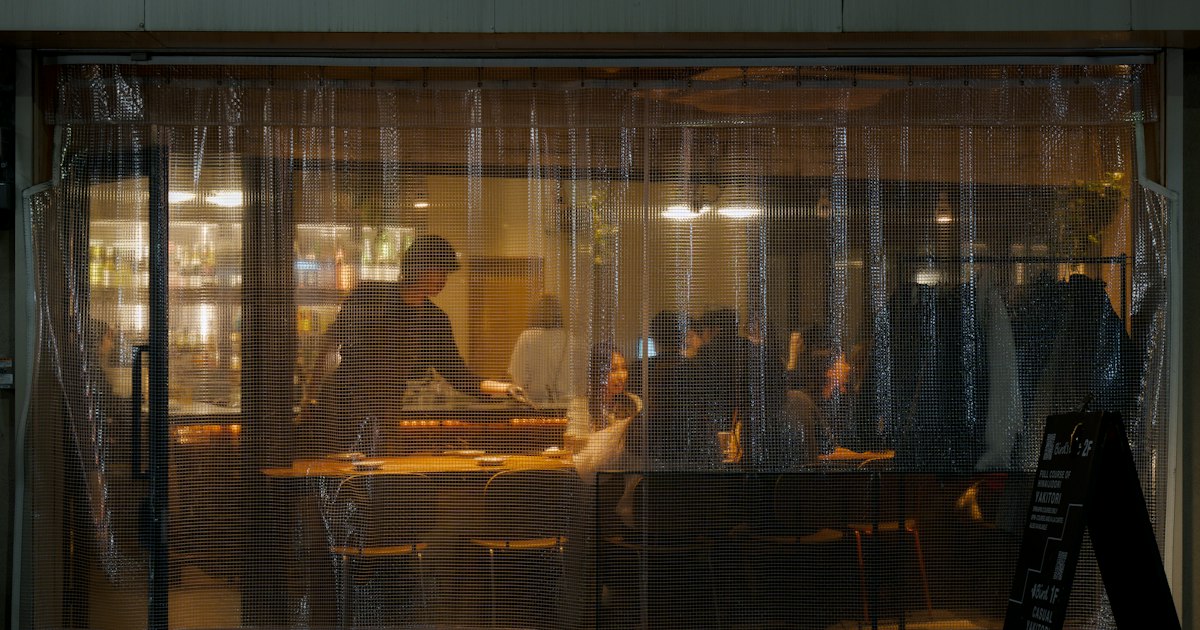
Getting a table at a great restaurant in Japan is often harder than getting on the flight to Tokyo in the first place. Top sushi counters, yakiniku grills, and kaiseki rooms can be booked out weeks in advance, many won’t take a reservation from anyone who can’t speak Japanese, and a growing number now charge a real penalty if you simply don’t show up. None of this is explained clearly to visitors before they land. Here’s how the reservation system actually works, which apps to use, and how to avoid the mistakes that get foreign tourists blacklisted or billed.
Why Japan’s reservation culture is different
Many sought-after restaurants in Japan are tiny — eight seats at a sushi counter, twelve at a yakitori bar — and the chef is often cooking a fixed omakase course for everyone at once. A no-show isn’t just a lost table; it’s wasted fish, wasted prep time, and a gap the chef can’t fill on short notice. Because of this, reservation etiquette is taken far more seriously than in most Western dining cultures, and the consequences for breaking it (cancellation fees, being refused future bookings, having your name flagged) are correspondingly stricter.
Add to that a language barrier — most of these restaurants have no English-speaking staff and no online booking widget — and it’s easy to see why visitors either give up and eat somewhere generic, or stumble into a booking mistake that costs them money.
Tabelog: Japan’s reservation and review platform
Tabelog (tabelog.com) is Japan’s dominant restaurant review and booking site, roughly equivalent to a hybrid of Yelp and OpenTable. Scores run from 1.0 to 5.0, and anything above 3.5 is genuinely good; above 4.0 is considered elite and usually means a multi-week wait for a table. The English version of the site (tabelog.com/en) covers major cities but has far fewer listings than the Japanese version, so it’s worth checking both.
Not every restaurant on Tabelog accepts online booking — many only list a phone number. For those that do support reservations, you’ll usually see one of three paths:
- Instant online booking — select a date, time, and party size directly on the page. No account needed for some restaurants; others require a free Tabelog account.
- Request-based booking — you submit a request and the restaurant confirms (or declines) within 24–48 hours. Common for smaller, high-demand places.
- Phone only — no digital option at all. This is still the norm for many one-star Michelin and traditional kaiseki restaurants.
If a restaurant is phone-only and you don’t speak Japanese, your hotel concierge can usually call on your behalf — this is one of the most useful (and underused) services a hotel offers, and it costs nothing.
OMAKASE: the app built for hard-to-book restaurants
The OMAKASE app (omakase.in) was created specifically to solve the “exclusive restaurant, no English support” problem. It specializes in high-end sushi, teppanyaki, and kaiseki restaurants — many of which don’t appear on any other booking platform — and lets you search, pay a deposit, and confirm entirely in English. Deposits are typically 30–50% of the course price and are usually non-refundable within a set window before your visit (commonly 3–7 days, varies by restaurant), which is clearly stated before you confirm.
Because OMAKASE restaurants skew toward the premium end — course menus commonly run ¥15,000–¥50,000 per person — it’s best suited to splurge meals rather than everyday dining. For mid-range and budget options, Tabelog’s broader listings or simply walking in are more practical.
Budget, mid-range, and splurge: where reservations actually matter
Reservation pressure in Japan isn’t evenly distributed. Knowing where it bites helps you decide where to spend the effort:
- Budget (no reservation needed): Chain restaurants like Gyoza no Ohsho, ramen shops, standing soba bars, and conveyor-belt sushi almost never take reservations and are built for walk-ins — a reliable fallback when your first-choice spot is full.
- Mid-range (reservation recommended): Izakayas, yakiniku, and specialty shops serving dishes like inarizushi or regional specialties such as katsuo no tataki fill up on weekend evenings but will often seat walk-ins on weekdays or early (before 6:30pm).
- Splurge (reservation essential): Omakase sushi, kaiseki, and single-chef counters routinely book out 2–8 weeks ahead. These are the restaurants worth using Tabelog or OMAKASE for well before your trip.
How no-show penalties actually work
No-show fees (“キャンセル料,” cancellation charges) are becoming standard at reservation-based restaurants, particularly counter-seating ones where the chef buys fish or meat specifically for confirmed guests. Typical structures:
- Full course price charged for a same-day no-show or cancellation with no notice.
- 50% charged for cancellations inside 24–48 hours of the reservation.
- Credit card required at time of booking on many English-friendly platforms (including OMAKASE), with the card charged automatically if you don’t cancel in time.
Beyond the money, repeat no-shows get your name and phone number flagged across Tabelog’s network, and some restaurants explicitly refuse future bookings from guests with a no-show history. If your plans change, cancel as early as possible through whatever platform you booked on — a short delay confirmed by email or app is far better than silence.
Common mistakes foreign visitors make
- Booking under a hotel’s name without saying so. If staff call to confirm and ask for “Suzuki-san’s reservation” and you don’t recognize the name, you may lose the table. Make sure the booking reflects whoever will show up to claim it.
- Ignoring party-size and time precision. Many kaiseki and omakase restaurants cook to the exact headcount and seating time booked — arriving 15 minutes late can mean missing the first courses entirely, and splitting or adding guests on arrival is often simply not possible.
- Assuming English support exists because the menu has English. An English menu doesn’t mean the booking line does. Confirm the reservation channel (online form, app, or phone-via-concierge) before counting on a restaurant.
- Not checking allergy/dietary policy in advance. Fixed-course restaurants often can’t accommodate dietary changes same-day; note allergies at the time of booking, not at the table.
- Forgetting cash-only policies. Smaller, traditional restaurants — especially the ones hardest to book — are frequently cash-only despite being expensive. Carry enough yen for the full bill.
With a little lead time — booking your splurge meal 2–4 weeks out on Tabelog or OMAKASE, keeping a cash-only chain restaurant in mind as backup, and canceling promptly if plans shift — you can eat at the restaurants Japan is actually famous for, rather than settling for whatever has an open table when you arrive hungry.