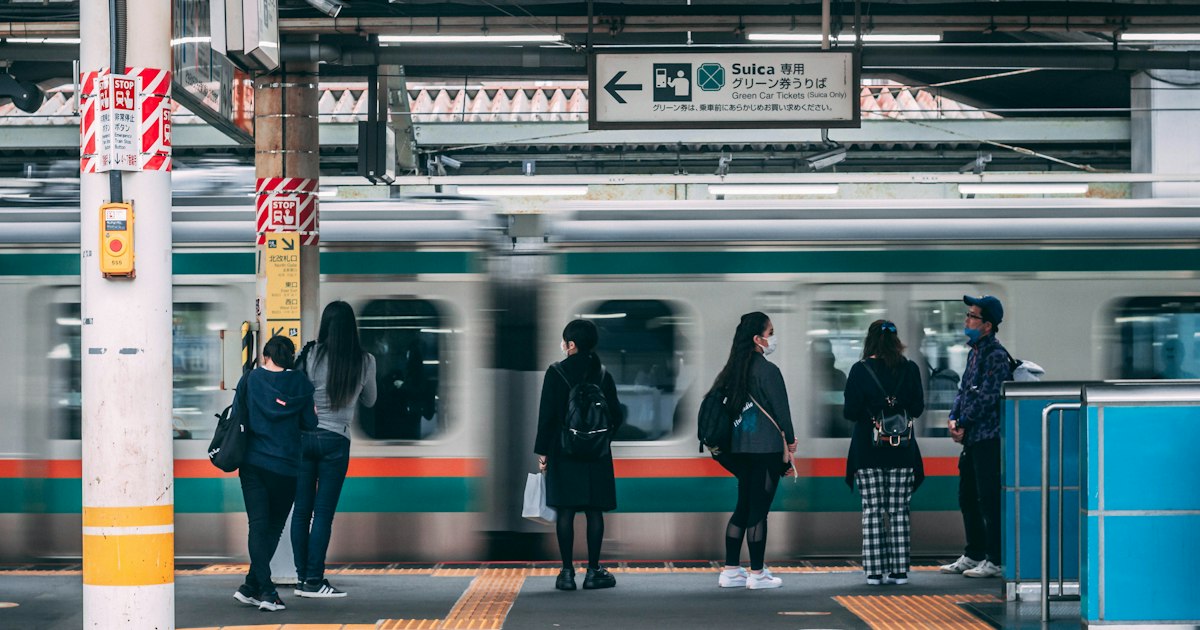
Photo by Kanchan Raj Pandey on Unsplash
If you’ve ridden a packed Tokyo or Osaka train during the morning commute, you’ve probably noticed a car near one end of the platform marked with pink signs and floor stickers, often with a sign reading “Women Only” in English and Japanese. These are josei senyo sharyo (女性専用車両), women-only train cars introduced on many Japanese commuter lines to cut down on groping and harassment during the worst of rush hour. They’re easy to use once you know the rules, but the hours, car numbers, and exceptions vary by line, and getting it wrong (as a man boarding by mistake, or as a woman not realizing a car has reverted to mixed use) is a common source of confusion for visitors. Here’s what you actually need to know.
Why Women-Only Cars Exist
Japan’s major train and subway operators introduced these cars in the early 2000s, starting with Keio and JR East, in direct response to chikan (痴漢) — groping — on crowded commuter trains. Surveys by operators and police consistently showed packed rush-hour trains, where bodies are pressed together and nobody can move, as the environment where most incidents occurred. Rather than relying solely on enforcement after the fact, operators carved out a car where women (and a few exempted groups) can ride without that risk during the two or three hours a day when trains are most crowded. The policy is voluntary and non-legally-binding — there’s no fine for a man who boards by mistake — but compliance is high, and stepping into the correct car matters socially even if it isn’t policed.
Which Lines Have Them, and Where the Car Is
Women-only cars run on most JR East lines serving central Tokyo (Saikyo Line, Chuo Line Rapid, Keihin-Tohoku Line, Yamanote Line on certain services, Sobu Line Rapid), on Tokyo Metro’s busier lines, and on nearly all major private railways into Tokyo — Odakyu, Keio, Tobu, Seibu, Keikyu, Tokyu. Osaka has them too, most notably on the Midosuji subway line and on JR West’s Kyoto and Kobe lines, and Nagoya’s Higashiyama subway line also runs one. The car position isn’t standardized citywide — it’s usually the car closest to one specific end of the platform (often the front car in the direction of travel, but check signage rather than assuming), and it can differ for the same line depending on direction. Platform floors are marked with pink paint or stickers at the exact spot where that car’s doors will stop, and the car itself has pink decals on the windows and doors. If you’re navigating a station for the first time, the same instinct that helps with reading station signage for ekinaka shopping malls — slow down and actually look at the floor and overhead signs rather than following the crowd — applies here too.
Exact Hours: When the Pink Rule Applies
This is the part that trips people up most: the women-only designation is almost always time-limited, not all-day. On most JR East lines it applies on weekday mornings only, typically from around 7:30 AM to 9:30 AM, covering inbound trains heading toward central Tokyo (Shinjuku, Tokyo, Shibuya). Outside that window, the same physical car is just a regular car — anyone can sit anywhere. A handful of lines add a second window, such as a weekday evening period (roughly 5:00 PM to 9:00 PM) on some Keio and Tobu services, and a few lines run the designation on the last train of the night regardless of day, since last trains get rowdy with late commuters. Weekends and public holidays are typically unrestricted on most lines, though a few private railways keep a limited weekend window too. Because this varies line by line, look at the sticker on the car door itself — it prints the specific days and times in both Japanese and usually English — rather than assuming the rule you saw on one line applies system-wide.
Who’s Allowed On
The cars are for women of all ages, plus a short list of commonly exempted riders: elementary-school-age boys and younger, passengers with disabilities, and their caregivers or assistants regardless of gender. Men accompanying a wheelchair user or a visually impaired passenger, for instance, are explicitly welcome. If you’re a man who steps into the wrong car during the restricted hours, you won’t be fined or confronted — station staff and fellow passengers in Japan are generally conflict-averse about it — but the polite move is to quietly move to the next car at the following stop rather than staying put. Conversely, if you’re traveling with a male partner or son older than elementary-school age during the restricted hours, plan to split up for that car or just ride together in an adjacent one.
How to Spot the Signs on the Platform and Car
Look for three things: a pink (sometimes pink-and-purple) rectangular sign hanging above the platform at the boarding point, floor decals in the same pink color scheme marking where the doors align, and a sticker on the train car’s windows or doors showing a simple pictogram of women and children with the operating hours printed underneath in small text. Announcements at major stations sometimes repeat the rule in Japanese and English just before the restricted period starts. If you can’t find a clear sign and you’re unsure, it’s completely acceptable to simply watch which car locals who look like they’re specifically waiting in a particular spot board, or to ask station staff — pointing at the platform and saying “josei senyo sharyo” (女性専用車両) usually gets you a point in the right direction.
Practical Tips for Visitors
- Traveling solo as a woman during rush hour: using the car costs nothing extra and is the single easiest way to avoid the worst of the 7:30–9:30 AM crush on lines like the Saikyo or Chuo Rapid, where trains can run well past 150% capacity.
- Traveling as a mixed-gender pair or family: just board the adjacent regular car together — there’s no inconvenience to this, and it’s extremely common.
- With a JR Pass or IC card: the women-only designation has zero effect on fares or ticketing; it’s purely about which door you stand in front of when the train arrives, so your approach to paying fares doesn’t change at all — this is strictly a big-city commuter rail and subway feature, not something you’ll encounter on rural one-man trains.
- Common mistake: assuming the rule is all-day. Riding the “pink car” at 2 PM or on a Sunday is completely normal for everyone, since the restriction has lapsed outside the posted hours.
- Common mistake: assuming every line has one. Not all routes do, particularly outside the three major metro areas, so don’t go hunting for pink signs on, say, a countryside JR local line.
None of this is something you need to plan around in advance — there’s no booking, no extra cost, and no ticket to buy. It’s simply useful to recognize the signage so you’re not confused when you see it, and to know you have the option during the morning squeeze in Tokyo, Osaka, or Nagoya if you’d rather skip the densest part of the crowd.