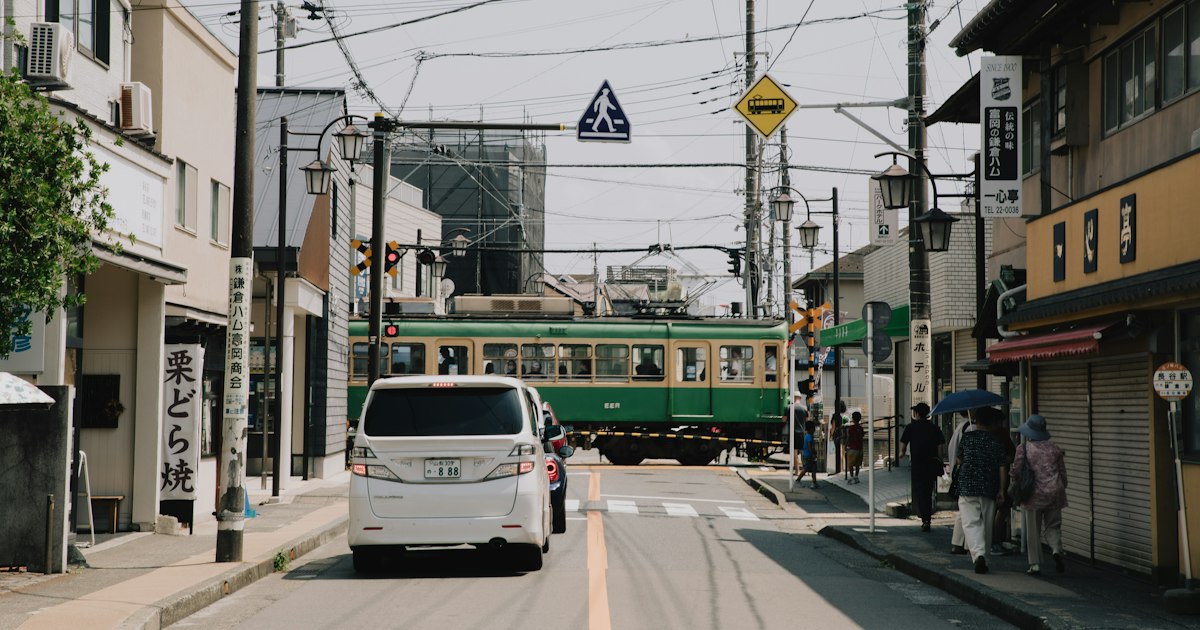
Photo by Crystal Fang on Unsplash
Japan’s trains get all the attention, but local buses are often the only way to reach a quiet mountain shrine, a countryside onsen, or a bus-only neighborhood just outside a station. The problem is that bus boarding in Japan isn’t standardized — some buses want you at the front door with exact change ready, others want you at the back door with a paper ticket in hand. Get it backwards and you’ll hold up the whole bus while the driver and other passengers wait patiently (but very visibly) for you to figure it out. Here’s how both systems actually work, so you can board like you’ve done it a hundred times.
Two Systems, One Country
Japan runs two completely different boarding-and-payment setups, and which one you encounter depends on the city and sometimes even the specific route:
- Flat-fare system: every ride costs the same amount regardless of distance. You board at the front, pay immediately, and exit from the rear or a middle door.
- Distance-fare system: the fare increases the farther you ride. You board at the rear door, take a numbered ticket, and pay the correct amount at the front when you get off.
Neither system is better — they’re just built for different route types. Flat fare suits short, dense city-center loops. Distance fare suits long rural or suburban routes where a single flat price wouldn’t be fair to someone riding one stop versus someone riding 40 minutes.
Flat-Fare Buses: Board at the Front, Pay Immediately
This is the simpler system, and you’ll find it on big-city municipal buses — Tokyo’s Toei buses are the classic example, with a flat adult fare in the low-200-yen range per ride (fares creep up every few years, so check the sign posted by the farebox rather than relying on an old guidebook figure). Kyoto City Bus also runs a flat fare of 230 yen for adults within its central zone, which covers most of the temples and neighborhoods tourists actually visit.
The routine: enter through the front door next to the driver, pay or tap as you board, and exit from the rear or middle door once the bus stops. If you’re paying cash, the farebox has a built-in coin changer that will break a 1,000-yen note into coins — it generally won’t accept 5,000 or 10,000-yen bills, so carry smaller notes before you need a bus. Drop in exact change or let the machine make change, then take your receipt if the machine prints one.
Announcements inside the bus (and an LED or LCD display at the front) show the next stop in Japanese and usually English. Press the request button mounted on the poles or ceiling well before your stop — the driver won’t stop unless someone has pressed it or someone is waiting at the stop to board.
Distance-Fare Buses: Board at the Rear, Take a Ticket, Pay at the Front
This is the system that trips up visitors, and you’ll meet it on most regional and rural bus companies — think buses around Nara’s outer temples, countryside routes in Kyoto Prefecture, Hiroshima-area lines, and small-city buses all over Japan.
Here’s the sequence:
- Board through the rear door only. Boarding at the front on these buses is reserved for the driver’s side and will confuse everyone, including you.
- As you step on, pull a small numbered paper ticket (seiriken) from a dispenser box mounted near the door. If you’re using an IC card instead, tap it on the card reader right there — don’t skip this tap, since it’s how the system marks where your trip started.
- Watch the electronic fare board at the front of the bus. It displays a running row of numbers, each with a yen amount underneath, and the amounts climb as the bus travels. Find the number matching your ticket to see your current fare.
- When you reach your stop, move to the front, and either drop your ticket plus the exact cash amount into the farebox, or tap your IC card again on the front reader. The card automatically calculates and deducts the correct distance-based fare — no math required.
If you tapped an IC card to board but forgot to tap again when leaving, drivers will usually catch it before you step off, since an unclosed trip shows up on their reader. It’s a minor hassle to fix on the spot, so get in the habit of tapping both ends.
IC Cards Make Both Systems Foolproof
Whether you’re dealing with flat fare or distance fare, a prepaid IC card (Suica, Pasmo, ICOCA, and similar cards are all interchangeable nationwide now) removes almost all the guesswork. On flat-fare buses you tap once, when boarding. On distance-fare buses you tap twice — once at the rear when you get on, once at the front when you get off — and the correct fare is deducted automatically, including any transfer discounts the local operator offers.
If you’re arriving via Haneda and plan to connect onto local buses once you’re in central Tokyo, our guide to the Tokyo Monorail vs. Keikyu Line covers how to get into the city first — the same IC card you use on that train will work on every bus covered here.
Common Mistakes Tourists Make
- Boarding the wrong door. Always glance at the door the people ahead of you are using, or check for a small sign near the door reading “exit” or “entrance” (often in English on tourist-heavy routes).
- Not having small change ready. Farebox coin changers are slow if you dump in a 1,000-yen note at the last second while the whole bus waits. Break larger bills at a convenience store beforehand.
- Losing the paper ticket. On distance-fare buses, losing your numbered ticket usually means paying the maximum fare on the route when you exit, since the driver can’t verify your boarding point. Keep it somewhere you won’t fumble for it.
- Assuming all buses in one city work the same way. Even within Kyoto, most central-zone buses are flat fare, but a handful of outer routes toward the hills switch to distance fare. The boarding door is your clue — if there’s a ticket dispenser at the rear door, it’s a distance-fare route.
Timing, Weather, and a Few Practical Tips
Local buses run less frequently than trains — often every 15 to 30 minutes outside big cities, and much less on weekends and holidays in rural areas. Build in buffer time, especially for the last bus of the day, which can be surprisingly early (sometimes before 9 p.m. in smaller towns). Winter mornings mean long waits at unheated stops; a hot canned coffee from a nearby vending machine (see our guide to hot vending machine drinks) makes the wait far more bearable.
Bus terminals at major stations are also a good spot to grab a fast meal before a longer ride — many station buildings have a standing noodle counter, and our piece on eki soba standing noodle stalls explains how to order one in under two minutes. And if buses aren’t your only option for getting across a city, Tokyo’s Sumida River water bus is a scenic alternative worth comparing for certain routes.
Once you’ve ridden a flat-fare bus and a distance-fare bus each one time, the whole system clicks into place — and you’ll have access to places the trains simply don’t reach.