Skip the subway for an afternoon and let the river do the work. The Tokyo Water Bus runs from Asakusa, past the Tokyo Skytree and a string of bridges, out to the futuristic skyline of Odaiba — and for the price of a couple of convenience-store lunches, it’s one of the best low-effort views in the city. Here’s how to actually plan the trip, not just admire it from a brochure.
What the Tokyo Water Bus Actually Is
The service is run by Tokyo Mizube Line (formerly known as Tokyo Cruise Ship Co.), and it’s a genuine public transit option, not a tour-bus gimmick. Regular boats are simple, Suica/Pasmo-friendly commuter ferries that locals use to skip traffic. Layered on top of that are a handful of special-design boats — most famously Himiko and Hotaluna, both designed by manga artist Leiji Matsumoto (the creator of Space Battleship Yamato) — which look like something out of an anime and run the same river for a premium fare.
The main route for visitors links Asakusa Pier, near the Azumabashi bridge, to Hinode Pier near Tokyo’s waterfront warehouse district, and onward to Odaiba Seaside Park and Odaiba Kaihin Koen. Along the way you pass under more than a dozen bridges, each a different color and era, with the Skytree receding behind you and the Rainbow Bridge growing larger ahead.
Getting to the Asakusa Pier
The pier sits right beside Azumabashi Bridge, about a 5-minute walk from Asakusa Station (served by the Ginza and Asakusa subway lines, plus the Tobu Skytree Line). It’s an easy add-on to a Senso-ji temple visit — walk down through Nakamise shopping street, see the temple, then head toward the river. If you want lunch before boarding, the Asakusa area is packed with old-school rice-bowl shops; it’s a good spot to try a bowl of oyakodon or katsudon before you commit to an hour on the water with no food service.
Routes, Prices, and How Long It Takes
There are a few ways to make the trip, and the price difference comes down to boat type and whether you transfer:
- Asakusa → Hinode Pier (regular boat, ~35–40 minutes): the cheapest leg, roughly ¥780–900 one-way for adults, half that for children. IC cards work on most standard-line boats.
- Hinode Pier → Odaiba Seaside Park (regular boat, ~20 minutes): an additional ¥400–500 or so one-way.
- Direct Asakusa → Odaiba on a standard boat when scheduled, or on Himiko/Hotaluna (~60 minutes): figure around ¥2,000 one-way for the special-design boats, since the fare covers the design premium, not just the ride.
Fares and schedules change periodically, so treat these as planning estimates and confirm current prices and departure times on the Tokyo Mizube Line website before you go. Boats generally run every 35–60 minutes between late morning and early evening; there’s no late-night service, so plan your return before sunset unless you’ve confirmed the last departure.
Himiko and Hotaluna: The Boats Worth Booking Ahead
If you only ride the water bus once, the glass-domed Himiko or Hotaluna is the one to pick — curved cabins, mood lighting, and a silhouette that looks nothing like a commuter ferry. The catch is that seats are limited and these boats run fewer times per day than the standard fleet, so weekend and holiday departures can sell out. Reserve a seat online in advance through the official Tokyo Mizube Line site rather than showing up and hoping. Also note that IC cards generally aren’t accepted on these special boats — you’ll need a paper or online ticket purchased separately from the regular water bus fare system.
Best Time to Ride
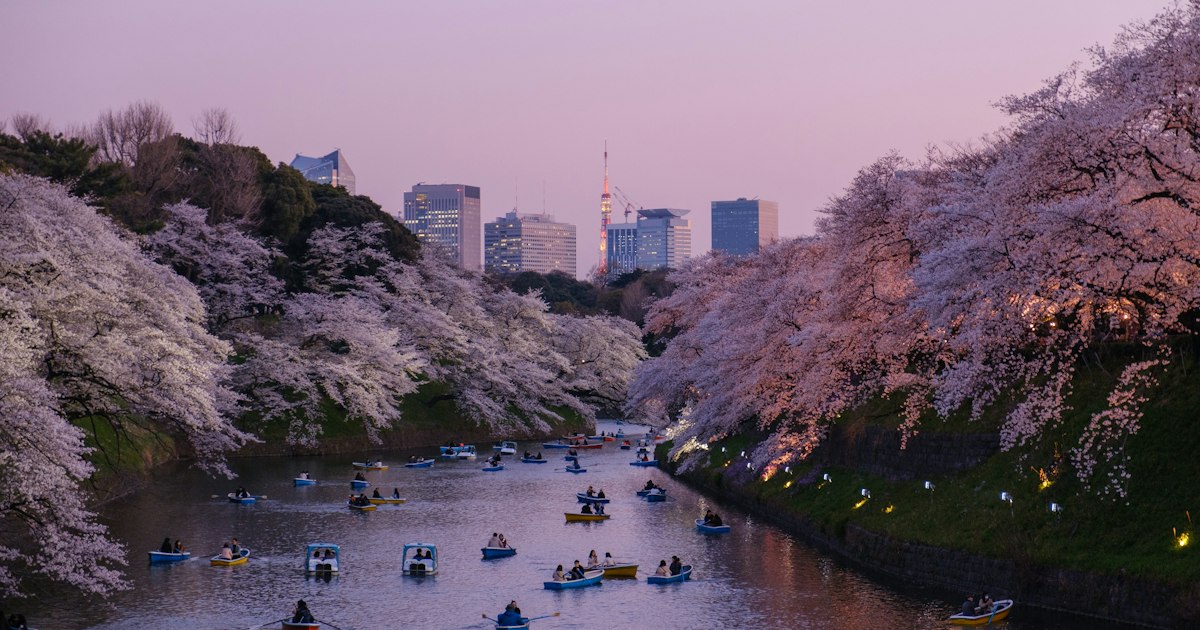
Spring (late March to early April) is the classic pick, since the Sumida River banks near Asakusa are lined with cherry trees you’ll see from the water as you pull away from the pier. Summer afternoons are hot with little shade on deck, but a late-day or early-evening departure rewards you with the Rainbow Bridge lit up as you arrive in Odaiba, and late July brings the Sumida River Fireworks Festival, when boats and schedules get crowded and should be booked well ahead. Autumn and winter give the clearest, haze-free skyline views, and winter evenings pair nicely with Odaiba’s seasonal illuminations once you dock. Whatever the season, go on a clear day — river mist and drizzle cut visibility and make the ride feel a lot less special.
Common Mistakes to Avoid
- Assuming one ticket covers everything. The regular line and the Himiko/Hotaluna boats use separate ticketing. If you want the futuristic boat specifically, buy that ticket, not a standard water bus pass.
- Not reserving ahead on weekends. The special-design boats have limited capacity and sell out faster than people expect, especially around cherry blossom season and summer weekends.
- Forgetting it’s point-to-point river transit, not a loop. If you ride one-way to Odaiba, you’ll need to plan your return via the Yurikamome line or the boat back — don’t assume the same vessel turns around immediately.
- Skipping weather checks. Service can be delayed or canceled in strong wind or heavy rain, which matters more here than on a train, since there’s no backup departure five minutes later.
- Underestimating total trip time if transferring at Hinode Pier. Waiting for a connecting boat can add 20–30 minutes beyond the time printed for each individual leg.
Budget, Mid-Range, and Splurge Options
Budget: ride the standard boat Asakusa → Hinode Pier, pay with your IC card, and treat it as cheap transit with a bonus view — no reservation needed.
Mid-range: take a direct standard-line sailing Asakusa → Odaiba when the schedule allows, getting the full river-to-skyline arc in one uninterrupted ride without the design-boat premium.
Splurge: book a reserved seat on Himiko or Hotaluna for the full Asakusa–Odaiba run, ideally timed for late afternoon so you watch the light change over Tokyo Bay. Once you land in Odaiba, it’s an easy segue into a relaxed evening — Odaiba also has a cluster of head spa-style wellness spots nearby if you want to unwind after a day of sightseeing. And if the idea of a scenic boat ride from Tokyo has you hooked, the ferry crossing to climb Mount Nokogiri in Chiba makes a solid full-day follow-up trip using the same water-first mindset.