Order “udon” in Nagasaki and you might get a plate of crunchy, deep-fried noodles smothered in a thick, glossy sauce piled high with pork, squid, and vegetables — nothing like the soft wheat noodles the word usually means elsewhere in Japan. This is sara udon (“plate noodles”), a dish born in Nagasaki’s Chinese immigrant community a century ago, and it’s one of the city’s most distinctive, least-exported foods. Unlike ramen or udon, it almost never travels well outside Nagasaki, so eating it here is genuinely a once-in-a-trip experience rather than something you can approximate back home.
What Sara Udon Actually Is
Sara udon was invented alongside champon at Chinese restaurants in Nagasaki in the early 1900s, both dishes built on the same stir-fried mix of pork, seafood, cabbage, bean sprouts, and kamaboko (fish cake) in a thick, slightly sweet soy-and-pork-bone sauce. The difference is the noodles: champon uses thick, soft noodles simmered directly in the broth, while sara udon uses either thin, crispy deep-fried noodles (the more common style, called “hosomen” style) or thick pan-fried noodles that stay chewy in the middle (the original, older style). The crispy-noodle version is what most visitors picture — you pour the sauce over the noodles table-side and watch them soften slightly while staying crunchy underneath, texturally closer to a loaded plate of chow mein than to any noodle soup.
Because the base ingredients overlap so much, most Nagasaki restaurants serve both champon and sara udon on the same menu, so you can compare them side by side in one visit if you’re not sure which you’ll prefer.
Where to Try It: Budget to Splurge
Budget (¥700–900): Kyushu-wide food court chain Ringer Hut (リンガーハット) serves a reliable, inexpensive version of both sara udon and champon, with locations inside Nagasaki Station’s Amu Plaza building and scattered across the city. It’s not the most authentic rendition, but it’s a fair introduction and useful if you’re short on time or budget — a set with gyoza runs around ¥900–1,100.
Mid-range (¥1,000–1,800): Kouzanrou (江山楼) in Nagasaki’s Shinchi Chinatown is one of the most respected names for both champon and sara udon, run by a family with roots in the dish’s history; expect to pay roughly ¥1,300–1,600 for a generous plate. Shikairo (四海樓), widely credited as the restaurant that invented champon (and by extension sara udon), has a multi-floor restaurant near Oura Church with harbor views and sara udon in the ¥1,200–1,700 range — it’s touristy but the historical pedigree and view make it worth the trip at least once.
Splurge (¥2,000+): A handful of Chinatown restaurants offer premium versions with larger seafood portions — bigger shrimp, scallops, or squid — pushing the price toward ¥2,000–2,500. At this level you’re paying mainly for ingredient quality and portion size rather than a fundamentally different dish, so it’s only worth it if you want to go all-in on seafood.
Getting There and When to Go
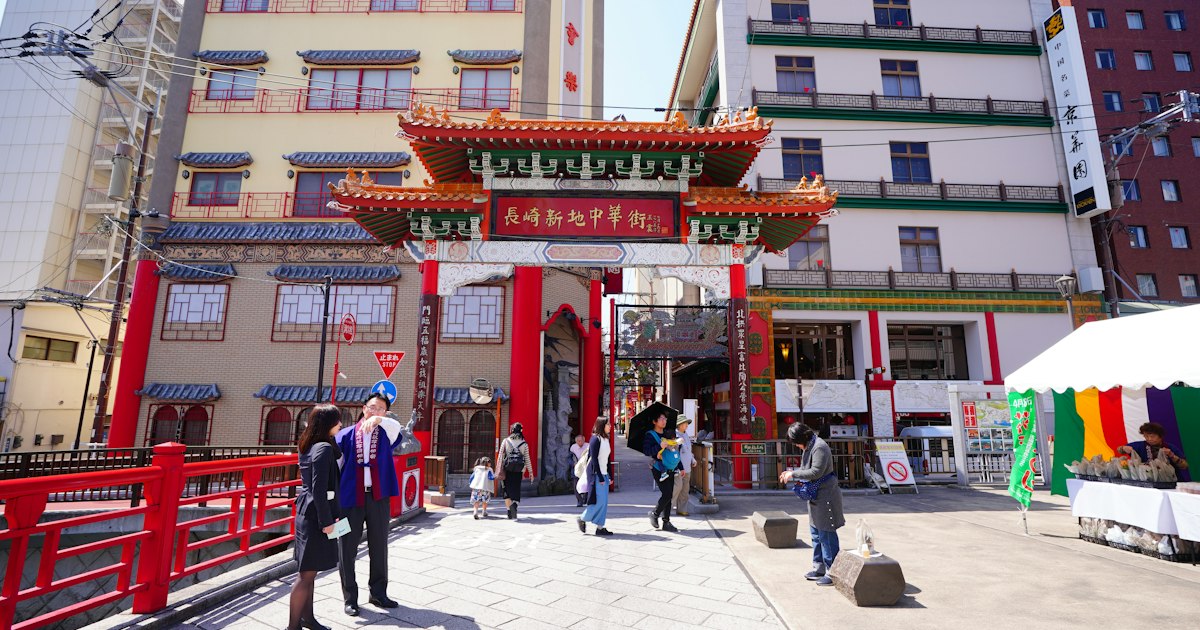
Nagasaki’s Chinatown (Shinchi Chinatown) is a short walk from both the Ishibashi tram stop and Nagasaki Station — from the station it’s about 10–15 minutes on foot, or a few minutes by the city’s old-fashioned tram system (fare is a flat ¥140–160 per ride, paid in cash or with an IC card on board). Shikairo, slightly outside Chinatown proper near Oura Church, is reachable via the Ishibashi or Oura Tenshudo-dori tram stops.
Most sara udon restaurants open for lunch around 11:00 or 11:30 and close mid-afternoon before reopening for dinner around 17:00–17:30, closing again around 21:00–22:00; a few, like Ringer Hut outlets, stay open straight through the afternoon. Lunchtime (11:30–13:00) at the well-known Chinatown spots gets genuinely busy with both tourists and locals, especially on weekends, so arriving right at opening or after 13:30 avoids the worst of the wait. There’s no strong seasonal angle to sara udon — it’s eaten year-round — but it pairs naturally with a visit during Nagasaki Lantern Festival in late January to mid-February, when Chinatown is strung with thousands of lanterns and the area is at its liveliest.
How to Order and Eat It
At most restaurants you’ll be asked to choose between the crispy thin-noodle style and the thicker pan-fried style — if the menu doesn’t specify, the default is almost always the crispy version. The sauce arrives already poured over the noodles in most restaurants, but at some traditional spots it’s brought separately so you can pour it yourself at the table; do this just before eating; the noodles lose their crunch within a few minutes once soaked. Many places offer a half-size portion (hansen, roughly ¥700–900) if you’re also ordering champon or other dishes to share, which is a good way to try both noodle styles in one sitting without overordering.
Common Mistakes to Avoid
- Confusing it with regular udon: If you ask a non-Nagasaki restaurant for “udon” expecting this dish, you’ll get soft noodle soup instead — sara udon is a regional specialty name, not a noodle type recognized nationwide.
- Waiting too long to eat: Letting the dish sit after the sauce is poured turns the signature crunch into a soggy mess within 5–10 minutes. Treat it like a dish to start on immediately, not one to photograph extensively first.
- Skipping Chinatown for only chain versions: Ringer Hut is convenient but represents the commercial, standardized version of the dish; if time allows even one meal in Shinchi Chinatown, the flavor difference in the sauce and ingredient freshness is noticeable.
- Not checking lunch break closures: Several traditional restaurants close between lunch and dinner service (roughly 14:00–17:00), which catches visitors off guard mid-afternoon — check hours before making a special trip.
Pairing It With the Rest of Your Nagasaki Visit
Chinatown and Oura Church sit within Nagasaki’s compact historic district, so a sara udon lunch slots easily into a half-day that also covers Glover Garden and the church itself. If you’re building out a broader food-focused itinerary around Kyushu, it’s worth knowing that Nagasaki’s regional noodle culture has its own distinct identity compared to what you’ll find elsewhere — for a contrasting deep dive into how another noodle dish is presented to visitors, the Shin-Yokohama Raumen Museum near Tokyo offers a theme-park-style look at ramen history that makes a useful comparison point for how differently Japan’s various noodle traditions evolved. And if your trip includes a more formal dining experience elsewhere in the country, guides to kaiseki ryori or shojin ryori are worth reading before you go, since they sit at the opposite end of the spectrum from sara udon’s casual, everyday character.
Sara udon rewards a bit of planning: go hungry, go early or after the lunch rush, and don’t be afraid to order the half-size portion so you can try both noodle styles. It’s inexpensive, filling, and — outside Nagasaki — nearly impossible to find done properly, which makes it one of the more worthwhile detours for anyone building a food-focused stop in Kyushu.