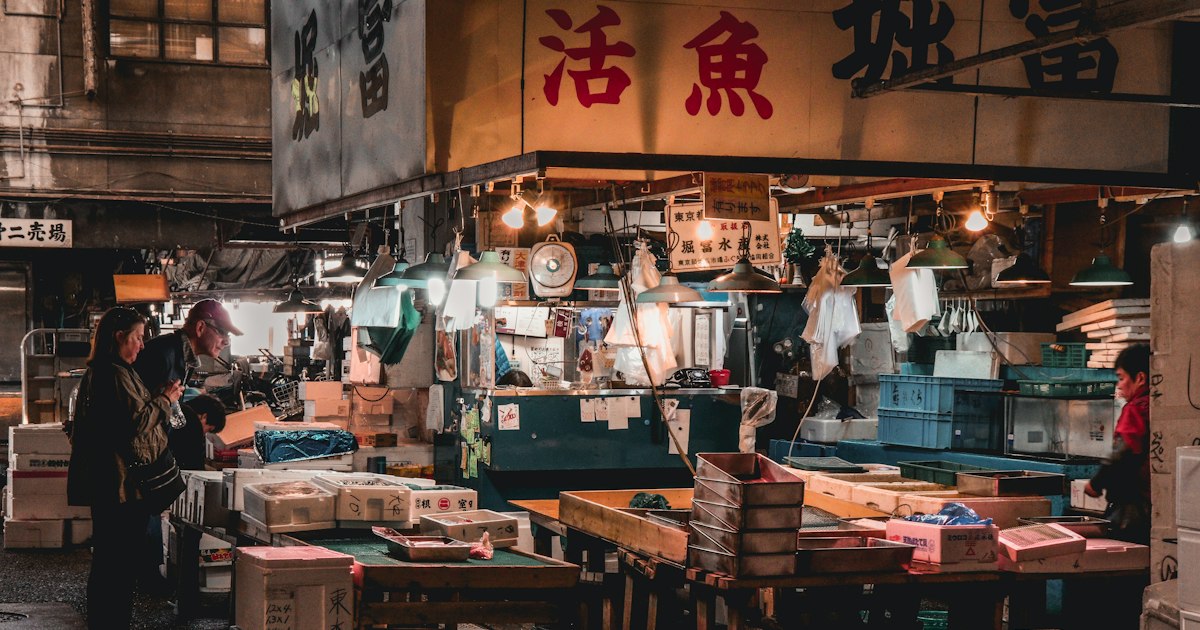
Photo by Michael DeMarco on Unsplash
Walk through almost any Japanese fishing town in the cooler months and you’ll spot rows of flattened fish pinned to bamboo racks, glistening faintly as they cure in the salt air. This is himono (干物), Japan’s centuries-old method of salting and sun-drying seafood to concentrate its flavor and make it keep longer without refrigeration. It’s humble food — breakfast-table fare, not a tourist spectacle — but for visitors willing to seek it out, himono shops offer some of the most honest, affordable eating and souvenir-shopping in the country. Here’s where to find them, what to buy, and how not to waste your money on the wrong fish.
What Is Himono, Exactly?
Himono simply means “dried thing.” Fish is gutted, split open (usually butterflied from the belly), soaked briefly in a salt brine, then air-dried for anywhere from a few hours to a couple of days, traditionally outdoors on wooden or bamboo racks facing the sea breeze. The salt and dehydration pull out moisture, which firms up the flesh, deepens the umami, and lets the fish keep for days in the fridge or months in the freezer. It’s not the same as the heavily smoked or bone-dry jerky-style preservation found elsewhere — most himono is still moist and tender inside, meant to be grilled fresh, not eaten raw out of the package.
Numazu: Japan’s Himono Capital
If you only visit one himono town, make it Numazu, on the Izu Peninsula in Shizuoka Prefecture. Numazu’s fishing port lands enormous volumes of aji (horse mackerel) and saba (mackerel), and the town’s dry winter winds off Suruga Bay are considered ideal for curing fish, which is why dozens of wholesalers and retail shops cluster around the port. The market complex at Numazu Port sells vacuum-packed himono by the piece or in gift boxes, and several attached restaurants serve himono teishoku — a grilled dried fish, rice, miso soup, and pickles set — for roughly ¥900–1,500. Expect simple vacuum packs of two aji for around ¥500–800, while a single premium kinmedai (golden eye snapper), an Izu specialty, can run ¥1,500–3,000 depending on size.
Numazu Station is about 35 minutes from Tokyo on the Kodama shinkansen, or roughly 1.5–2 hours on the regular Tokaido Line for a cheaper fare. From the station, the port area is a 15–20 minute walk or a short bus/taxi ride. Shops generally open around 9am and close by 5pm, with some closing one weekday (often Wednesday) — hours shift seasonally, so it’s worth confirming locally rather than planning around a single storefront. If you’re already routing through this corner of Shizuoka, it pairs naturally with a stop at the real wasabi farms in Shizuoka and Izu — both are built around the same cold, clean coastal and mountain water that makes this region’s food distinctive.
Atami and the Izu Coast’s Drying Racks
A few stops up the line, Atami is smaller and more tourist-oriented, but you’ll still see himono hanging in shop windows and occasionally on outdoor racks near the harbor, especially in the shopping lanes around Atami Station and Atami Ginza. Prices here run slightly higher than Numazu because of foot traffic, but it’s a convenient stop if you’re doing a day trip from Tokyo and don’t have time to detour to Numazu. Further down the Izu Peninsula, smaller ports like Shimoda and Ito sell himono at roadside fish markets, often cheaper than the station-adjacent shops but with less English signage.
Beyond Izu: Hakodate and Enoshima
Himono culture isn’t limited to Shizuoka. In Hakodate, Hokkaido, the morning market (Hakodate Asaichi) is famous for squid — you can even pay a few hundred yen to fish live ika out of a tank yourself and have it prepared on the spot, and dried surume (shredded or whole dried squid) is sold everywhere as a snack. On the other side of the country, Enoshima island near Kamakura is the place for shirasu — tiny dried baby sardines, sold as shirasu-boshi (lightly dried) or kama-age shirasu (boiled, barely dried), both eaten over rice as a donburi or bought in small packs as a lighter, less pungent souvenir than a whole dried fish.
The Varieties Worth Trying
- Aji (horse mackerel) — the everyday himono, mild and affordable; a good starting point if you’re unsure about dried fish.
- Saba (mackerel) — richer and oilier, with a stronger flavor that holds up well to grilling.
- Hokke (Atka mackerel) — a Hokkaido favorite, large and fatty, often sold as a single split fillet that’s a meal on its own.
- Kinmedai (golden eye snapper) — Izu’s prized, pricier option, with delicate, almost sweet flesh.
- Shishamo — small enough to eat whole, bones and all, a good low-commitment try.
- Surume/ika (dried squid) — chewy, salty, and shelf-stable for months; the easiest himono to actually take home on a plane.
How to Buy, Pack, and Cook It at Home
Most shops vacuum-seal himono for sale, and that packaging is what makes it reasonably travel-friendly — ask for it refrigerated if you’re eating within a few days, or ask if a frozen pack is available if you want it to last through the rest of your trip. A frozen, sealed pack can usually survive a day or two in checked luggage if wrapped in a few layers of newspaper or a plastic bag inside your clothes, though it will likely thaw partially; eat it soon after arrival rather than refreezing.
At home, himono is traditionally cooked over charcoal, which renders a bit of fat and gives the skin a light char without drying the fish out further. A compact shichirin tabletop charcoal grill — the same kind sold in hardware shops near these fishing towns — is exactly what’s used in Japanese households for this, and it’s a fitting souvenir to buy alongside your fish. No charcoal grill at home? A fish-grill setting on an oven or a well-ventilated stovetop grill pan works fine; just skip added oil, since the fish is already salted and will release some fat as it cooks.
Common Mistakes to Avoid
The biggest mistake is assuming all dried fish travels freely through customs — rules vary a lot by destination country, and some places (Australia, New Zealand, and others with strict biosecurity laws) restrict or ban bringing in any uncooked animal product, commercially packaged or not. Check your home country’s import rules before buying anything beyond a small, fully sealed snack-style pack. The second mistake is buying the fanciest, most expensive fish (kinmedai, large hokke) as a first try — start with aji or shishamo to see if you even like the texture and saltiness before spending ¥2,000+ on a gift box. And don’t buy himono as a “last day” souvenir if you’re not flying home immediately — refrigerated packs don’t hold up well sitting in a hotel room or backpack for several days before a flight.
Finally, remember this is breakfast food, not a delicacy meant to impress — the best way to experience it is the way locals do, as a simple grilled fish with rice and miso soup at a counter near the port where it was dried, not plated up at a formal restaurant. If you want to see how dried and preserved seafood fits into Japan’s more elevated dining traditions instead, a traditional kaiseki ryori meal or a ryokan breakfast will often feature a small, exquisitely grilled piece of himono as one course among many — a good way to taste a refined version after you’ve had the real, working-port kind.