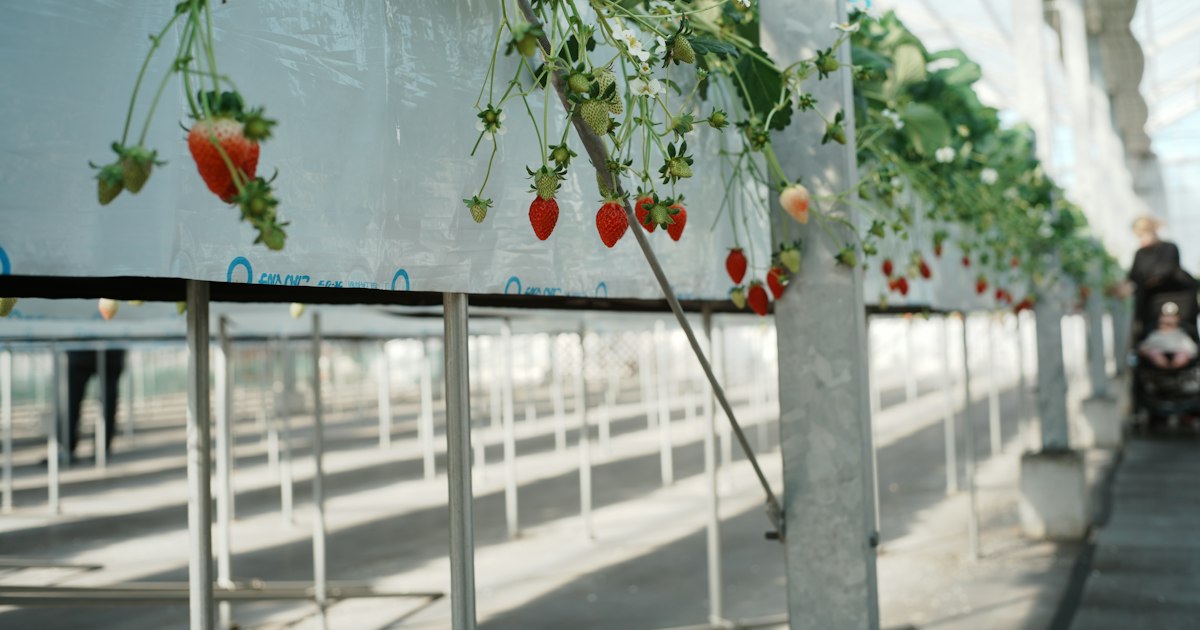
Photo by Ashita Mata on Unsplash
Every winter and spring, farms across Japan open their greenhouses for ichigo-gari (いちご狩り) — “strawberry hunting” — where visitors pay a flat fee to pick and eat as many strawberries as they can in a set time limit, straight off the plant. It’s one of Japan’s most underrated seasonal activities: cheap, kid-friendly, and a rare chance to taste varieties that never make it to export markets. Here’s how to plan one properly, from timing to etiquette to which prefecture to target.
What Ichigo-Gari Actually Is
You pay an entry fee (not per-kilogram), get handed a small plastic or paper tray, and are turned loose in rows of strawberries for a fixed window — almost always 30 minutes, occasionally unlimited time on quieter weekdays. Most commercial farms grow strawberries on raised hydroponic benches at waist height rather than in ground-level dirt rows, so there’s no bending or kneeling, and shoes stay clean. Many farms hand out small cups of condensed milk (either included or for an extra 100–200 yen) as a dip, which is the traditional way Japanese strawberries are eaten fresh. You eat on the spot — trays of fruit to take home are usually a separate, additional purchase.
Strawberries aren’t picked and weighed afterward like at a U-pick blueberry farm in the West; the “all-you-can-eat” format means the price is fixed regardless of how much you actually eat, so pace yourself and pick the ripest (fully red, no white shoulders) berries rather than grazing indiscriminately.
Best Season and Timing
Ichigo-gari season runs roughly from late December through early May, with most farms closing by Golden Week (early May) as the plants finish fruiting and summer crops take over the greenhouses. The sweetest, most abundant picking is typically January through March, when cold outside temperatures combined with heated greenhouses produce the highest sugar content. Late-season visits (April) still have plenty of fruit but it tends to be smaller and slightly more tart.
Within a single day, morning slots have more ripe fruit and cooler, less crowded greenhouses. Go on a weekday if your schedule allows — weekend afternoon sessions at popular farms can mean picked-over rows by the time you’re handed your tray. This is a similar logic to timing a hanami trip: just as the window for Yoshino’s cherry blossoms is narrow and weather-dependent, strawberry farms post daily updates on ripeness, and it’s worth checking a farm’s website or calling ahead during shoulder-season weeks.
Where to Go: Best Regions
- Tochigi Prefecture — Japan’s largest strawberry-producing prefecture and the easiest to reach from Tokyo (about 1 hour by Tohoku Shinkansen to Oyama or Utsunomiya Station, then a short taxi or bus to a farm cluster). Known for the Tochiotome and premium Skyberry varieties. Areas around Oyama City and Nasushiobara have dozens of farms within walking distance of each other.
- Kanagawa Prefecture — Odawara and Minami-Ashigara are the closest major strawberry regions to Tokyo without a Shinkansen, reachable via the Odakyu Line in under 90 minutes. Good option if you’re short on time or budget.
- Chiba Prefecture — the Minami-Boso and Kamogawa coastal areas combine strawberry picking with beach scenery; reachable by JR from Tokyo Station in around 1.5–2 hours.
- Shizuoka Prefecture — famous for the deep-red Benihoppe variety; a logical add-on if you’re already heading toward Izu or the wasabi-growing valleys covered in our guide to Shizuoka and Izu’s wasabi farms.
- Fukuoka Prefecture — if you’re in Kyushu, the Amaou variety (bred specifically in Fukuoka) is considered among the best in Japan, with large and sweet berries.
How Much It Costs
Pricing is tiered by month — January and February (peak abundance) are usually the most expensive, tapering down by April. Expect roughly:
- Budget (around 1,000–1,500 yen): smaller, local farms outside the main tourist clusters, often with a strict 30-minute limit and only one or two strawberry varieties available.
- Mid-range (1,800–2,500 yen): the typical experience at a tourist-oriented farm — unlimited condensed milk, English-friendly staff or signage, and a choice of two to three varieties on rotation.
- Splurge (2,800–3,500+ yen): farms offering limited access to premium varieties like Skyberry or Yubeni, which are usually capped per-session and require advance reservation because supply is deliberately limited.
Children typically pay 60–80% of the adult rate, and toddlers under about 2–3 years old often get in free. Prices are almost always listed in yen on the farm’s own site or on booking portals like Asoview or Jalan, and many farms require pre-booking by phone or online, especially January through March weekends — walk-ins can be turned away once a day’s capacity is full.
Getting There and Booking
Few strawberry farms are directly walkable from a train station — most require a taxi (typically 1,000–2,000 yen one-way from the nearest station) or a seasonal shuttle bus that some farm clusters run during peak months. If you don’t read Japanese, booking by phone can be a hurdle; look for farms listed on English-language booking aggregators, or ask your hotel concierge to call and reserve a time slot on your behalf — concierges in strawberry-growing regions are generally used to this request from foreign guests. Renting a car for the day is the most flexible option if you’re visiting multiple farms in a cluster like Tochigi’s Oyama area, since farms there are often spread across a few kilometers of rural road with no sidewalks.
Common Mistakes to Avoid
- Not reserving ahead. Popular farms sell out specific time slots, particularly 10am–12pm on weekends during January–March.
- Going too late in the day. Afternoon visitors often find the best rows already picked clean by morning groups.
- Bringing outside food or drink into the greenhouse. Most farms prohibit this, since the point is eating their fruit, not a picnic.
- Assuming you can take fruit home for free. The all-you-can-eat fee covers on-site eating only; a takeaway pack is a separate purchase, usually sold by the pack at the farm’s shop or stand.
- Treating it like a weighed U-pick farm. Don’t fill a bag to take outside and eat later — that’s generally not how the pricing or rules work, and staff will stop you.
If you’re building a food-focused Japan itinerary around regional specialties, ichigo-gari pairs naturally with other seasonal food detours — Shiga’s Omi beef if you’re routing through the Kansai region, or a stop at the Shin-Yokohama Raumen Museum if you’re based near Tokyo and want a rainy-day backup plan. Either way, book your strawberry slot first — the season is short, and the best farms fill up fast once word gets out that the berries are at peak sweetness.