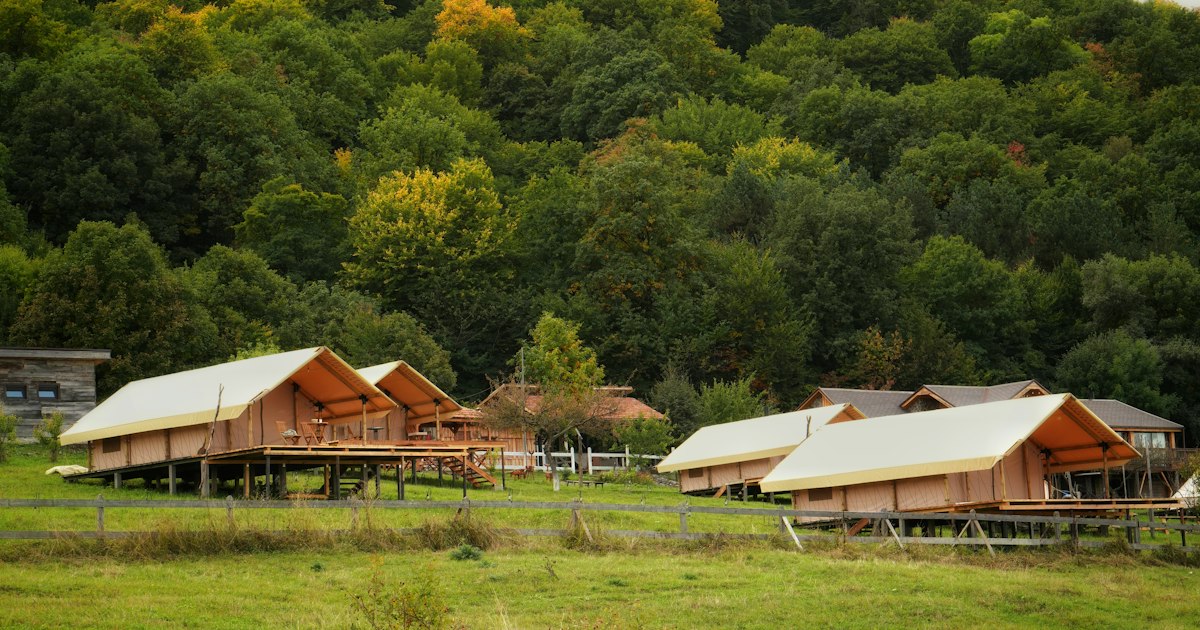
Photo by Jack Sparrow on Unsplash
Glamping — “glamorous camping” — has quietly become one of Japan’s fastest-growing travel trends, and it’s easy to see why. You get a heated or air-conditioned canvas suite with a real bed, a private deck overlooking a lake or forest, a chef-prepared barbecue dinner, and often an onsen bath, all without pitching a tent or digging a fire pit. For travelers who want nature without the gear, the learning curve, or the cold ground, it’s one of the best middle grounds Japan offers between a ryokan and a national park campsite.
Why Glamping Has Exploded in Japan
Japan’s domestic travel boom after 2020 pushed a wave of resort operators — Hoshino Resorts, Snow Peak, and a long tail of independent operators — into building glamping sites on land that was previously underused forest, lakeshore, or farmland. The appeal for Japanese travelers was the same as for foreign visitors now discovering it: a car trip to a beautiful, often remote, setting with none of the logistics of traditional camping. Most sites also lean hard into regional identity, serving local Wagyu, Hida beef, or Kyushu pork at the evening barbecue and stocking the camp store with prefecture-specific snacks and sake.
Budget, Mid-Range, and Splurge: What You Actually Get
Budget (¥8,000–15,000 per person/night): Shared-facility sites, usually a canvas bell tent with a futon or simple bed frame, shared bathhouse, and a self-cook or simple set-menu BBQ. Think PICA-brand sites (run by Hoshino Resorts) in places like Yamanakako or Fujino — comfortable, clean, but closer to “upgraded campsite” than resort.
Mid-range (¥20,000–40,000 per person/night): This is where most Western visitors land. Expect a private en-suite bathroom, air conditioning or heating, a proper bed, and a full-course regional dinner cooked over an open hearth or grill. Snow Peak’s “Land Station” sites (Hakuba, Niigata, Rokko) and the GRAX brand (Nasu Shirakawa, Izu) sit in this tier, often with heated floors that make even winter stays comfortable.
Splurge (¥50,000–150,000+ per night, often per unit rather than per person): Hoshinoya-level properties and a handful of independent luxury domes add private onsen baths, kaiseki-style dinners, and architect-designed tents with floor-to-ceiling views. Some lakeside properties near Yamanakako or Kawaguchiko charge this much for a Mt. Fuji view from a hot tub, and it’s genuinely worth it for a special-occasion night.
The Best Regions and When to Go
Spring (April–May) and autumn (October–November) are the sweet spot almost everywhere — mild enough for evenings on a deck, with cherry blossoms or foliage as a bonus. Summer glamping works well in the mountains and highlands (Hakuba, Nasu, Fujino) where altitude keeps nights cool, but lowland or seaside sites can be hot, humid, and buggy from July through early September. Winter is its own draw at heated sites with kotatsu or in-tent fireplaces — snow outside, warmth inside — and this is when demand (and prices) spike around Hakuba and Nozawa Onsen because of ski season.
Regionally, Yamanashi and Shizuoka (Mt. Fuji views), Nagano (Hakuba, the Japan Alps), Hokkaido (Furano, Niseko in summer), and Kyushu (Oita and Kumamoto’s volcanic highlands) are the strongest clusters. If you’re building a Nikko itinerary, several glamping sites around Oku-Nikko pair naturally with a day at Lake Chuzenji and Kegon Falls, letting you combine a scenic lake loop with a comfortable night outdoors rather than rushing back to Tokyo. In Hyogo, glamping around the Kinosaki and Harima area makes a good base for chasing the cloud sea at Takeda Castle Ruins, which peaks in the early morning between September and November — plan to leave the campsite before dawn if that’s the goal. Kyushu’s Oita prefecture has a growing glamping scene too, and it sits close enough to Hita’s mountain hot springs and cedar rafting to combine both in a two-night trip.
How to Get There
Almost every glamping site in Japan assumes you have a car. Most are 20–90 minutes from the nearest shinkansen or major train station, and while a handful (mostly the bigger Hoshino Resorts properties) run a paid shuttle bus that must be reserved in advance, many smaller independent sites have no public transport option at all. If you don’t want to rent a car, filter your search specifically for “no car needed” or “shuttle available” before booking — don’t assume a taxi will be easy to find at a rural site after dark, because many rural taxi companies stop dispatching by early evening.
What to Pack (and What to Skip)
Most mid-range and luxury sites provide bedding, towels, and basic toiletries, so you don’t need a sleeping bag or pillow. What people consistently underpack: a warm layer for after sunset (mountain and lakeside sites drop 10°C+ once the sun goes down, even in July), closed-toe shoes for walking to shared bathhouses at night, and insect repellent for anything near water or forest edge between May and September. If you want gear that won’t take up suitcase space, Standard Products and Threeppy stock inexpensive, well-designed outdoor essentials — collapsible cups, compact towels, insect patches — that are easy to pick up in any city before you head out.
Common Mistakes to Avoid
- Assuming dinner is included. Many budget and even some mid-range sites sell the BBQ dinner as a separate plan that must be reserved at booking, not on arrival — walk-up add-ons are often unavailable or sold out by check-in.
- Not checking the rain policy. Open-air BBQ dinners are frequently moved to a covered pavilion or cancelled with a partial refund in heavy rain; ask about this before booking if you’re traveling in Japan’s June–July rainy season.
- Booking a weekend in peak season without a waitlist backup. Popular sites near Mt. Fuji and Hakuba sell out 2–3 months ahead for autumn weekends and New Year’s week — book on a weekday if your dates are flexible.
- Expecting an onsen at every site. “Hot spring” and “bathhouse” are not interchangeable in listings — a shared shower block is common at budget sites, while a genuine onsen (natural mineral spring) is a mid-range-and-up feature worth confirming directly.
Glamping won’t replace a ryokan stay or a serious backcountry trek, but as a one- or two-night add-on to a longer Japan itinerary, it delivers a kind of nature access — quiet forests, star-filled skies, lakeside sunrises — that’s hard to get any other way without carrying your own tent.