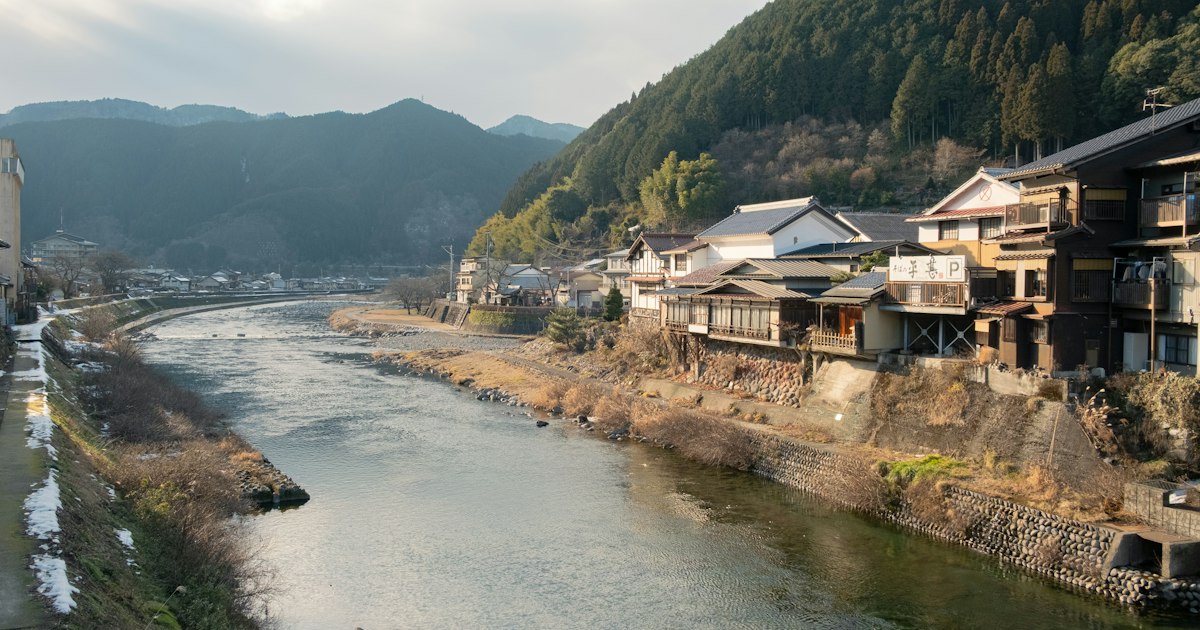
Tucked into a mountain basin where three rivers meet in western Oita Prefecture, Hita is the kind of town that rarely makes a first-time Japan itinerary — and that’s exactly its appeal. For over 150 years it supplied the Edo and Osaka markets with Hita cedar, floated downriver on log rafts, and the money that trade generated built a merchant district that still stands today. Add a quiet riverside hot spring and a sake-and-soy-sauce food scene, and Hita makes an easy, uncrowded day trip or overnight stop between Fukuoka and Yufuin.
Getting to Hita
Hita sits on the JR Kyudai Main Line, the scenic rail route that links Fukuoka and Oita through the mountains. From Hakata Station in Fukuoka, the limited express “Yufu” or the sightseeing train “Yufuin no Mori” reaches Hita Station in roughly two hours (around ¥5,000–6,000 one-way, unreserved seat). From Yufuin, it’s a much shorter hop — about 30–40 minutes and ¥1,000–1,500. Coming from Beppu or Oita city adds another hour or so via the same line.
By car, Hita is about 1.5 hours from Fukuoka or Oita via the Oita Expressway, and this is genuinely the easier way to combine Hita with Yufuin or the mountain roads further into Kyushu’s interior — parking in Mamedamachi is plentiful and cheap (often free or under ¥500 for the day). If you’re already building a Kyushu rail itinerary, note that Hita works well as a one-night detour rather than a quick stopover, since the Kyudai line only runs a handful of trains per day in each direction.
Hita Onsen: a working hot spring town, not a resort
Hita Onsen sits right along the Mikuma River, a short walk from the station and old town. Unlike Yufuin or Kurokawa, it never built up a glossy tourist brand — the handful of ryokan and hotels here cater as much to local business travelers and long-term soakers as to visitors, which keeps prices reasonable and the atmosphere unpretentious.
- Budget: Day-use bathing at local inns typically runs ¥500–800 for an hour or two of soaking, a good option if you’re passing through without staying overnight.
- Mid-range: A night with two meals (dinner and breakfast) at a riverside ryokan generally falls in the ¥12,000–20,000 per person range — expect river-view rooms and kaiseki-style dinners built around Oita beef, mountain vegetables, and freshwater fish from the Mikuma.
- Splurge: A handful of inns offer private riverside rotenburo (open-air baths) attached to larger suites, pushing into the ¥25,000–35,000+ per person bracket, especially during cedar-viewing autumn weekends.
If you’ve enjoyed secluded, low-key hot spring towns elsewhere in Japan — the forest bathhouses at Nyuto Onsen in Akita are the classic comparison — Hita scratches a similar itch without the long trip north.
Mamedamachi: the old merchant quarter
Hita’s wealth from the cedar and timber trade, plus its status as a tenryo — a town directly administered by the Tokugawa shogunate rather than a feudal lord — left behind Mamedamachi, a compact grid of white-walled storehouses and merchant homes now sometimes nicknamed “Little Kyoto of Kyushu.” It’s free to wander and small enough to cover in 1–2 hours.
- Kuncho Shuzo, a working sake brewery on the main street, offers tastings and sells bottles you won’t find outside the region.
- Hita Shoyu‘s historic storefront sells its own soy sauce and, more famously, a soy-sauce soft-serve ice cream (around ¥400) that’s become the town’s signature snack — sweet with a savory finish that’s odd on paper and genuinely good in person.
- Several kura (storehouse) buildings have been converted into small museums and craft shops selling local cedar woodwork, a nice souvenir category given the town’s forestry history.
Himuka cedar and the Mikuma River’s rafting history
Hita cedar (Hita sugi) is ranked among Japan’s most prized cedar brands, grown slow in the surrounding mountain valleys for straight, tight-grained timber. For centuries, logs cut from these forests were lashed into rafts and floated down the Mikuma River to the port of Oita, then shipped on to Osaka — the river was Hita’s only practical route to market before roads and rail arrived, and the rafters who guided the log trains downriver were a skilled, respected trade in their own right.
That history is kept alive today more through festivals and craft than through an active working raft trade. The Hita Kawabiraki Kanko Matsuri (Hita River Opening Tourism Festival), held in late May, marks the start of the river season with fireworks and lantern-lit boats on the Mikuma, echoing the town’s old relationship with the water. Local woodcraft shops in Mamedamachi still sell items turned from Hita cedar, and it’s worth asking shopkeepers about the timber’s history — many are happy to point you toward whichever displays or exhibits are running that season at the town’s small forestry and folk museums.
If cedar-and-river scenery is the draw, pair Hita with a scenic nature stop elsewhere in Kyushu or beyond — the boardwalks at Oze National Park or the alpine views from the Shin-Hotaka Ropeway are a different kind of mountain experience, but both reward the same instinct to get off the main tourist corridors.
Best time to visit
Spring (April–May) brings fresh green on the surrounding cedar slopes and the river festival in late May. Summer is hot and humid in the basin, but mid-July brings the Hita Gion Festival, a UNESCO-recognized float festival with illuminated yamakasa floats paraded through the old town at night — check the exact dates each year, as they shift slightly. Autumn (late October–November) is arguably the best season for the hot spring side of a visit, with cooler nights making the riverside baths genuinely comfortable and the hillsides turning color above the cedar stands. Winter is quiet and cold, with fewer crowds but also fewer events running.
Common mistakes to avoid
- Treating it as a quick stopover without checking train times. The Kyudai line isn’t frequent — look up return times before you arrive, especially if heading onward to Yufuin or Fukuoka the same day.
- Expecting a resort-town onsen experience. Hita Onsen is modest and local; go for the authenticity and the river, not for spa amenities.
- Skipping Mamedamachi because it looks small on a map. The old town rewards slow walking — side alleys, storehouse interiors, and brewery tastings are easy to miss if you rush through in 20 minutes.
- Visiting mid-summer without sun protection. The river basin traps heat; July and August afternoons get intensely humid.
Hita isn’t a headline destination, and that’s precisely why it’s worth the detour — a town built on cedar and water, still quietly running on both. For travelers who enjoyed the understated charm of a place like Hida Furukawa in Gifu, Hita offers that same unhurried, river-town atmosphere on the Kyushu side of the country.