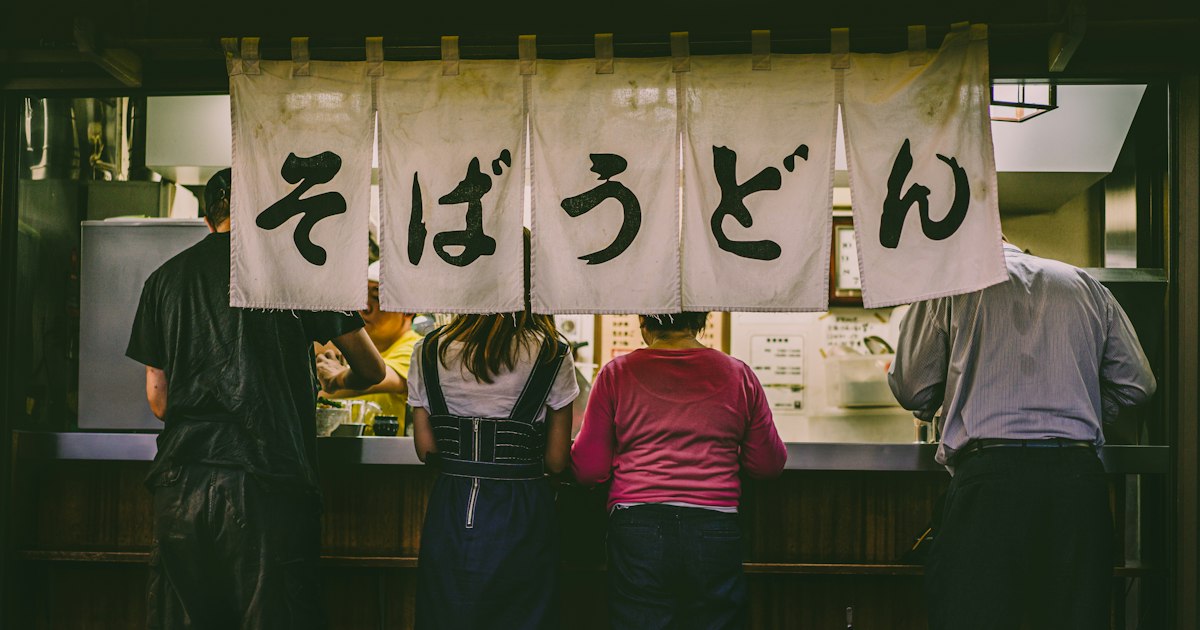
Photo by Dovile Ramoskaite on Unsplash
Tokyo commuters have turned breakfast into a three-minute transaction: walk up to a counter, slurp a bowl of hot soba standing up, pay around 350 yen, and be back on the platform before the next train. These tachigui-soba (立ち食いそば, “standing-and-eating soba”) stalls are one of the city’s most practical food experiences for travelers, too — they’re fast, cheap, open absurdly early, and often sit right inside the station you’re already passing through. Here’s how to find the good ones and eat like you’ve done it a hundred times before.
Why Standing Soba Exists (and Why It’s Worth Trying)
Standing soba stalls date back to the postwar commuter boom, when workers needed hot food that didn’t require sitting down or waiting. The format never disappeared because it still solves the same problem: you’re hungry, your train leaves in six minutes, and you don’t want konbini onigiri again. For visitors, it’s a rare chance to eat exactly like a Tokyo salaryman — no English menu, no table, no small talk, just noodles. A bowl of kake soba (plain soba in dashi broth) typically runs 320–390 yen, with topped versions like tempura soba or kitsune soba (with fried tofu) landing around 450–550 yen. Compare that to a 1,200 yen hotel breakfast and it’s an easy case for trying it at least once.
Platform Stands Inside the Ticket Gates
The most efficient version of this experience is the soba stand built directly onto a train platform, meaning you never even leave the paid area. JR East operates many of these under the brand Irori-an Kiraku (いろり庵きらく), found on Yamanote Line platforms at stations including Kanda, Akabane, Ueno, and inside Tokyo Station’s underground concourse. They’re open from around 6:00 or 6:30 AM, which lines up perfectly with an early Shinkansen connection or a trip to Tsukiji’s outer market before the crowds arrive. Because you’re already holding a valid ticket or IC card, there’s zero friction — eat, rinse your bowl area if asked, and walk straight to your train. If you need a restroom before or after, check our guide to finding a public restroom in Japan, since station facilities vary and platform-level toilets aren’t guaranteed at every stop.
The Big Chains: Fuji Soba and Komoro Soba
If you’re not catching a train right this second, Tokyo’s two dominant standing-soba chains are more forgiving and easier to spot. Fuji Soba (富士そば), recognizable by its red-and-white signage, has roughly 100 locations across greater Tokyo and many run 24 hours — genuinely useful if you land on a red-eye flight and want hot food at 5 AM. Komoro Soba (小諸そば) is the other major chain, slightly cheaper on average, with a dense cluster of branches around Shinjuku, Shibuya, and the Yamanote loop. Both use the same ticket-machine ordering system described below, and both post laminated photo menus, so you can point even without reading Japanese. A basic bowl at either chain is 330–420 yen; adding a crispy ebi tempura piece pushes it to around 550 yen.
How to Order: The Vending Machine System
Nearly every standing soba stall uses a food-ticket vending machine (shokken-ki) by the entrance instead of a cashier. Here’s the actual sequence:
- Feed in cash or tap your IC card (Suica/Pasmo) at the machine — most now accept both.
- Press the button for your dish. Photos are usually shown; if not, look for the kanji そば (soba) versus うどん (udon), since many stalls serve both noodle types in the same broth.
- Take the printed ticket that drops out and hand it to the staff at the counter — don’t just say your order out loud.
- Grab chopsticks and water/tea yourself from the side counter if the shop is self-service.
- Eat standing at the counter ledge, then set your bowl in the return tray on your way out.
The whole interaction is designed to take under a minute of staff time per customer, which is exactly why lines move so fast even during the 7:30–8:30 AM rush.
Best Times to Go and When to Avoid
Weekday mornings between 7:00 and 9:00 AM are peak commuter hours — expect a short line but very fast turnover, usually under five minutes even when it looks busy. If you want elbow room to actually enjoy the bowl rather than wolf it down, aim for 6:00–6:30 AM or the late-morning lull between 10:00 and 11:00 AM. Weekends are noticeably quieter since the clientele is largely office workers, though stalls near major stations like Shimbashi or Kanda still see some foot traffic from early risers. Winter is arguably the best season for this experience: hot broth against cold station air is the whole appeal, and seasonal toppings like kamo (duck) soba appear at some chains from November through February.
Budget, Mid-Range, and Splurge Toppings
Budget: plain kake soba or udon, 320–390 yen — the true commuter default. Mid-range: tsukimi soba (soba topped with a raw egg, resembling a moon) or kitsune soba, 420–480 yen. Splurge, relatively speaking: tempura soba with a whole ebi tempura or a kakiage (mixed vegetable-and-seafood fritter), 500–600 yen, which is still far cheaper than a sit-down soba restaurant charging 1,000+ yen for the same combination. If the idea of really fresh seafood toppings appeals to you and you have a free day, it’s worth comparing this fast-food version against a proper seafood breakfast in a place like Numazu, Shizuoka’s fresh-catch port town, where the kaisendon bowls use fish landed that same morning — a completely different pace, but a useful point of comparison for what “fresh” costs when speed isn’t the goal.
Common Mistakes First-Timers Make
The biggest one is sitting down to decide what to order — these counters have no menus to browse at leisure, so decide before you reach the machine, or step aside to let the line move. Second, don’t expect English signage; screenshot a soba vocabulary list beforehand if you’re nervous. Third, don’t linger once you’re done eating — the standing format exists because space is limited, and finishing your tea while scrolling your phone at the counter is a quiet faux pas during rush hour. Finally, some stalls serve small side dishes like inari sushi or a piece of agedashi dofu alongside the noodles; if you want to understand that deep-fried tofu side before you see it on a hand-written sign, our guide to agedashi dofu and Japan’s deep-fried tofu dishes covers what to expect. Standing soba isn’t meant to be a destination meal — it’s a logistics solution that happens to taste good, and once you’ve done it once, you’ll find yourself ducking into one every time you’ve got six minutes to kill before a train.