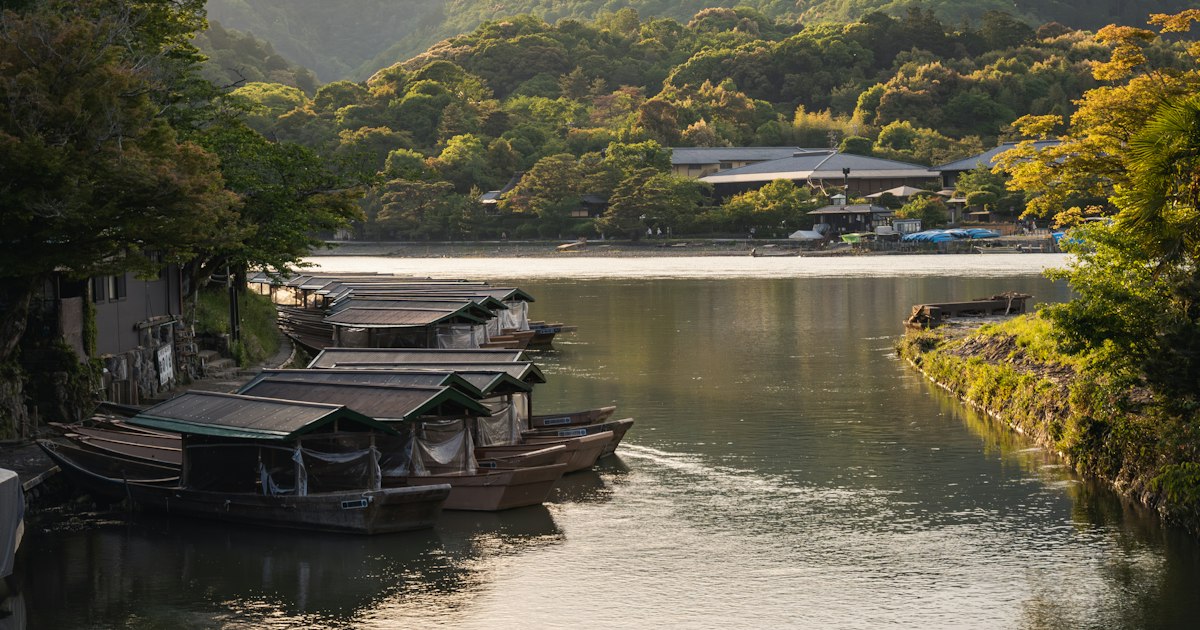
Photo by Artem Shuba on Unsplash
Deep in the mountains of Minakami, Gunma, where the Takaragawa river tumbles down from the Niigata border, sits one of Japan’s most famous — and most misunderstood — hot spring experiences. Takaragawa Onsen is known for its enormous open-air baths built directly along the riverbank, for the fact that most of them are mixed-gender (konyoku), and for a setting so remote and forested that soaking here feels nothing like a city spa. If you’ve seen a photo of bathers sitting in a snow-dusted rock pool next to a rushing river, there’s a good chance it was taken here. This guide covers what you actually need to know before you go: prices, hours, how to get there without a car, and how mixed bathing really works for foreign visitors.
What Makes Takaragawa Different
Takaragawa Onsen is really one historic inn, Osenkaku (汪泉閣), built around a cluster of four riverside rotenburo (outdoor baths) that are often described as among the largest open-air baths in Japan — the operator’s own figures put combined capacity at roughly 100 bathers across the baths. Three of the four are mixed-gender; one is reserved for women only. The baths sit at slightly different levels along the river’s edge, separated by rock and wood, with the water itself a milky, slightly sulfurous alkaline spring said to be good for skin and muscle fatigue.
What draws people here isn’t luxury — the baths are rustic, the changing areas are basic, and the inn itself is an old-fashioned wooden ryokan rather than a polished resort. The appeal is the setting: forest on all sides, the river running past at arm’s length, and (depending on season) snow piling up on the rocks while you sit in steaming water.
Mixed Bathing, Explained for Visitors
Konyoku (mixed-gender bathing) was once common across Japan and survives today mostly at remote, traditional onsen like this one. At Takaragawa, men typically bathe nude as is standard onsen custom, while women almost always wear a yugi — a thin cotton bathing robe available to rent on-site for a small fee (budget around ¥300–500). Towels are not meant to go in the water itself, but the yugi is specifically designed for this purpose, so don’t be shy about using one if you’re uneasy about mixed nude bathing. If you’d rather skip mixed bathing entirely, the women-only bath (sometimes called Maha-no-yu) is available, and staff can point you to it.
A few etiquette basics apply regardless of which bath you choose: rinse off at the washing area before entering, don’t swim or splash, keep long hair tied up and out of the water, and know that tattoos may be an issue — call ahead or check the inn’s current policy if you have visible tattoos, as some traditional onsen still restrict them.
Prices and Hours
Takaragawa welcomes day-trippers (higaeri onsen), not just overnight guests. Expect to pay roughly ¥1,500 for adults and around ¥1,000 for elementary-school-age children, with young children often free; bring cash, as rural onsen facilities frequently don’t take cards. Day bathing is generally available from around 9:00 a.m. to mid-afternoon (last entry typically around 3:00–4:00 p.m.), so this is not an evening soak — plan your trip for daytime hours and build in time to get back to the bus stop or your car before dark, especially in winter when daylight is short. If you stay overnight at Osenkaku, bathing hours extend later and you can visit the baths multiple times, including early morning before day-trippers arrive.
How to Get There
Takaragawa Onsen is genuinely remote, and this is the part most first-time visitors underestimate. The most practical route without a car is: take the Joetsu Shinkansen from Tokyo Station to Jomo-Kogen Station (about 75–90 minutes), then transfer to a local bus bound for Takaragawa Onsen. Buses run only a handful of times per day, so check the timetable before you leave Tokyo — missing the last return bus means an expensive taxi or an unplanned overnight stay. The bus ride itself takes roughly 45–50 minutes and winds through mountain roads. A taxi from Jomo-Kogen Station covers the same distance in about 40 minutes but will cost somewhere in the ¥8,000–9,000 range one-way, so it’s best split among a group.
Driving gives you the most flexibility and lets you combine Takaragawa with other stops in the Minakami area, but the roads narrow considerably near the onsen and can be genuinely treacherous in winter without snow tires or chains. If you’re renting a car for this trip, it’s worth reading up on how parking works in Japan before you set off, since rural facilities like this one have their own small lots rather than the coin-parking systems you’ll find in cities.
Best Season and Timing
Takaragawa is a year-round destination, but the experience shifts dramatically with the seasons. Autumn (mid-October through early November) brings koyo foliage in brilliant reds and golds along the river valley, and this is arguably the most popular — and most crowded — time to visit. Winter (December through February) is when the famous snow-rimmed bath photos happen; soaking in hot water while snow falls around you is the signature Takaragawa experience, but access becomes harder, bus service can be disrupted, and you should only attempt this by car if you’re confident driving on snow. Spring brings fresh green leaves and milder access conditions, while summer offers lush greenery and the sound of the rushing river, though humidity and insects are more noticeable in the forest setting. Weekday visits, regardless of season, are noticeably quieter than weekends and holidays.
Common Mistakes to Avoid
- Not checking bus times in advance. With only a few departures daily, arriving at Jomo-Kogen Station without a return time in mind can strand you.
- Assuming it’s an evening or late-night onsen. Day-bathing hours end mid-afternoon; this isn’t a place to show up at 6 p.m. expecting a soak.
- Forgetting cash. Card payment is unreliable this far into the mountains.
- Expecting a private, boutique experience. This is a large, communal, rustic bathing facility — wonderful for the setting and history, but not a quiet luxury spa.
- Underestimating winter driving conditions if self-driving in the colder months.
Where to Stay: Budget to Splurge
Most visitors treat Takaragawa as either a day trip from Tokyo or Minakami, or an overnight stay at Osenkaku itself. For budget travelers, the day-trip bathing fee of around ¥1,500 is the cheapest way to experience the baths without committing to a stay. Mid-range visitors can book a standard overnight room at Osenkaku with the entrance fee included, typically running from around ¥15,000–25,000 per person with two meals (kaiseki-style dinner featuring local mountain vegetables and river fish is standard at this type of ryokan). For a splurge, look at the inn’s larger or river-view rooms, which command a premium but let you step almost directly from your room to the baths. Whichever tier you choose, remember that checking into any Japanese ryokan requires presenting your passport — if this is your first stay in Japan, it’s worth reading up on what to expect when checking into a Japanese hotel so there are no surprises at the front desk.
If you enjoy this kind of remote, nature-set hot spring resort, Gunma’s neighboring prefecture Tochigi offers a very different but equally rewarding option in Nasu Highland, which pairs onsen culture with an imperial villa and safari park and is easier to reach without a strict bus schedule. Either way, Takaragawa rewards visitors willing to put in the extra travel effort with a hot spring experience that feels genuinely out of step with modern Japan — in the best way.