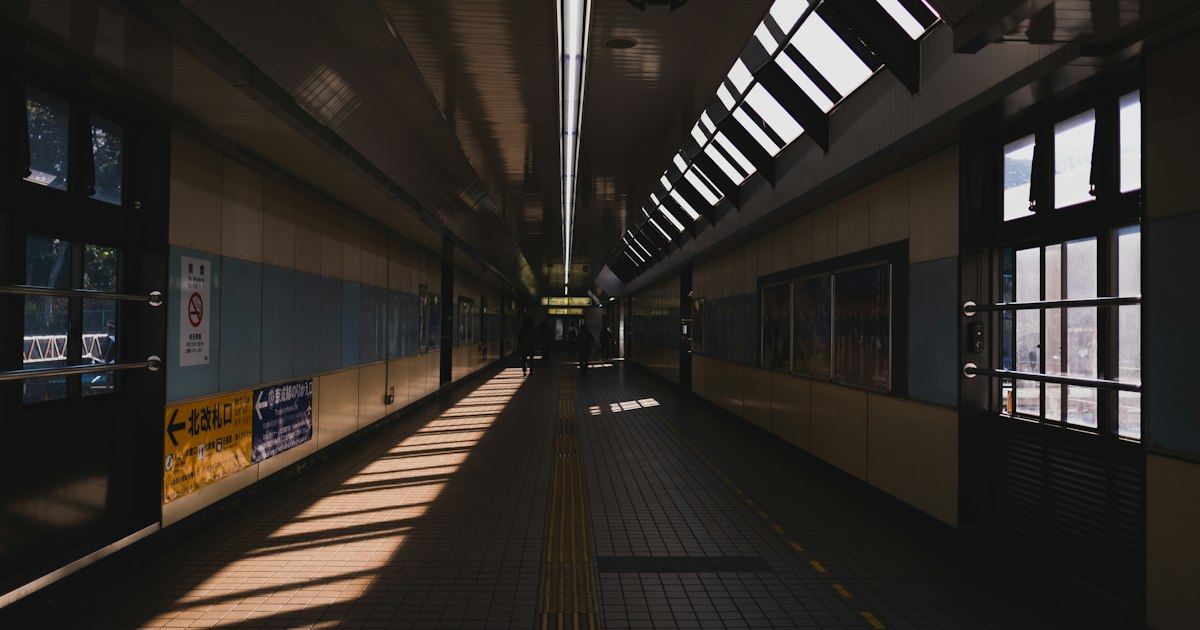
Photo by Levi Meir Clancy on Unsplash
Japan has a reputation for being the easiest country in the world to find a clean toilet, and for the most part that’s true — but “easiest” doesn’t mean “obvious.” Konbini policies vary by chain and by branch, station restrooms are sometimes inside the ticket gates and sometimes outside, and the apps that locals use aren’t the ones that show up first in an English app store search. Here’s how to actually find a restroom in Japan, fast, wherever you are.
Convenience Stores: Usually Fine, Not Always Free-For-All
Seven-Eleven, Lawson, and FamilyMart are the backbone of Japan’s public restroom network, and most branches will let you use the toilet without buying anything. But this isn’t a universal legal right — it’s a courtesy that varies by store, and a few things matter:
- Ask first. A quick “sumimasen, toire wa arimasu ka?” (excuse me, is there a toilet?) at the register is expected, especially at smaller or older branches where the toilet is staff-controlled and may require a key or code written on a card.
- Urban flagship stores sometimes say no. Densely packed locations in areas like Shinjuku or Shibuya occasionally restrict restroom use to customers only, or close it for cleaning. If one branch says no, the next konbini is rarely more than a few minutes’ walk away.
- Buying something is good manners, not a requirement. A ¥120 bottle of tea is a cheap way to say thank you if you’ve used the facilities and have five minutes to spare.
Konbini toilets are almost always Western-style with a washlet (heated seat, bidet function), and most now stock toilet paper reliably, though it’s still smart to carry a small pack of tissues as backup.
Train and Subway Stations: Your Most Reliable Default
Every JR station and most private-line and subway stations have free public restrooms, and in larger stations there are usually two sets — one inside the paid area (past the ticket gates) and one outside it, so you don’t need a valid ticket just to use the toilet. Look for the pictogram signage near station exits or consult the station’s posted floor map, which almost always marks restrooms in multiple languages.
A few practical notes:
- Major terminal stations (Tokyo, Shinjuku, Osaka, Kyoto) have large, well-maintained restroom banks with baby-changing tables and accessible stalls, usually near the central concourse or Shinkansen platforms.
- Smaller rural or older stations may still have a squat-style (washiki) toilet alongside the Western one — not a problem, just budget a little extra time if you’re unfamiliar with the style.
- Coin-operated toilets (around ¥20–100) have mostly disappeared, but you’ll occasionally still find one at an older regional station or roadside rest stop. Keep a bit of small change on hand just in case.
If you’re road-tripping rather than training, the same logic applies at highway service areas (SA) and parking areas (PA), which have free, well-kept restrooms open 24 hours — useful to know if you’re also navigating where to park in Japan on a longer drive.
Toilet-Finding Apps That Actually Work
Skip the generic “find a bathroom” apps built for other countries — they have poor Japan coverage. Use these instead:
- Japan Official Travel App (JNTO) — the national tourism board’s free app includes a restroom layer alongside its offline maps, Wi-Fi finder, and disaster alerts. Good baseline coverage in cities and tourist areas.
- Google Maps — searching “toilet” or “restroom” near your current location works surprisingly well in Japanese cities, pulling in konbini, station, and park facilities with user ratings and photos.
- NAVITIME for Japan Travel — the English tourist version of Japan’s most-used transit app includes a restroom search filter alongside train routing, handy if you’re already using it to plan your route.
- Check A Toilet (トイレ情報共有サービス) — a Japanese-language crowdsourced map specifically for accessible and multipurpose toilets; worth trying even with basic Japanese, since it’s more granular on wheelchair access and ostomate facilities than general map apps.
In Shibuya specifically, keep an eye out for The Tokyo Toilet project — 17 architect-designed public restrooms (by names like Tadao Ando and Kengo Kuma) scattered around the ward since 2020–2023, all free, all immaculately maintained, and worth a detour if you’re nearby and curious about design as much as plumbing.
Department Stores, Malls, and Other Backup Options
When you want guaranteed cleanliness and don’t mind a short walk, department stores (Takashimaya, Isetan, Daimaru, Mitsukoshi) have restrooms on nearly every floor, typically open during store hours (roughly 10:00–20:00), with baby rooms and lounge-style waiting areas near the women’s facilities on several floors. Shopping malls and large electronics stores (Bic Camera, Yodobashi) follow similar hours and standards.
Cinemas are another reliable option if you happen to be near one — the restrooms at TOHO Cinemas and other major theater chains are open to anyone passing through the lobby, not just ticket holders, and tend to be spacious and well-stocked.
Parks and shrine/temple grounds usually have at least a basic public toilet near the entrance, though standards vary more here — some are modern and spotless, others are older squat-style blocks with no soap or hand dryer, so carrying tissues and a small bottle of hand sanitizer is a good habit for temple-hopping days.
Common Mistakes to Avoid
- Not carrying tissues. Most restrooms have toilet paper, but older park and shrine facilities sometimes run out or never had a dispenser to begin with. A small pocket pack solves this permanently.
- Assuming hand dryers exist. Many public restrooms, including some konbini and older stations, have neither dryers nor paper towels post-pandemic. A small handkerchief is standard carry for locals for exactly this reason.
- Forgetting store-hour restrictions. Department store and mall restrooms close with the building — don’t count on them late at night or very early morning; stations and konbini are open far longer (many 24 hours).
- Panicking in a crowded station. Signage can be easy to miss in rush-hour crowds at places like Shinjuku Station. Look up, not around — restroom signs are almost always mounted overhead with a running-figure pictogram, visible above the crowd.
Between konbini, stations, and a decent map app, you’re rarely more than a five-minute walk from a clean, free restroom anywhere in urban Japan — the main skill is just knowing where to look first.