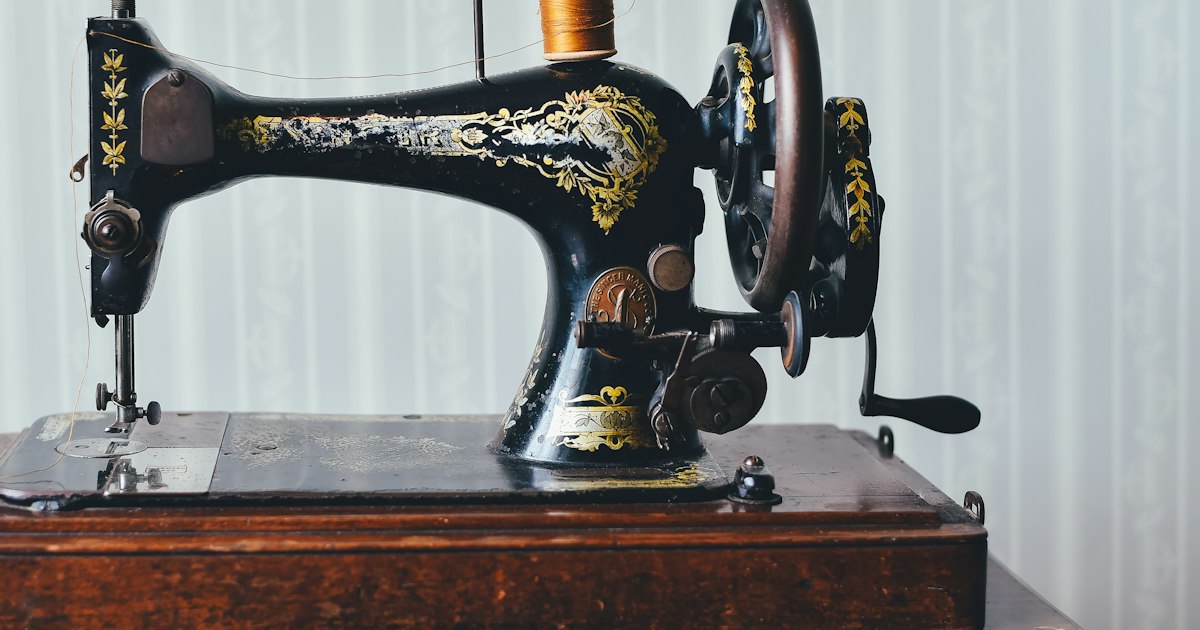
Photo by Annie Spratt on Unsplash
Japan is the home turf of three of the world’s biggest sewing machine brands — Brother, Juki, and Janome — and for quilters, cosplayers, and garment hobbyists, a trip here is also a chance to shop machines, feet, and notions that either cost far more back home or never get exported at all. But buying a sewing machine in Japan isn’t quite as simple as walking into a shop and picking one up, especially once you factor in voltage, warranty coverage, and the sheer size of some of these machines in a suitcase. Here’s what actually works.
Brother, Juki, and Janome: what each brand is known for
All three companies are headquartered in or around Nagoya, and all three sell very different machines domestically than what often ships overseas. Brother dominates the home and computerized-embroidery segment in Japan, with mid-range models like the PS202 or Innov-is series widely stocked in electronics chains. Juki is the one hobbyists specifically travel for — its industrial-grade straight-stitch machines (the TL-2000Qi and TL-2010Q are the famous ones) are prized for quilting because of their speed and stitch precision, and Juki’s domestic lineup includes models rarely sold abroad. Janome, the oldest of the three (founded 1921), leans toward computerized multi-function machines and is well regarded for its embroidery units. If you already sew, decide which brand you’re hunting for before you go — the shops below don’t all carry the same strengths.
Where to shop: Tokyo’s hobbyist sewing district
Nippori’s “Fabric Town” (Nippori Sen’i Gai), a 5-minute walk from Nippori Station on the JR Yamanote Line, is the best single destination — it’s a strip of roughly 90 fabric and notions shops, and several carry entry-to-mid-range Brother and Janome machines alongside bolts of cloth, so you can buy a machine and the fabric to break it in on the same trip. Most shops open around 10:00 and close by 18:00 or 19:00, and many are closed on Sundays or Wednesdays, so check before a dedicated trip.
For serious machine shopping, head instead to a Juki or Brother brand showroom, or a large sewing specialty retailer like Jonan Shokai or Satomi Mishin in Tokyo, where staff can demonstrate machines and often offer tax-free processing for overseas visitors spending over ¥5,000 in a single transaction (bring your passport). Yodobashi Camera and Bic Camera also stock a surprising range of Brother and Janome home machines in their sewing/craft sections, which is convenient if you’re already there for electronics and want tax-free paperwork handled in one place.
Realistic prices
Budget: a basic Brother or Janome mechanical machine for straight and zigzag stitching runs roughly ¥15,000–¥30,000. Mid-range: computerized machines with multiple stitch patterns and an LCD screen, the kind most hobbyists end up happiest with, land around ¥40,000–¥90,000. Splurge: Juki’s quilting-oriented semi-industrial machines like the TL-2010Q run ¥90,000–¥150,000, and multi-needle embroidery machines from any of the three brands can exceed ¥300,000. None of these prices include the voltage/warranty complications below, so budget accordingly before you fall in love with a display model.
The voltage and warranty problem
This is the part first-time buyers get wrong most often. Japanese domestic machines run on 100V, while most of the rest of the world uses 220–240V. A simple travel voltage converter is usually fine for small motors like these, but it’s still an extra thing to carry and plug in correctly every time you sew — annoying for a machine you’ll use for years. Just as important: the manufacturer’s warranty on a Japan-market machine is valid in Japan only. If the motor fails after you take it home, there’s no local Brother or Juki service center obligated to help you, and shipping a machine back to Japan for repair rarely makes financial sense. For this reason, many hobbyists buy mechanical machines locally (simpler, fewer parts to fail) and leave the expensive computerized embroidery units for their home-country retailers, even though the Japan price looks tempting.
Shopping online instead of in person
If you can’t find the specific Juki model you want in a shop, or you want to compare prices before committing, Rakuten Ichiba lists most of these machines from Japanese sewing retailers, often cheaper than in-store because of online-only competition. The catch is that most listings default to domestic-only shipping and the checkout flow is entirely in Japanese. Our guide to buying from Rakuten Ichiba as an overseas shopper walks through using a forwarding address and translating the checkout — worth reading before you try to order a 10kg machine online, since sewing machines are exactly the kind of bulky item where a forwarding service’s packing fees can erase your savings if you don’t check the math first.
Best time to shop, and what to bring home instead
There’s no major seasonal sale cycle specific to sewing machines, but Japanese retailers do run New Year “fukubukuro” grab-bag promotions in early January and mid-year clearance around Golden Week (late April–early May) when new model years are introduced, so prices on outgoing models dip slightly in those windows. If the voltage and warranty issues above make a full machine purchase feel like too much hassle for a short trip, consider instead buying presser feet, Japanese-made sewing shears (Kai is the big name), or quilting notions — all voltage-free, light enough for a suitcase, and genuinely hard to find outside Japan. Pair that with a visit to Nippori for fabric, and you’ll come home with a project kit rather than just a machine sitting in a box.
Common mistakes to avoid
- Buying a computerized machine with on-screen menus you can’t read — ask the shop if an English manual PDF exists for that exact model before purchasing, since in-store signage is almost never bilingual.
- Forgetting the tax-free minimum (¥5,000 pre-tax, same-store, same-day) and splitting a purchase across receipts, which disqualifies you from the refund.
- Assuming all Nippori shops take cards — many of the smaller fabric and notions stalls are cash-only, so bring yen.
- Checking a machine in checked luggage without padding — the carrying case is rarely included with mechanical models, so ask the shop for a box or buy a padded case locally.