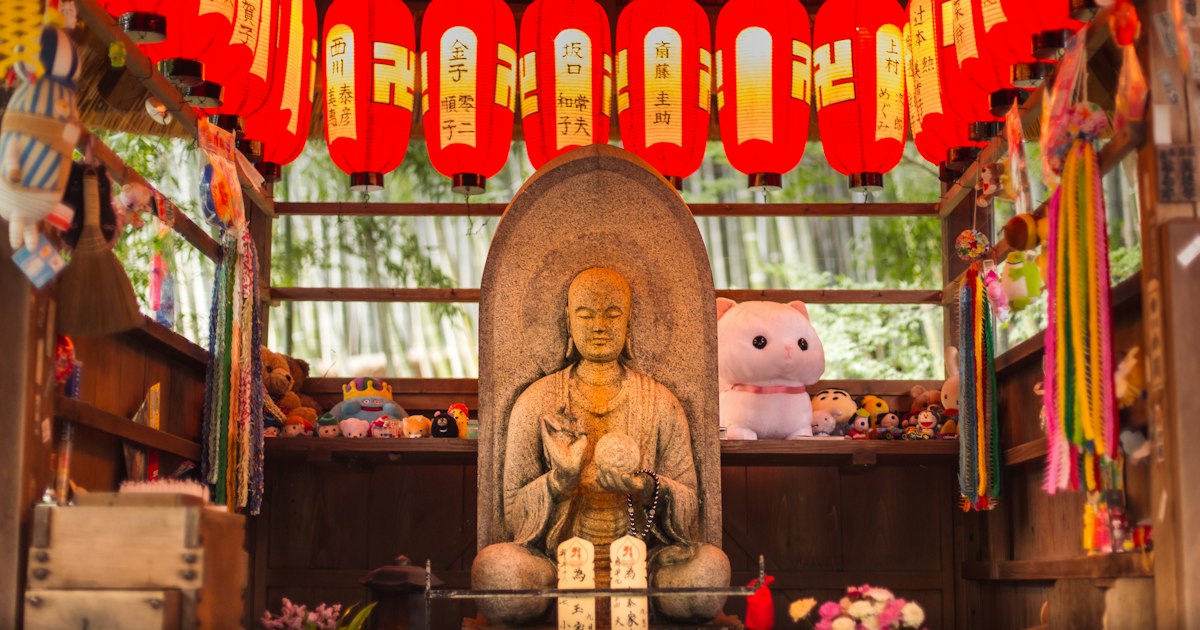
Photo by Marek Piwnicki on Unsplash
Most souvenir shelves in Japan are stacked with fans, chopsticks, and tenugui, but one of the most meaningful — and least understood — purchases a visitor can make is a home altar. A butsudan (Buddhist altar) or kamidana (Shinto household shrine shelf) is a genuine piece of Japanese domestic life, not a tourist trinket, and compact modern versions exist specifically because apartment-dwelling Japanese families need something smaller than their grandparents’ altars. Buying one takes a bit more homework than grabbing a daruma doll at the airport, but it’s entirely doable, and the result is a souvenir with real craftsmanship behind it.
Butsudan vs. Kamidana: What You’re Actually Buying
These two objects get confused constantly, including by Japanese people outside their own household’s tradition, so it’s worth separating them before you shop.
A butsudan is a Buddhist altar, traditionally a cabinet with doors that houses a statue or scroll of a Buddhist deity along with ancestral memorial tablets (ihai). It’s used for daily offerings of rice, tea, water, and incense, and features heavily around the Obon festival in summer, when ancestors’ spirits are said to visit home. A kamidana is a Shinto shelf, usually mounted high on a wall, holding a small shrine-shaped box that stores a paper or wooden talisman (o-fuda) from a shrine, flanked by offerings of rice, salt, water, and sake. Butsudan are about family memory; kamidana are about an ongoing relationship with a shrine and the kami it enshrines. If you’re buying purely as a cultural souvenir rather than for actual devotional use, either works — just be clear with the shop staff about your intent, since they’ll often ask.
Where to Buy One
Specialty altar shops are called butsugu-ten (for butsudan and Buddhist ritual goods) or sold through shrine-supply dealers for kamidana. These aren’t big-box retailers — most are small, family-run stores, frequently with a workshop in back, and they keep modest hours: typically around 10:00–18:00, often closed one day midweek. Calling ahead or checking a storefront sign before a special trip is worth it.
- Kyoto has one of the country’s deepest concentrations of butsugu-ten, largely because the neighborhoods around the two great Jodo Shinshu head temples, Higashi Honganji and Nishi Honganji (both a short walk from Kyoto Station), have supplied altar goods to pilgrims and local temples for centuries.
- Nagoya is a historic manufacturing center for lacquered butsudan — “Nagoya butsudan” is a nationally recognized traditional craft — and shops across the city sell everything from full gilt altars to compact modern ones.
- Osaka has its own long-standing butsudan-making tradition and a cluster of dealers in its older merchant districts.
- Asakusa in Tokyo, especially the backstreets west of Sensoji, has long served as a wholesale district for Buddhist ritual goods, so smaller retail shops there are used to one-off customers as well as temple buyers.
- Department stores occasionally carry a small selection of compact butsudan or kamidana in their interior-goods or furniture section — worth asking at the information desk if you’re short on time.
If you’re combining altar-shopping with other craft hunting, it’s also worth checking flea markets for older, secondhand pieces — the same hunting instinct that applies to Japan’s antique tool and hardware flea markets turns up genuine vintage kamidana and small butsudan from time to time, usually far cheaper than a new one, though you’ll want to have it cleansed or blessed if you intend to use it devotionally rather than display it.
Realistic Prices in Yen
Prices vary enormously by size, wood, and finish, but as a rough guide:
- Budget: simple unfinished or lightly finished kamidana shelf boxes start around ¥3,000–¥8,000. Small decorative or “interior” butsudan designed to sit on a bookshelf, in paulownia or other light wood, run roughly ¥15,000–¥40,000.
- Mid-range: hinoki (Japanese cypress) kamidana with proper shrine-roof detailing typically cost ¥15,000–¥50,000. Compact modern butsudan in walnut or karin wood with a clean, furniture-like design run ¥50,000–¥150,000.
- Splurge: full-size traditional lacquered and gold-leafed butsudan, hand-built in the old manufacturing centers, commonly start around ¥300,000 and can run well past ¥1,000,000 for the finest work. These are built to be heirlooms, not souvenirs, but seeing one in a Nagoya or Kyoto workshop is worth doing even if you don’t buy.
Choosing Materials and Style
Traditional lacquered butsudan (often called kin-butsudan, “gold altars”) are ornate, mirror the interior of a temple hall, and are strongly associated with Jodo Shinshu and Jodo Buddhism. Plainer wood-grain butsudan (kara-ki butsudan), left unlacquered to show the wood, suit other sects and also suit most foreign buyers’ interiors better. For kamidana, hinoki is the standard and preferred wood — it’s light-colored, fragrant, and traditionally considered pure, which matters for an object meant to be sacred rather than purely decorative. Avoid stained or dark-wood kamidana if you want something that reads as traditional; the pale, unfinished look is the convention for a reason.
The Accessories You’ll Also Need
A bare altar box is only half the purchase. For a kamidana, the standard minimum set includes a sanbo (small offering stand), a pair of kawarake dishes for rice and salt, a small sake vessel, and a shimenawa rope with shide paper zigzags for the front. For a butsudan, expect to also buy an incense burner, a small bell (orin), candle holders, and a pair of flower vases — fresh or artificial flower offerings are part of the daily ritual, and anyone curious about arranging them properly might enjoy pairing the purchase with one of Japan’s beginner-friendly ikebana classes. Some butsudan are built around a hanging scroll of a deity instead of a statue, in which case you’d be shopping at a kakejiku specialist, or hyogu-ya, rather than a butsugu-ten.
Common Mistakes Foreign Buyers Make
- Buying a kamidana without an o-fuda. The shelf itself is just a holder — the talisman inside is the point. If you want the full experience rather than an empty display box, visit a shrine you have an affinity for and ask for an o-fuda; tech-industry visitors sometimes pick up theirs at Kanda Myojin near Akihabara, known for blessing IT and electronics work, which makes a nice story to go with the shelf.
- Mounting a kamidana at eye level or below. Convention calls for it to be placed higher than head height, ideally facing south or east, and never directly above a doorway people walk through.
- Treating a used butsudan as a plain antique. Secondhand altars sometimes still contain a previous family’s memorial tablets or require a priest to perform a closing ceremony before resale — reputable shops handle this, but flea-market finds may not have been through the process.
- Assuming any shop will ship internationally. Many small butsugu-ten are not set up for overseas shipping or paperwork; ask before you buy a large piece, and consider whether a compact model that fits in a suitcase is more realistic than a full-size cabinet.
Timing Your Visit
There’s no strict shopping season, but two periods make a visit more rewarding. Before New Year, households traditionally refresh their kamidana’s shimenawa and offerings, so shops stock up and staff are well-practiced at explaining the components to first-time buyers. Around Obon in mid-August (mid-July in some regions), butsudan shops see a seasonal rush of memorial goods, and it’s an interesting time to see the altars in actual use if you’re staying with a Japanese family or visiting a temple. Outside these windows, shops are quieter and staff have more time for the questions a foreign buyer inevitably has.