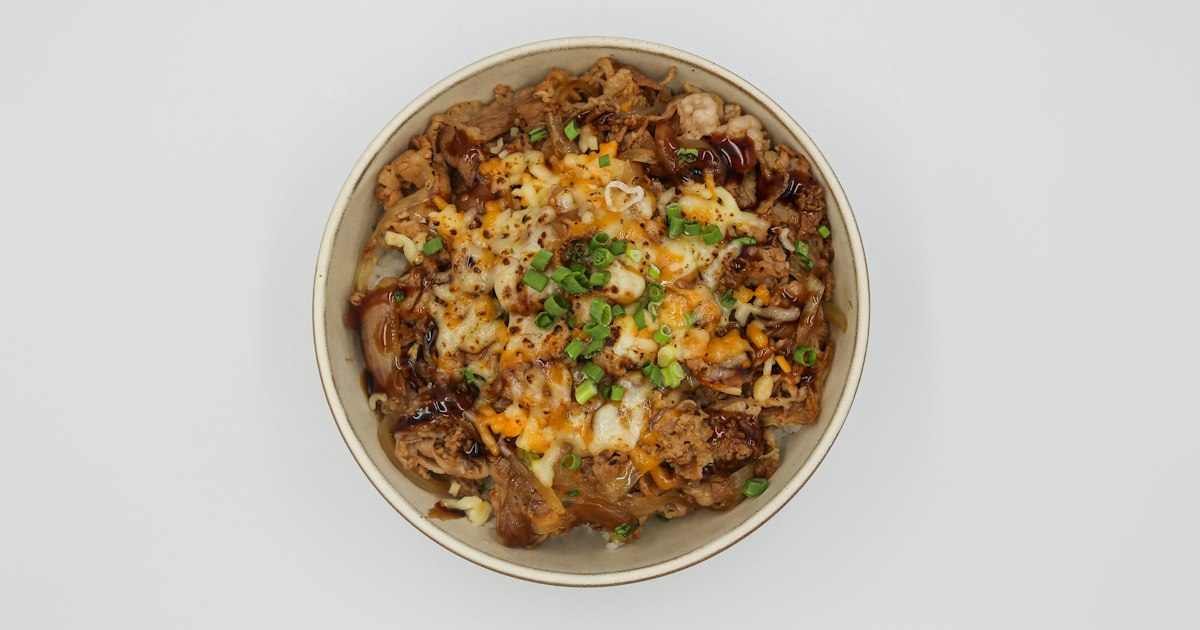
Photo by Xavier Chng on Unsplash
Ask anyone in Sapporo where to find Hokkaido’s best-known pork dish and they’ll likely point you three hours southeast, to a mid-sized agricultural city called Obihiro. That’s where butadon — thick slices of grilled pork glazed in sweet-savory soy sauce over a mound of rice — was invented nearly a century ago, and it’s still the only place where locals will tell you, without hesitation, that you’re eating the “real” version.
What Makes Obihiro’s Butadon Different
Butadon (豚丼, literally “pork bowl”) looks like a simple rice-bowl dish, but Obihiro’s version has specific rules that separate it from the butadon you might find at a random diner elsewhere in Japan. The pork — usually loin (rosu) or a mix of loin and belly — is cut into thick slabs, not thin shabu-shabu-style strips, and grilled directly over charcoal before being bathed in a tare sauce built from soy sauce, sugar, and mirin. The charcoal grilling is the key detail: it gives the fat a light char and smoky edge that a frying pan can’t replicate, and it’s why a good bowl smells like a yakitori stall before it even reaches your table.
A regular-size bowl typically runs ¥900–1,300, with large (ōmori) or extra-thick-cut versions pushing ¥1,500–2,000. That’s noticeably more than a konbini bento, but on par with a casual lunch set anywhere else in Japan, and most shops serve it fast — this is built as efficient, satisfying lunch food for farmers and office workers, not a slow-dining experience.
The Birth of Butadon in Obihiro
The story traces back to the early 1930s, when the Tokachi region around Obihiro was a major pork-farming area but eel — the traditional base for a similar grilled, soy-glazed rice bowl (unadon) — was scarce and expensive this far north. A restaurant called Panchō is widely credited with substituting local pork for eel around 1933, essentially reverse-engineering unadon with a cheaper, locally abundant protein. The dish caught on with Tokachi’s farming and logging communities as a cheap, filling, protein-heavy meal, and it never left the local menu rotation. Panchō is still open near Obihiro Station today and is considered the dish’s point of origin, which makes it the closest thing butadon has to a pilgrimage site.
Where to Eat the Original: Obihiro’s Best Butadon Shops
Obihiro has dozens of butadon restaurants, but a handful are consistently named by locals and food writers as the standard-bearers:
- Panchō (ぱんちょう) — The acknowledged birthplace of the dish, a short walk from JR Obihiro Station. Expect a line at peak lunch hours; the tare here is on the sweeter, darker side, and portions are generous.
- Ippin (いっぴん) — A longtime local favorite known for well-marbled, thickly cut loin and a lighter touch with the sauce than Panchō’s.
- Butadon no Tomuraya and other long-running counter shops scattered through the covered arcades near the station — worth trying if you want to compare tare styles shop to shop, since recipes vary more than you’d expect from such a simple-sounding dish.
Most of these shops are small, counter-style operations open roughly 11:00–19:00 (some close one weekday, commonly Monday or Wednesday — check current hours locally, as they do shift), and none take reservations. Cash is still safer to carry than at big-city restaurants, though card and IC-card payment acceptance has been expanding.
Getting to Obihiro from Sapporo and New Chitose Airport
Obihiro sits inland in the Tokachi Plain, about 200 km southeast of Sapporo, and isn’t a casual add-on to a Sapporo-Hakodate itinerary — it takes planning.
- By train: The JR Super Tokachi limited express runs directly between Sapporo Station and Obihiro Station in about 2 hours 35 minutes to 3 hours, with an unreserved one-way fare in the ¥7,000–8,000 range.
- By air: Tokachi-Obihiro Airport has direct flights from Tokyo Haneda (around 1 hour 40 minutes), which can be faster and cheaper than the train if you’re coming from Honshu rather than starting in Sapporo.
- By bus: Highway buses connect Sapporo and Obihiro in roughly 3.5–4 hours for considerably less than the train, usually ¥2,500–3,500 one-way — a reasonable trade if you’re not in a hurry.
- By car: The Doto Expressway links Sapporo and Obihiro directly; if you’re road-tripping across Hokkaido, the service areas along the way are worth a stop in their own right — see our guide to Japanese expressway service areas for what to expect.
Budget, Mid-Range and Splurge Options
Butadon is forgiving on budget across the board, but there’s still a spread worth knowing:
- Budget (¥900–1,100): A regular-size bowl at a standard counter shop — this is the everyday version locals actually eat, usually thin-to-medium cut loin.
- Mid-range (¥1,200–1,600): Thicker-cut loin or a loin-and-belly combination at a named shop like Panchō or Ippin, often with a small side of pickles and miso soup included.
- Splurge (¥1,800–2,500+): “Tokusen” (premium-grade) cuts, extra-large portions, or butadon made with branded Tokachi pork — some shops offer a kuroge or branded local pork upgrade that’s noticeably richer.
If you’re building out a wider Hokkaido food itinerary while you’re here, it’s worth pairing a butadon stop with Hokkaido’s other defining comfort food — our guide to zangi, Hokkaido’s garlic-soy fried chicken, covers the other dish nearly every Hokkaido local has strong opinions about.
Best Time to Go and Common Mistakes
Butadon isn’t seasonal — it’s grilled-to-order year-round and tastes just as good in January as in August — which makes Obihiro a solid stop regardless of when your Hokkaido trip falls. That said, winter (December–February) is when Obihiro’s other signature attraction, Ban’ei horse racing (a unique heavy-draft-horse sled race unique to this city), runs evening sessions, so pairing a butadon lunch with a race-night visit is an efficient way to use a single stop.
The most common mistake visitors make is assuming any “butadon” they see on a menu elsewhere in Japan is the same dish — in Tokyo and other regions, “butadon” sometimes refers to thin pork slices simmered gyudon-style rather than grilled, which is a genuinely different texture and flavor. If you want the dish this article describes, look for the words “Tokachi” or “Obihiro” on the menu, or simply wait until you’re in Obihiro itself. The second mistake is treating it like a sit-down dinner outing — these are lunch-focused counter shops that often sell out of pork or close by early evening, so arrive before 13:00 if you want to avoid both the lunch rush and the risk of a shop running out for the day.