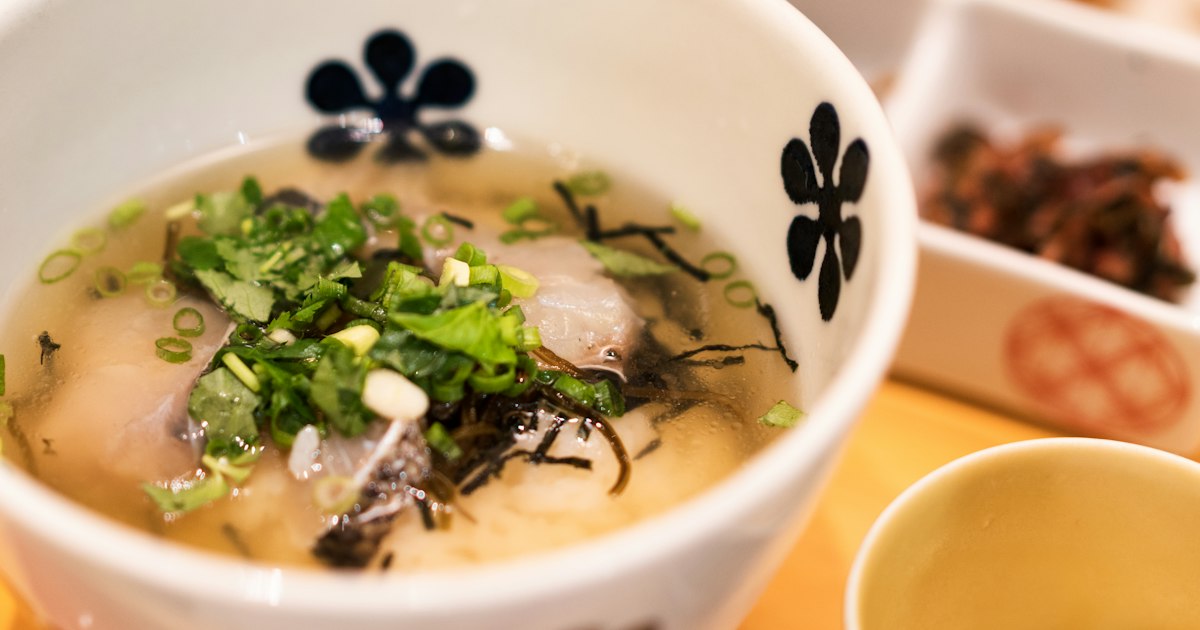
Photo by White.Rainforest ™︎ ∙ 易雨白林. on Unsplash
On a cold morning at a mountain trailhead, a hot spring town, or a neighborhood diner, you’ll eventually run into a bowl of cloudy, pork-flecked soup that smells like home cooking even if you’ve never been to Japan before. That’s tonjiru — literally “pork soup” — and it’s one of the most comforting, least-hyped dishes a visitor can order. It won’t show up on many “must-eat Japan” lists next to ramen or sushi, but it’s the dish locals actually crave when the weather turns, and it’s cheap, filling, and easy to find once you know where to look.
What Exactly Is Tonjiru?
Tonjiru is a miso-based soup built around thin-sliced pork belly or pork offcuts and a mix of root vegetables — usually daikon radish, carrot, taro (satoimo) or potato, burdock root (gobo), and konnyaku, simmered in a dashi stock and finished with miso paste. It’s thicker and more substantial than a standard miso soup; think of it as sitting somewhere between soup and stew. Pork fat renders into the broth as it cooks, giving it a richness that plain miso soup doesn’t have, and the vegetables are cut into hearty, bite-sized chunks rather than the thin shavings you’d see in a lighter soup.
It’s closely related to kenchinjiru (a vegetarian version using no meat, often served at temples) and to butajiru, which is essentially the same dish — the names are regional and largely interchangeable. You’ll also see it appear inside bento boxes, as a side to a grilled fish teishoku (set meal), or standing alone as a meal with a bowl of rice.
Where to Try It: From Convenience Stores to Mountain Huts
Tonjiru’s best quality is that you don’t need a reservation or a special trip to find good versions of it.
- Teishoku chains: Ootoya and Yayoiken, both nationwide chains, serve tonjiru either as a side upgrade (around 150–250 yen added to a set meal) or as a standalone bowl with rice for roughly 700–900 yen. These are reliable, open daily, usually from around 11:00 to 22:00.
- Convenience stores: 7-Eleven, Lawson, and FamilyMart all sell cup or bagged tonjiru, especially from autumn through late winter, for 150–300 yen. It’s microwaved or hot-water prepared and is a legitimately good option if you’re cold and just got off a train.
- Mountain trail huts: Mt. Takao in western Tokyo, a popular half-day hike reachable via the Keio Line to Takaosan-guchi Station (about 50 minutes from Shinjuku), has several rest huts near the summit selling tonjiru for roughly 600–800 yen, best enjoyed after the climb in autumn (November foliage) or winter.
- Hot spring towns: Ryokan dinners in onsen areas frequently include a pork-and-vegetable miso soup course, especially in colder regions. If you’re heading somewhere remote and snowy like Nyuto Onsen in Akita, expect it on the dinner table almost automatically — it’s the kind of dish that mountain ryokan kitchens make well because they’ve been making it for generations.
- Winter festivals and markets: Street stalls at matsuri and New Year markets often sell tonjiru from large pots for 300–500 yen a cup, a good low-commitment way to try it while sightseeing.
Best Season and Timing
Tonjiru is a cold-weather dish through and through. It appears on menus most reliably from late October through March, and many seasonal-only stalls (festival vendors, ski-resort huts, mountain trail shops) simply don’t sell it in summer. If you’re visiting snow country — the same kind of region covered in our guide to Yudanaka’s snow-country soba and apple orchards — tonjiru is often the thing locals eat before or after visiting a hot spring, precisely because it warms you up fast and pairs naturally with onsen-town dining. Lunchtime (11:30–13:30) is the most dependable window at teishoku restaurants; dinner service at ryokan is usually fixed by your reservation time.
Budget, Mid-Range, and Splurge Options
This is a dish where spending more doesn’t necessarily buy you something dramatically different, but the quality ceiling is real:
- Budget (150–500 yen): Convenience store cups and festival stalls. Fine for a quick, honest version, though the pork is often minimal.
- Mid-range (700–1,000 yen): Teishoku chains and local diners (shokudo), where tonjiru comes with generous vegetables and visible pork belly, often as part of a set with rice, pickles, and a small side.
- Splurge (included in a kaiseki or ryokan dinner, typically 12,000–30,000+ yen per person for the full meal): Here tonjiru isn’t ordered on its own — it’s one course in a multi-dish dinner at a quality ryokan, made with better pork, house-made dashi, and seasonal root vegetables sourced locally. The soup itself isn’t “luxury,” but the surrounding meal elevates it considerably.
Common Mistakes Visitors Make
A few easy ones to avoid:
- Confusing it with miso soup: If you order “miso soup” expecting tonjiru, you’ll get a small, light bowl with tofu and seaweed — not the hearty pork version. Ask specifically for tonjiru or butajiru.
- Assuming it’s available year-round at every restaurant: Many casual spots drop it from the menu in summer. If you’re visiting in July or August, don’t count on finding it outside of all-season chains.
- Not checking for allergens: Tonjiru almost always contains pork and often dashi made from fish or bonito, so it’s not vegetarian or halal despite looking like a vegetable soup. Kenchinjiru is the dish to ask for instead if you need a meat-free version.
- Skipping it because it looks “too plain”: It photographs modestly next to ramen or sushi, but it’s one of the most genuinely flavorful, unpretentious dishes in everyday Japanese cooking — worth ordering even if it won’t be your most Instagrammed meal.
Making Tonjiru Yourself
If you’re staying in a weekly mansion or apartment-style hotel with a kitchenette, tonjiru is one of the easiest Japanese dishes to cook with minimal equipment — a pot, a knife, and a rice cooker is really all you need, which makes it a good match for the kind of setup covered in our guide to compact rice cookers and mini kitchen gear for Japan’s weekly mansions and studio stays. For ingredients, a well-stocked supermarket will have everything, but if you want higher-quality miso, dashi packs, or thick-cut pork belly without hunting through multiple stores, Seijo Ishii is a reliable one-stop option in most major cities.
A basic version: sauté thin pork belly slices until the fat renders, add chopped daikon, carrot, gobo, and satoimo, cover with dashi stock, simmer 15–20 minutes until the vegetables soften, then stir in miso paste off the heat (boiling miso dulls its aroma). A handful of green onion on top finishes it. Total cost for ingredients at a supermarket is typically under 1,000 yen for enough to serve two or three people over a couple of meals.
Final Thoughts
Tonjiru rewards visitors who are willing to eat like locals rather than chase photogenic food. It’s inexpensive, it’s everywhere once you know to look, and it tends to show up exactly when you need it most — after a cold hike, during a winter festival, or at the start of a ryokan dinner in the mountains. Order it without overthinking it; it’s meant to be simple.