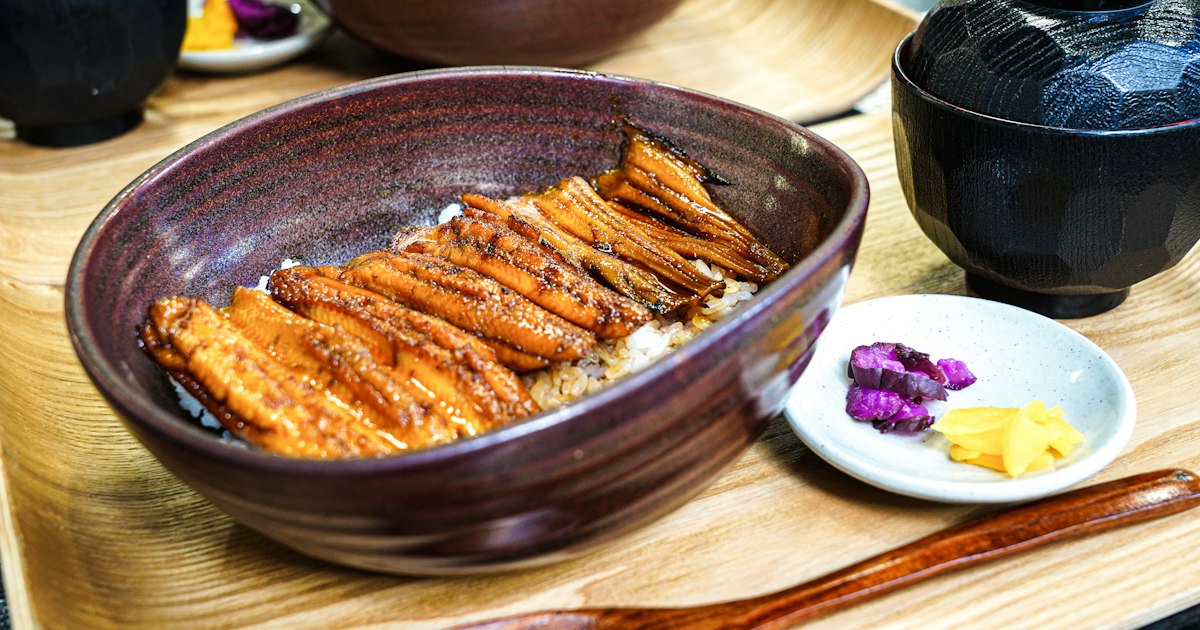
Walk into almost any Japanese supermarket, department store basement, or neighborhood restaurant in the thick of summer and you’ll see the same banner: a cartoon eel, the character 鰻 (unagi), and a date circled in red. That date is Doyo no Ushi no Hi — the Day of the Ox during the Dog Days — and for one day, grilled eel becomes the most sought-after meal in the country. It isn’t a public holiday, nobody gets the day off, but it’s one of the most quietly consistent food traditions a visitor can actually plan around.
What Is Doyo no Ushi no Hi?
The name breaks into two old calendar concepts. “Doyo” (土用) refers to the roughly 18-day transitional window before each of the four seasons changes, a concept borrowed from Chinese five-element theory. “Ushi no hi” (丑の日) means “Day of the Ox” — because historically, days were counted in a repeating 12-day cycle of zodiac animals, the same cycle used for years. So Doyo no Ushi no Hi is simply the day within the pre-autumn doyo period that happens to fall on an “ox” day. Since the doyo window is about 18 days and the zodiac cycle repeats every 12 days, most years there’s one ox day; some years there are two, called ichi no ushi (first ox day) and ni no ushi (second ox day).
Because it’s tied to a rotating day-count rather than a fixed date, it moves around the Gregorian calendar each year — usually landing somewhere between mid-July and early August. There’s no shortcut formula worth memorizing as a traveler; the easiest way to find the exact date for the year you’re visiting is to check a Japanese calendar (koyomi) app, or simply look at convenience store and supermarket signage once you’re in the country — they start advertising it about two weeks out.
Why Unagi? An Edo-Period Ad Campaign That Stuck
The food connection isn’t ancient folk wisdom so much as very effective 18th-century marketing. The most-told version credits Hiraga Gennai, an Edo-period polymath, inventor, and occasional copywriter, with helping a struggling eel shop drum up midsummer business. He leaned on an existing folk belief that foods starting with the sound “u” — umeboshi (pickled plum), uri (melon), udon — helped the body cope with natsubate, the seasonal fatigue and appetite loss that hits in Japan’s brutal, humid summers. Unagi fit the pattern perfectly, and it had a real nutritional case behind it: eel is dense in vitamin A, B1, B2, and fat, genuinely restorative food for a body run down by heat. The slogan worked. Two and a half centuries later, it’s still working.
How to Order Unagi Like You Know What You’re Doing
Most restaurants serve eel as kabayaki — filleted, skewered, grilled, and repeatedly basted in a sweet soy-based tare sauce until it’s glossy and caramelized. If you see shirayaki on the menu, that’s the same fish grilled plain, unsauced, meant to be eaten with a dab of wasabi and soy so you taste the fish itself rather than the glaze.
- Unadon — eel over a donburi (rice bowl). The simpler, usually cheaper format.
- Unaju — the same idea served in a lacquered box (jubako), generally considered a step up in presentation and price.
- Hitsumabushi — Nagoya’s regional specialty: chopped eel over rice in a wooden tub, eaten in three stages — plain, with condiments like nori, wasabi, and scallion, then as ochazuke with hot dashi poured over the last portion.
A sprinkle of sansho pepper, the citrusy, faintly numbing Japanese peppercorn, is on the table at nearly every unagi restaurant — use it, it cuts the richness.
Where to Eat It: Budget to Splurge
Budget (¥1,000–¥2,000): Supermarkets and convenience stores sell pre-grilled kabayaki fillets and unaju bento specifically timed to this day — you just reheat at home or at your hotel. Note that prices for fresh eel often climb in the days right around Doyo no Ushi no Hi due to demand, so the sale-priced packs disappear fast; shop early in the day. If you’re buying one to self-checkout, it’s worth knowing the etiquette first — see our guide to self-checkout and bagging your own groceries in Japan, since fish trays and bento boxes need careful bagging to avoid a crushed lunch.
Mid-range (¥2,500–¥4,500): A standard unadon or unaju set at a neighborhood eel restaurant, usually served with miso soup, pickles, and sometimes a small chawanmushi on the side — that savory steamed egg custard shows up as a common companion dish to eel sets across the country. Expect lunch service roughly 11:30–14:00 and dinner 17:00–21:00, with many shops closed one weekday (often Monday or Tuesday) and some closing early once they run out of eel for the day, especially around the ox-day rush.
Splurge (¥6,000–¥15,000+): Long-established specialty shops treat unagi as their entire identity. Tokyo’s Nodaiwa in Azabu-Juban has been grilling eel since 1675 and remains one of the most-recommended old-school spots. In Nagoya, Atsuta Horaiken (founded 1873) is the standard-bearer for hitsumabushi. If you’d rather road-trip to the source, Hamamatsu in Shizuoka Prefecture — reachable in about 90 minutes from Tokyo on the Tokaido Shinkansen — and its Lake Hamana are where Japan’s modern eel farming industry began in the Meiji era, and the city is still thick with eel restaurants. It also sits conveniently along a route if you’re already renting a camper van in Japan and working your way along the coast. If eel isn’t for everyone in your group, Mie Prefecture’s Matsusaka beef makes a solid alternative splurge meal in roughly the same region and price bracket.
Common Mistakes Tourists Make
- Assuming it’s a holiday. It isn’t. Shops, trains, and offices run on a completely normal schedule — only restaurant demand spikes.
- Walking into a famous shop on the day itself without a reservation. Historic unagi restaurants are genuinely overwhelmed on Doyo no Ushi no Hi; waits of an hour or more are common, and some take reservations specifically for that date weeks in advance. If you have a must-visit shop in mind, call or book ahead rather than show up.
- Confusing unagi with anago. Unagi is freshwater eel, usually grilled with the sweet tare glaze; anago is saltwater conger eel, lighter, often served at sushi counters rather than eel specialty shops. They look similar on a menu photo but taste and cook differently.
- Over-ordering. Eel is fatty and filling. A single unaju set with rice, soup, and pickles is a full meal — you don’t need to add extra sides to feel like you got your money’s worth.
- Not checking the actual date for that year. Because it moves on the Gregorian calendar, travelers who plan around “late July” sometimes land a week off. Confirm the date once you’re in-country.
Worth Knowing: Sustainability
Japanese eel (Anguilla japonica) is listed as endangered by the IUCN, and wild-caught stock has been declining for decades. The vast majority of unagi served in restaurants and supermarkets today is farm-raised from wild-caught juveniles (glass eels), which is a separate issue from wild adult fishing but still a point of ongoing debate in Japan. It’s not something that should stop you from trying a dish this central to Japanese food culture, but it’s worth knowing the context if you’re the type of traveler who likes to.
Planning It Into a Summer Trip
Doyo no Ushi no Hi lands at the same time as some of Japan’s best-known summer festivals, so it’s easy to build a few days of travel around it. Gifu’s Gujo Hachiman water town and its all-night Gujo Odori dance festival runs deep into the summer and pairs naturally with a Nagoya-area eel detour, since Atsuta Horaiken and the hitsumabushi restaurants are a short trip away. Whatever else is on the itinerary, just remember the eel part of the plan needs a phone call ahead of time — everyone else in Japan is thinking about lunch on that day too.