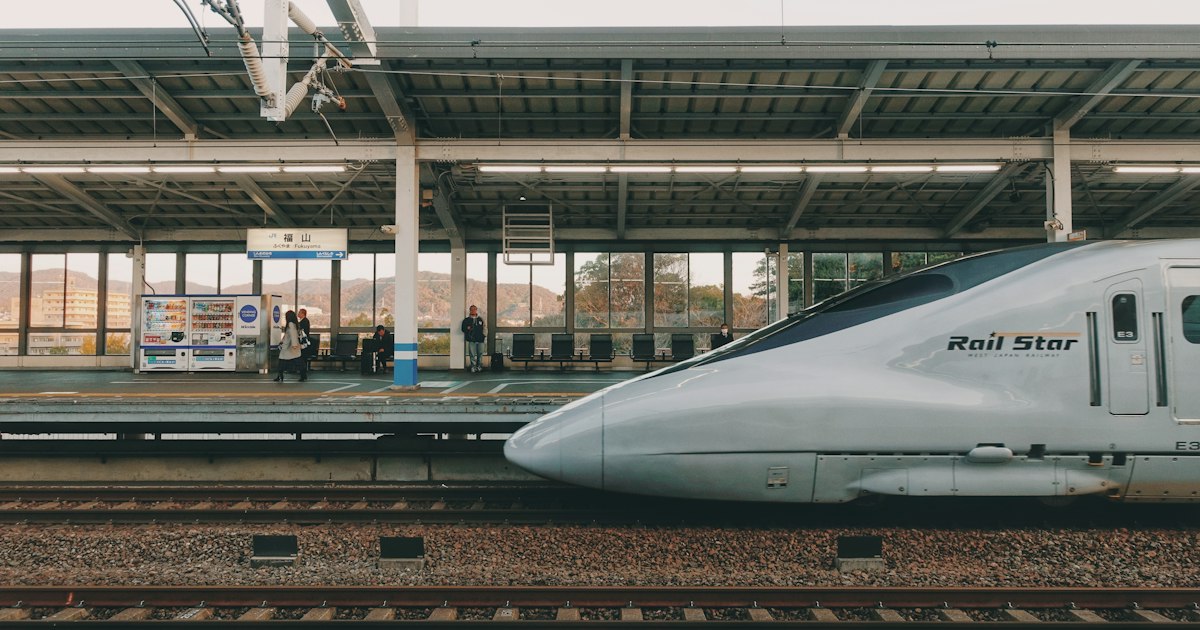
Photo by Nakaharu Line on Unsplash
It happens to even seasoned travelers: the train doors chime, you step off onto the platform, and ten seconds later you realize your phone is still sitting in the seat pocket, or your camera bag is in the overhead rack of a train that’s already pulling away at 300 km/h. The good news is that Japan’s lost-and-found system for Shinkansen trains is unusually well organized, and the recovery rate for items left on bullet trains is genuinely high — JR companies report that the vast majority of reported items are eventually matched with their owners. But speed and following the right steps matter a lot. Here’s exactly what to do, in order.
Act Immediately — Don’t Wait Until You Get to Your Hotel
The single biggest factor in getting your item back is how fast you report it. Shinkansen trains are cleaned and turned around quickly, and once an item is found by cleaning staff it gets logged and moved — but if nobody is looking for it yet, it can sit unclaimed longer than necessary. As soon as you notice something is missing, do not leave the station. Go straight to the nearest JR staff member, ticket gate attendant, or Midori no Madoguchi (ticket office) window and explain what happened: the train number or departure time, which car and seat number (check your ticket stub — this is why it’s worth holding onto it until you’re well clear of the station), and a description of the item.
If you’re still on the platform and the train hasn’t yet departed, tell staff immediately — in rare cases they can radio the crew before the doors close. If the train has already left, staff will contact the conductor by radio, and crew can often locate the item before the train even reaches its next stop, holding it for pickup at a stop further down the line or sending it back on a return service.
Where to Go: Station Lost-and-Found Counters
Every major Shinkansen station has a lost-and-found office (遺失物, ishitsubutsu), usually near the ticket gates or inside the station’s general information counter. Typical hours run from around 10:00 to 18:00 or 19:00, though staffed ticket windows that can take a basic report often operate much longer, sometimes from early morning until close to midnight. If you’re transiting through on a connecting train — say changing from the Nankai or JR Haruka into a Shinkansen at Shin-Osaka, as covered in our guide on Nankai Rapi:t vs JR Haruka — report the loss at whichever station you’re standing in; staff can look it up regardless of which JR company’s train you were on, though Tokaido, Sanyo, Tohoku, and Kyushu Shinkansen are each operated by different JR companies (Central, West, East, and Kyushu respectively) with separate internal systems.
For English-speaking travelers, JR East operates a multilingual phone line, the JR East InfoLine, at 050-2016-1603, open daily from 10:00 to 18:00, which can help with lost items on Tohoku, Joetsu, and Hokuriku Shinkansen routes (useful if, say, you’re heading up toward Matsushima Bay near Sendai and realize something’s missing after you’ve already left the platform). For the Tokaido Shinkansen (Tokyo–Osaka), JR Central runs a Shinkansen Customer Center that can be reached at 050-3772-3910. If you’re not confident on the phone, ask your hotel concierge or even station staff to make the call for you — this is extremely common and nobody will think it’s an imposition.
Checking Online Before You Call
JR East and JR West both maintain online lost-item search databases where recently found items are logged with a rough description, the date, and the train or station where they turned up. These are mostly in Japanese, but the category icons (wallet, umbrella, phone, bag) are easy to navigate even without reading kanji, and Google Translate’s camera function handles the rest. Searching online first can save you a long hold time on the phone, since you can often confirm an item matching yours has already been logged before you even call.
Getting the Item Back: Pickup vs. Courier Delivery
Once an item is located, you generally have two options. The first is picking it up in person at the station or lost-and-found office holding it — free, but only practical if you’re still in the area or can backtrack. The second is having it shipped to you via courier (takkyubin), which most JR lost-and-found offices will arrange on request. Expect to pay roughly ¥1,500 to ¥3,000 for domestic delivery depending on distance, payable by cash or sometimes by bank transfer, and delivery typically takes one to two days within Japan. If you’re about to fly home, ask specifically whether they can ship to your hotel before checkout or, in some cases, directly to the airport — this only works with enough lead time, so don’t wait until your last day to start the process.
Items are usually held at the station where they were found for a few days before being transferred to a larger regional lost-property warehouse (for JR East, this is a central office in Tokyo) if unclaimed. After an extended period — often around three months, though it varies by operator — unclaimed valuables may be handed over to local police lost-property offices, so don’t assume an item is gone just because a few weeks have passed.
Common Mistakes That Slow Things Down
- Not recording your seat and car number. Without it, staff have to search a much wider net. Keep the ticket until you’re off the platform.
- Reporting only at your final destination. Report at the nearest station possible, even if it’s not where you’re headed — time matters more than convenience.
- Assuming all Shinkansen lost-and-found is one system. JR Central, JR East, JR West, and JR Kyushu each manage their own networks, so a report filed with the wrong company’s line can get lost in translation.
- Giving up after one call. Items found deep in a seat pocket or overhead rack sometimes aren’t logged until the next cleaning cycle, which can be a few hours after the train’s final stop. Following up the next morning is normal and often successful.
Special Cases: Phones, IC Cards, and Food
Phones and tablets are usually easy to identify (lock screen photo, case color) and get prioritized since staff recognize their value. IC transit cards (Suica, Pasmo, Icoca) can often be deactivated remotely if registered to an app, which also helps confirm ownership when you go to claim a replacement or the original. Perishables — including an unfinished ekiben box like Oshamambe’s famous crab rice — are, unsurprisingly, not worth chasing down; cleaning staff dispose of food items immediately for hygiene reasons, so don’t waste report time on a half-eaten lunch box.
The overall takeaway: Japan’s Shinkansen lost-and-found network is fast, courteous, and far more effective than equivalent systems in most countries, but it rewards travelers who report immediately, keep their ticket stub, and are willing to make one or two follow-up calls. Panicking rarely helps — staff deal with this constantly and have a well-worn process for it.