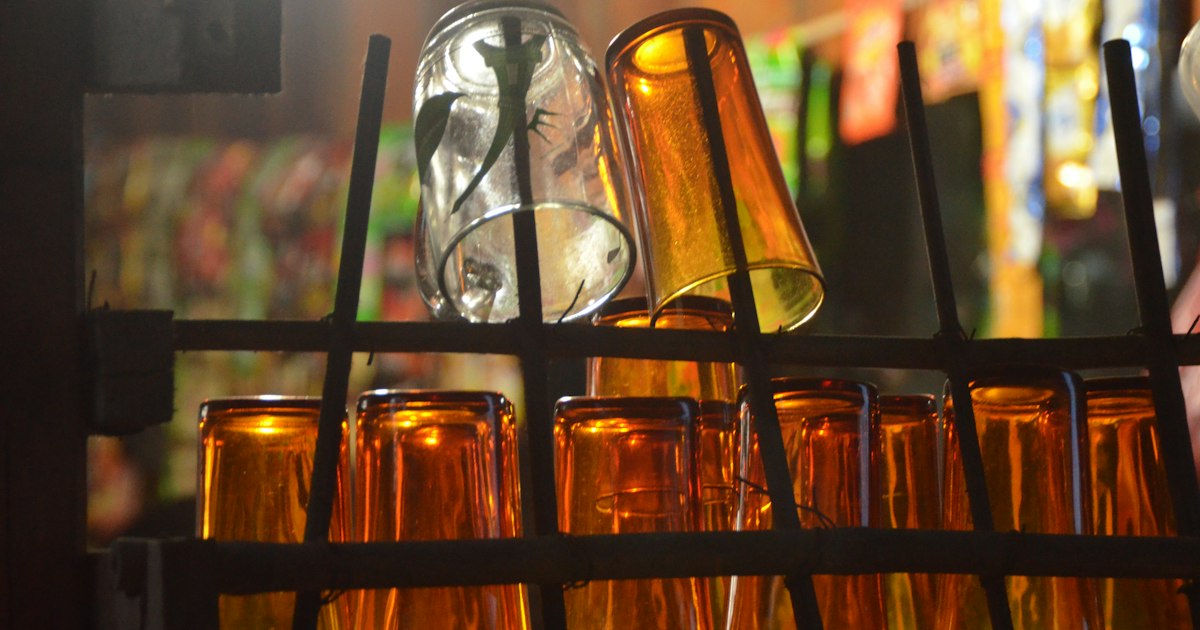
Photo by Beth Macdonald on Unsplash
Most sake is made to be drunk by the cup, pairing quietly with a meal. Kijoshu (貴醸酒) is the opposite: a thick, amber, intensely sweet sake meant to be sipped slowly from a small glass, like a dessert wine. It’s one of the strangest and least-exported styles of sake Japan makes, and unless you know to look for it, you can spend a week in the country’s best sake bars and never see a bottle. Here’s what it is, how it’s made, and the handful of places where you can actually track it down.
What Makes Kijoshu Different
Ordinary sake is brewed by fermenting steamed rice, koji mold, and water together. Kijoshu uses the same process with one deliberate substitution: during the final water addition to the fermenting mash (the step brewers call tome-zoe), the brewer replaces some or all of the water with sake itself. Pouring alcohol into a fermenting mash slows the yeast down before it can convert all the sugar into alcohol, so the finished sake comes out syrupy, deep amber, and far sweeter than anything fermented with plain water.
The technique isn’t ancient — it was developed in 1973 at Japan’s National Research Institute of Brewing in Hiroshima, reviving a much older Nara-period idea of brewing sake with sake instead of water. Because it uses extra sake as a raw ingredient, kijoshu is expensive to make and brewers only release small batches, which is why it’s sold as a specialty item rather than a everyday drink. Expect color ranging from pale gold to a sherry-like amber, and a texture closer to liqueur than table sake.
How It Tastes, and How to Drink It
Good kijoshu tastes like a cross between sherry, Sauternes, and caramelized rice — raisin and honey notes up front, a sticky-sweet body, and a short, slightly bitter or nutty finish that keeps it from feeling cloying. Alcohol content typically runs 13–17%, noticeably stronger than it tastes, which is the single biggest trap for first-timers.
Serve it chilled or at cool room temperature, in a small wine glass rather than a sake cup — a 30–60ml pour is standard, not a full glass. It’s traditionally drunk as an aperitif or, more often, as a dessert pairing: with blue cheese, foie gras, dark chocolate, or vanilla ice cream. Because of the sugar and density, most bottles are sold in 300ml or 360ml formats rather than the usual 720ml or 1.8L, which also explains why prices per milliliter look steep compared to regular sake.
Where to Buy a Bottle
Kijoshu isn’t something you’ll find at a convenience store, and even large supermarkets rarely stock it. Your realistic options, roughly by budget:
- Budget (around ¥1,200–¥2,000 for 300ml): Specialty sake retailers like Imadeya, which has branches in Tokyo (Ebisu, Shibuya) and Osaka, occasionally carry one or two kijoshu labels among their craft sake selection. Stock rotates, so call ahead or ask staff if none is on the shelf.
- Mid-range (¥2,500–¥4,500 for 300–500ml): Department store sake corners, such as Isetan Shinjuku’s basement food hall, carry a more curated, often more aged selection, including gift-boxed bottles.
- Splurge (¥5,000+): Long-aged kijoshu, sometimes cellared for 3–10 years, develops a darker, soy-sauce-like color and deeper flavor. These limited vintage releases show up around New Year gift season and at sake fairs, and are the closest thing Japan has to a dessert-sake equivalent of vintage port.
A quirk worth knowing before you buy: the bottling date printed on the label is usually given in the Japanese imperial era system rather than the Western calendar, so a bottle marked “令和7年” was bottled in 2025. If the date format on a label throws you, this explainer on why Reiwa still shows up on receipts and labels walks through the conversion.
Visiting a Kijoshu Brewery in Hiroshima
Saijo, a district of Higashihiroshima City, is one of Japan’s three great sake-brewing towns (alongside Nada in Kobe and Fushimi in Kyoto), and it’s the birthplace of kijoshu. Several breweries sit within a 15-minute walk of JR Saijo Station, itself about 25–40 minutes from Hiroshima Station on the JR Sanyo Line (around ¥680 one-way). Sanyo Jozo, maker of the widely cited Misonotsuru Kijoshu, is one of the breweries based here and a good first stop if you want to taste the style at its source.
Brewery shops in the district generally open around 9:00–17:00 and close for the New Year holidays; hours and tasting availability vary by brewery, so it’s worth checking ahead rather than showing up unannounced. The best single time to visit is the second weekend of October, when Saijo hosts its annual Sake Matsuri — tens of thousands of visitors sample sake from dozens of breweries for the cost of a tasting cup, and limited-run kijoshu often appears alongside the regular lineup. Outside festival weekend, late autumn through winter is brewing season, so some breweries restrict tours to protect the work in progress; spring and early autumn visits are generally easier for a casual walk-through.
Tasting in Tokyo Without a Trip to Hiroshima
If Hiroshima isn’t on your itinerary, the Japan Sake and Shochu Information Center, near Toranomon/Nishi-Shimbashi in Minato City, is the most reliable place in Tokyo to taste a range of sake styles — including kijoshu when it’s in rotation — for a small per-glass fee using a coupon system. It’s run by the national sake and shochu trade association rather than a single brewery, so the selection changes; staff can tell you on the spot whether kijoshu is currently poured. It’s closed on weekends and public holidays, so this is strictly a weekday stop — confirm current hours before you go, since trade-association facilities like this adjust their schedule more often than retail shops do.
Common Mistakes to Avoid
- Drinking it like regular sake. It’s sweeter and often stronger than it tastes, and a full sake-cup pour will hit much harder than expected — treat it like a fortified wine, not a table sake.
- Serving it warm. Unlike many junmai or honjozo styles, kijoshu is almost always better chilled; warming it emphasizes the sweetness without the balancing acidity.
- Confusing it with mirin. The color and syrupy texture look similar, but mirin is a cooking seasoning, not a drinking sake — check the label for “清酒” (seishu) or “貴醸酒” before buying.
- Not refrigerating after opening. The higher residual sugar makes it more prone to flavor change once opened; keep it cold and finish within a few weeks.
- Expecting every sake shop to stock it. Because production is small and seasonal, it’s genuinely rare outside specialty retailers and brewery shops — budget time to hunt for it rather than assuming you’ll stumble on it.
Bringing a Bottle Home
Liquids over 100ml can’t go in carry-on luggage, so any bottle you buy needs to travel in checked baggage — wrap it well, since 300ml glass bottles are more fragile than they look in a packed suitcase. Duty-free shops at Narita, Haneda, and Kansai airports occasionally stock a kijoshu label as a premium gift item, which sidesteps the packing problem entirely since it’s handed to you after security. If you’d rather not deal with wine checks at all, some specialty retailers in Japan do offer international shipping for sake, in the same way mail-order catalogs have long let overseas fans order Japanese goods without visiting in person — worth exploring if you’ve already discovered how Japan’s mail-order catalog culture works for ordering goods from abroad, since the same logic applies to drink.
Kijoshu will never be the sake you drink by the carafe over dinner, but as a one-bottle souvenir — something to crack open back home with cheese or dessert while you talk through your trip — it’s one of the more distinctive pours Japan makes.