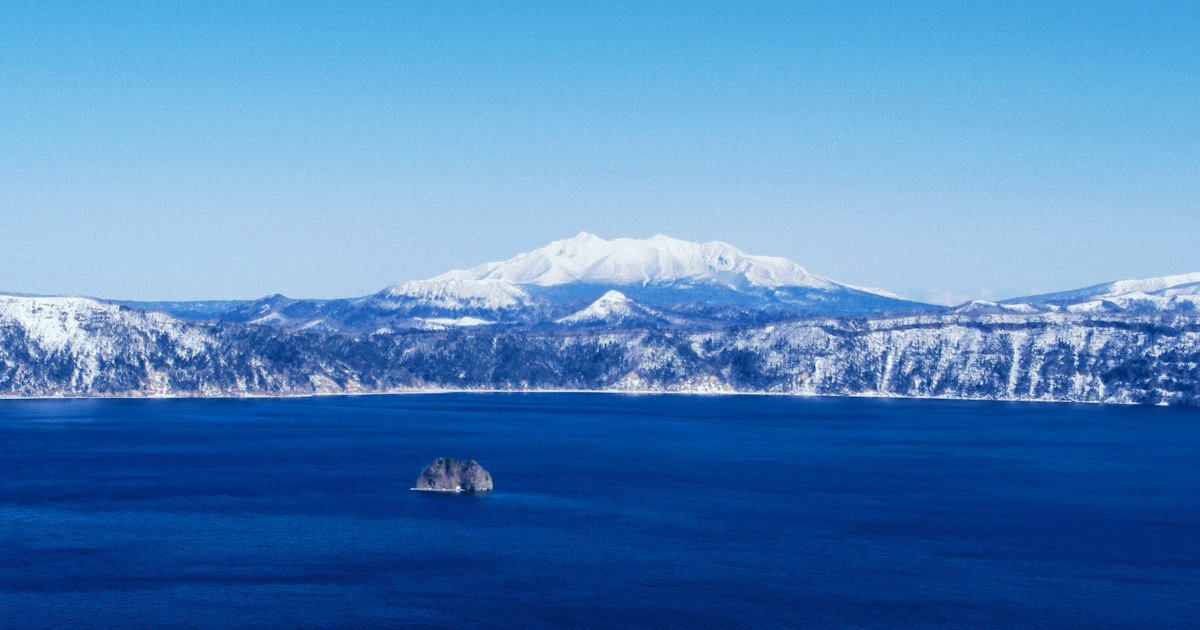
Photo by YUNAN WANG on Unsplash
Hokkaido has two caldera lakes that get mentioned in the same breath so often that visitors assume they’re next-door neighbors or interchangeable stops. They’re neither. Lake Shikotsu and Lake Toya sit about 60-70 km apart inside the same national park, Shikotsu-Toya, but they offer almost opposite experiences: one is a quiet, deep-blue wilderness lake with almost no development on its shores, the other is a lively hot-spring resort town built around a lake with a volcano still steaming beside it. Here’s how to actually plan a visit to either or both.
Two Calderas, Two Very Different Lakes
Lake Shikotsu formed in a massive eruption roughly 40,000 years ago and is Japan’s second-deepest lake at about 360 meters. That depth, combined with geothermal warmth, means it almost never freezes even in Hokkaido’s brutal winters — it’s often advertised as the northernmost ice-free lake in Japan. The water clarity rivals Lake Mashu over in eastern Hokkaido, and like Mashu, there’s very little commercial development around the shoreline — a handful of onsen inns, a campground, and forest.
Lake Toya, by contrast, has a proper resort town, Toyako Onsen, lining its southern shore, complete with hotel towers, souvenir shops, and a nightly fireworks display. Four small islands (the Nakajima group) sit in the middle of the lake, and directly to the south looms Mt. Usu, an active volcano that last erupted in 2000 and whose eruption scars you can still walk through today.
Getting to Lake Shikotsu
Lake Shikotsu is the easier of the two to reach from New Chitose Airport, which makes sense given the lake lent the airport city its name. Dohoku Bus runs services from both New Chitose Airport and JR Chitose Station to Shikotsuko (the small lakeside village), taking roughly 45-55 minutes and costing around 940-1,000 yen one way. From Sapporo, direct bus service takes about 1 hour 45 minutes to 2 hours depending on the route; driving takes about 1 hour via Route 453.
There’s no train line to the lake itself — Chitose Station is the nearest rail access point, so if you’re not driving, budget the bus connection into your schedule and check the timetable in advance, since buses can run as infrequently as once every 1-2 hours outside peak season.
Getting to Lake Toya
Lake Toya is reached via JR Toya Station on the Muroran Main Line. Limited express trains (“Hokuto”) from Sapporo take about 1 hour to 1 hour 20 minutes and cost around 6,000-6,500 yen one way with reserved seating; local trains are cheaper but slower and less frequent. From Toya Station, a shuttle bus (coordinated with train arrivals, about 25-40 minutes, roughly 350-500 yen) covers the final stretch to Toyako Onsen on the lakeshore.
Driving is the more flexible option and lets you link both lakes in one day: the drive between Shikotsuko and Toyako Onsen takes about 1.5 hours via Route 453, through forested national park road that’s genuinely scenic in autumn. If you’re renting a car, make sure your license situation is sorted before you land — see our guide on which countries’ licenses actually work in Japan. And if you’re visiting outside summer, winter mountain roads here get serious ice and snow; read up on winter driving precautions in Hokkaido before you commit to a self-drive loop.
What to Do at Each Lake
At Lake Shikotsu, the main activities are a sightseeing boat cruise (around 1,500-1,800 yen for a 25-30 minute loop, running roughly April through November), soaking at Marukoma Onsen’s open-air lakeside bath (day-use entry around 700-1,000 yen), and hiking. Mt. Tarumae, one of the more approachable active volcanoes in Japan, lets you drive to a 7th-station parking lot and walk just 30-50 minutes to a crater-rim viewpoint with the whole lake spread below — no technical climbing required, though check for volcanic activity alerts before going.
At Lake Toya, the Toyako Kisen sightseeing boat (around 1,500 yen round trip) loops out to Nakajima island and back in about 30 minutes, with onboard snack stalls selling grilled squid and corn. The free Nishiyama Crater Walking Trail, built through the 2000 eruption zone, is a strange and worthwhile detour — collapsed roads and buried houses left exactly as the eruption left them. The Usuzan Ropeway (round trip around 1,900 yen) climbs toward Showa Shinzan and gives a wide view over both the volcano and the lake. And every night from late April through October, free fireworks (Toyako Chōsui Hanabi) launch over the lake around 8:45pm for about 20 minutes — no ticket needed, just walk down to the shore.
Where to Stay: Budget to Splurge
Budget travelers can camp at Lake Shikotsu’s Morappu auto campsite (tent sites from around 1,000-2,000 yen per night) or do both lakes as day trips from Sapporo without staying over at all. Mid-range visitors should look at Toyako Onsen’s standard ryokan and hotels, which typically run 15,000-25,000 yen per person per night including dinner and breakfast — most have lake-facing rooms for a modest surcharge. For a splurge, the Windsor Hotel Toya (the venue for the 2008 G8 summit, perched on a hill above the lake) and a few other large resort hotels in town offer suites and premium lake-view rooms well above 40,000 yen per night, often bundled with kaiseki dinners.
Best Time to Visit
Late May through early October is the sweet spot: the boat cruises run, the fireworks are on at Toya, and Tarumae is safely hikeable. Autumn foliage (late September into October) around both lakes is excellent and far less crowded than Sapporo’s city parks. Winter is genuinely worth considering too — Toyako Onsen runs a snow illumination event and the ice-free lake against snow-covered hills is a striking, uncrowded sight — but Lake Shikotsu’s facilities (boat cruises, some bus routes) scale back significantly, and road conditions demand caution if you’re self-driving.
Common Mistakes to Avoid
The biggest mistake is treating these as a single side trip — they’re far enough apart, and different enough in character, that trying to squeeze both into one rushed afternoon from Sapporo leaves you with almost no time at either. Pick one as your priority, or commit to an overnight loop. The second mistake is skipping the bus timetable check at Shikotsu — service is infrequent enough that missing one bus can cost you two hours. And if you’re driving between the lakes, don’t assume convenience stores or gas stations are frequent on Route 453 through the park; fuel up before you leave Chitose or Toyako Onsen.
Finally, pack for temperature swings — even in summer, lake-level evenings cool off fast, and if you’re bringing a translation gadget for talking with onsen staff or boat crews in rural Hokkaido, a Pocketalk or similar device is more useful here than in central Tokyo, where English signage is thinner on the ground.