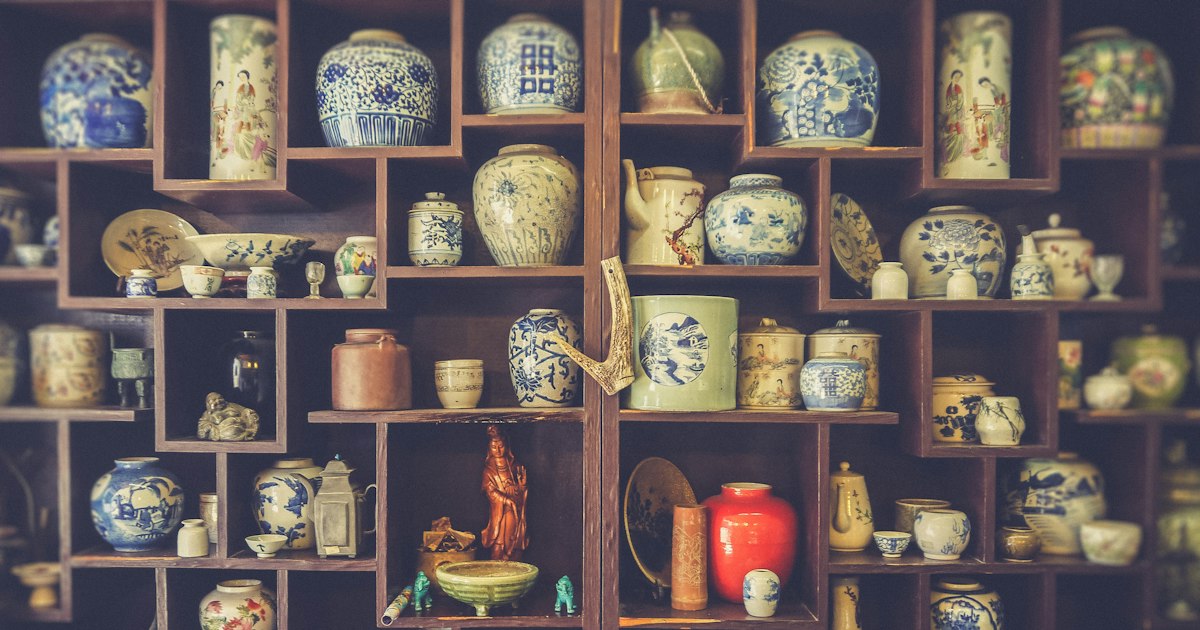
Photo by Alexandre Valdivia on Unsplash
Long before “mismatched vintage plates” became a Pinterest aesthetic, Japan already had a whole retail category built around it. A setomono-ya (瀬戸物屋) is a shop that deals in setomono — literally “things from Seto,” the old ceramics town in Aichi, but used colloquially to mean any pottery or porcelain tableware. The secondhand ones, tucked into Tokyo backstreets and shopping arcades, sell single plates, odd bowls, and broken sets of dishes that restaurants, estate liquidators, and retiring potters no longer need. For visitors, they’re one of the few places left in the city where you can buy a genuinely old, handmade Japanese plate for less than the price of a coffee.
What you’re actually buying
Most stock falls into three categories: restaurant surplus (thick, sturdy plates once used in izakaya or soba shops, often stamped with a shop name on the back), estate clearances (grandmother’s good china, sometimes still in original boxes with the shop’s paper wrapping), and kiln seconds or discontinued lines from producers in Seto, Mino, Arita, and Kyoto. Because the stock is whatever came in that week, no two visits look the same. You might find a single Imari-style bowl with gold rim damage for 300 yen sitting next to a complete 5-piece Mino ware set still wrapped in its original box for 8,000 yen. Mismatching isn’t a flaw here — it’s the entire business model, since nobody is trying to sell matched sets of 20.
Where to look
There’s no single “setomono-ya district,” but a few areas reward a slow walk:
- Kappabashi (Kappabashi Dougu Gai), Taito-ku — Tokyo’s restaurant-supply street near Asakusa. Most shops here sell new tableware to professional kitchens, but a handful of secondhand and discount corners mix in used plates among the new stock. Worth combining with an Asakusa visit; the street runs roughly 15 minutes on foot from Tawaramachi Station (Ginza Line).
- Yanaka Ginza and the backstreets around Nippori Station — this old shitamachi neighborhood has several small secondhand shops and recycle shops that take in household goods, including dishes, from estate clearances in the area. Stock turns over slowly, so a shop that looks sleepy may still have the same good pieces sitting there a month later.
- Koenji and Kichijoji — both neighborhoods have a dense cluster of vintage and secondhand general stores (リサイクルショップ) where tableware shares shelf space with furniture and clothing. These are hit-or-miss but cheap, often 100–500 yen per piece.
- Antique markets — the monthly Oedo Antique Market (when held at Yurakucho/Tokyo International Forum) and the long-running flea markets at Togo Shrine (Harajuku, first/fourth Sunday) and Nogi Shrine often have one or two dedicated ceramics dealers among the stalls, with prices generally 500–3,000 yen per piece and room to haggle, especially late in the day.
Hours, days, and timing
Independent secondhand shops in Japan keep irregular hours — many open around 11:00 and close by 18:00 or 19:00, and a surprising number close one or two weekdays entirely (often Tuesday or Wednesday) rather than weekends, since owners are frequently older and running the shop solo. Shrine flea markets are weather-dependent and get cancelled or shortened in rain, so check the shrine’s own site or social media the morning of, not the week before. Late autumn through early spring (roughly October–March) tends to bring more estate-clearance stock onto the market, since Japanese households traditionally do a big clean-out before New Year; shops and market stalls often look fuller from November onward. Arrive early at outdoor markets — serious local collectors go through the good ceramics boxes within the first hour.
Prices and what counts as a good deal
As a rough budget guide in Tokyo:
- Budget (100–800 yen): single plates and bowls, often with a small chip or stamp mark, from recycle shops and flea market junk boxes. Perfectly usable, not investment pieces.
- Mid-range (1,000–5,000 yen): named-kiln pieces (Mino, Seto, Kutani) in good condition, small matched pairs, or lacquered wooden boxes of 3–5 bowls from an estate sale.
- Splurge (8,000–30,000+ yen): signed artisan work, full antique sets, or Arita/Imari ware with intact gold leaf — found more often at dedicated antique dealers in Kappabashi or at the bigger Oedo-style markets than in neighborhood recycle shops.
Haggling is accepted at flea markets and with independent dealers, less so at fixed-shelf recycle shops that already price everything with a sticker. A polite “chotto yasuku narimasu ka?” (can you come down a little?) when buying multiple pieces at once is normal and often works better than haggling over a single item.
Common mistakes first-time buyers make
- Not checking for hairline cracks. Hold each piece up to a window or light and run a fingernail around the rim — a crack you can’t see will tap with a dull thud instead of a clear ring when flicked gently with a fingernail.
- Assuming a stamp means valuable. Many stamps are just the restaurant or wholesaler that originally ordered the piece, not a famous kiln mark. Don’t pay antique prices based on a stamp alone.
- Buying more than you can pack. Ceramics are heavy and break easily in checked luggage. Bring bubble wrap or ask the shop for newspaper wrapping (many will do this for free), and consider shipping larger hauls home or to your hotel via takkyubin rather than carrying them — similar to how skiers forward gear ahead at resorts, as covered in this guide to Japan’s takkyubin counters.
- Skipping the small recycle shops because they look like junk stores. The best finds are often disorganized, dusty, and unlabeled — that’s exactly why they’re priced like junk instead of antiques.
Pairing the hunt with a neighborhood visit
Secondhand tableware hunting rewards the same unhurried, backstreet-wandering approach that works well for other secondhand specialist shopping in Tokyo — if you’re also curious about the city’s used-goods scene, the shops covered in Tokyo’s secondhand skate shop scene and Tokyo and Osaka’s secondhand cyclist shops follow a similar logic of specialist dealers clustered in unglamorous side streets. After a morning of digging through boxes, a kissaten is the natural place to rest — many of these old-school coffee shops actually serve on the same kind of mismatched vintage crockery you’ve just been hunting for, and this comparison of Doutor, Komeda, and kissaten culture explains what sets a true kissaten apart. If the craft angle appeals to you beyond ceramics, it’s also worth looking at tsumami zaiku fabric-flower crafts, another small, hands-on Japanese tradition that’s easy to bring home in a suitcase.
Practical etiquette notes
Most of these shops are run by one person who may also be the person who sourced the stock, so a little courtesy goes a long way. Ask before photographing the shop interior, and if you’re buying several pieces, let the owner wrap them rather than doing it yourself — they often have a system for packing fragile goods that you’ll be grateful for at the airport. Cash is still the norm at flea markets and many of the smaller recycle shops; don’t assume IC cards or credit cards will be accepted away from the main shopping streets.