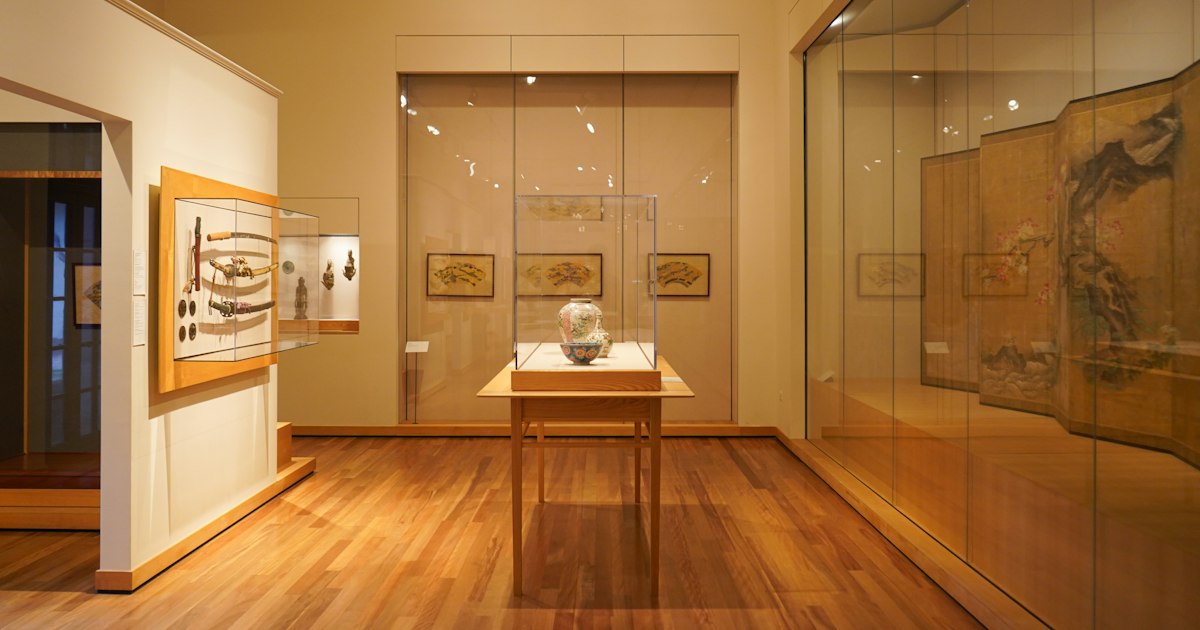
Photo by Yosuke Ota on Unsplash
Tucked into a residential corner of Komaba, a few stops from Shibuya on a quiet private rail line, the Nihon Mingeikan (日本民藝館, Japan Folk Crafts Museum) is one of Tokyo’s best small museums and one of its least crowded. There are no ticket lines, no gift-shop crowds, and no English audio guide app pushing notifications at you. What there is: a building designed by the man who coined the word “mingei,” and room after room of bowls, textiles, baskets, and lacquerware that were made to be used, not admired — which is exactly why they’re worth admiring.
What “Mingei” Means and Why This Museum Exists
Mingei roughly translates to “folk craft” or “art of the people.” In the 1920s and 30s, philosopher and art critic Soetsu Yanagi, along with potters Shoji Hamada, Kanjiro Kawai, and the British potter Bernard Leach, pushed back against Japan’s growing obsession with fine art and named-artist ceramics. They argued that everyday objects — a farmer’s rice bowl, a fisherman’s basket, a dyer’s indigo cloth — made anonymously by hand for practical use, held their own kind of beauty. Yanagi opened this museum in 1936 to prove the point, and the collection he built is still the best place in Japan to see that argument made in physical form.
Getting There
The museum sits in Meguro-ku, about a 7-minute walk from Komaba-Todaimae Station on the Keio Inokashira Line. From Shibuya, it’s a short, one-line ride (around 5-7 minutes) — no transfers, no JR pass needed. Exit toward the west side of the station and follow the small signs; the street is residential and easy to miss if you’re not watching for the low stone wall and wooden gate. There’s no dedicated parking lot, so this is a train-and-walk destination, which also makes it an easy half-day add-on if you’re already exploring Shibuya or Shimokitazawa.
Hours, Admission, and When It’s Closed
The museum is open 10:00–17:00, with last entry at 16:30. It’s closed on Mondays (if Monday is a public holiday, it closes the following Tuesday instead) and over the New Year holiday period. It also closes briefly between special exhibitions a few times a year, so it’s worth a quick check of the museum’s own calendar before you build a day around it — unlike major Tokyo museums, there’s no English-language events hotline to call if you guess wrong.
Admission is modest: roughly ¥1,200 for adults, ¥700 for university and high school students, and ¥100 for elementary and junior high students (prices do creep up over time, so treat these as close estimates rather than guaranteed figures). Across the street, Yanagi’s former residence — a separate annex building — is sometimes open to the public on weekends and holidays for a close look at how he actually lived among the objects he collected; hours there are more limited, so don’t count on it being open on a weekday visit.
What You’ll Actually See Inside
The main building holds a rotating selection from a collection of roughly 17,000 objects: Mashiko and Okinawan ceramics, Tohoku kogin and sashiko embroidery, Ainu textiles, woven bamboo baskets, wooden furniture, metalwork, and a notable group of Korean Joseon-dynasty ceramics that Yanagi collected and championed decades before “folk art” was a respected category anywhere. Labels are mostly in Japanese with limited English, so this isn’t the place for a deep-dive audio tour — it rewards slow, close looking more than reading. Photography is not permitted inside the exhibition rooms, so leave the tripod packed; if you’re hoping to do serious photography at cultural sites elsewhere in Tokyo, that’s a separate planning step covered in this guide to tripod rentals and camera permits.
The building itself, designed by Yanagi in 1936 with a plastered storehouse-style exterior and dark wood interior, is arguably as much the exhibit as what’s inside it. Low ceilings, worn wooden floors, and deep-set windows frame the pieces the way a farmhouse would have, rather than the white-cube gallery style you’d get at a major art museum. Afternoon light through the windows is particularly good on clear days, which makes a case for visiting in the morning-to-early-afternoon window regardless of season.
Best Time to Visit
There’s no bad season for the Mingeikan — the collection is indoors and the crowds are never a real problem, even on weekends. Spring (April) and autumn (October-November) are pleasant for the walk from the station and for pairing the visit with a stroll around the quiet Komaba streets or the nearby University of Tokyo campus. Special exhibitions typically run in blocks of a few months, so if there’s a specific craft tradition you want to see (indigo dyeing, a particular region’s pottery, Ainu work), check the current exhibition theme before you go rather than assuming the permanent highlights will all be on display — much of the collection rotates in and out of storage.
Common Mistakes to Avoid
- Showing up on a Monday. This trips up more visitors than anything else — there’s no walk-up ticket booth to save you if you arrive to a locked gate.
- Expecting a big-museum pace. The main building is modest in size; budget 60-90 minutes, not a half-day, unless you also catch the annex.
- Skipping the shop. The small museum shop sells postcards, books on mingei theory, and genuine folk-craft items — small ceramic pieces, textiles, and woodwork — often made by artisans connected to the same regional traditions in the collection.
- Treating it as a souvenir stop first. It’s a museum before it’s a shop; go for the collection, and let the shop be a bonus if something there catches your eye.
Budget, Mid-Range, and Splurge Options
On a budget, the museum ticket itself (around ¥1,200) plus a ¥300-600 postcard or small booklet from the shop covers the whole visit. For a mid-range experience, set aside ¥3,000-10,000 for a small piece of pottery, a dyed cloth item, or a woven basket from the shop — genuinely useful objects in the mingei spirit, not display pieces. If you want to splurge, ask the shop staff about higher-end works by named potters working in traditions the museum champions (Mashiko ware, Okinawan textiles); these can run ¥20,000 and well beyond, and are the kind of thing worth having shipped home rather than carried in a suitcase.
If you’re building out a day of under-the-radar Tokyo museums, the Mingeikan pairs naturally with other specialist collections across the city — the blade connoisseurs will want the Japanese Sword Museum for its own quiet, craft-focused approach to a very different material, while anyone chasing Tokyo’s oddest free admission has the Meguro Parasitological Museum just a short ride away in the same ward.