Photo by Alvin Mahmudov on Unsplash
If you’re in Japan and have just learned you need to attend a wake (otsuya) or funeral (kokubetsushiki) — for a colleague, a host family member, or a business connection — you’re probably facing this problem for the first time: you don’t own a Japanese-style black mourning suit (reifuku), and the service is tomorrow morning. The good news is that Japan is extremely well set up for exactly this situation, because Japanese people also frequently need reifuku on short notice. Here’s how to get properly dressed within a few hours, without guessing at the etiquette.
Why You Might Need a Reifuku at Short Notice
Japanese funerals typically move fast: the wake is often held the evening after a death is announced, and the funeral itself the following day. If you’re invited, you’re usually expected to wear formal black — not just “a dark suit,” but a specific look (detailed below) that signals respect and avoids drawing attention. Showing up in your travel clothes, or in a suit that reads as “business” rather than “mourning,” is noticed. For visitors and expats, this is almost always an unplanned purchase or rental, which is why Japan has a whole small industry built around same-day and next-day reifuku.
Buy vs. Rent: Which Is Actually Faster
For a single, one-off occasion, many people in Japan actually buy rather than rent, because the big suit retail chains — AOKI, Aoyama (Yofuku no Aoyama), Konaka, and Haruyama — stock ready-to-wear black mourning suits in standard sizes for same-day purchase. Entry-level black suits at these chains run roughly ¥9,900–¥19,900, and basic alterations (hemming trousers) can often be done in under an hour, sometimes while you wait. Stores are usually open 10:00–20:00 or 21:00, seven days a week, including most holidays except New Year’s Day.
Renting makes more sense if you’re confident you’ll never need the suit again and want to minimize luggage. Rental services (search “礼服レンタル” or “mourning suit rental”) offer full sets — jacket, trousers, white shirt, black tie, black socks, black shoes, and sometimes a small black bag — for a 2–4 day rental period at roughly ¥7,000–¥15,000. Platforms such as Cariru handle ceremonial wear alongside formal dresses and tuxedos, with delivery to a hotel or home address. The catch is timing: standard delivery is next-day in major cities, and true same-day delivery (if offered at all) usually carries a rush fee of ¥1,000–¥2,000 and a cutoff time, often around midday.
Where to Rent or Buy Fast in Major Cities
In Tokyo, Osaka, and other large cities, your fastest option is almost always a suit chain storefront rather than waiting on courier delivery. Search for the nearest AOKI, Aoyama, or Konaka branch to your hotel or the funeral venue — these chains have dozens of locations in any major metro area, and staff are used to handling last-minute mourning-wear requests (they’ll know to point you to the correct black, not just any dark suit). If you’re navigating an unfamiliar rail network to get there, routes like those covered in our guide to Osaka Metro vs Nankai vs JR are a useful reminder that in Kansai especially, the fastest line between two points isn’t always the obvious one — worth checking before you commit to a route under time pressure.
Also worth checking: convenience stores. FamilyMart, Lawson, and 7-Eleven locations in business districts frequently stock emergency items like plain black ties and white dress shirts, aimed at salarymen who get unexpectedly called to a funeral straight from the office. It won’t give you a full suit, but if your suit is close enough and you just need the right tie or a fresh white shirt, a nearby konbini can save you a trip — see our guide on what’s actually available at the counter in buying alcohol and cigarettes at a Japanese konbini for a sense of how these stores stock beyond the obvious.
If you went through a funeral hall (sougijo) or a funeral company to arrange the ceremony, ask the staff directly — many sougisha keep a small stock of rental mourning suits and dresses on-site for family members who arrive unprepared, sometimes at no extra charge.
What a Proper Reifuku Includes — and Common Mistakes
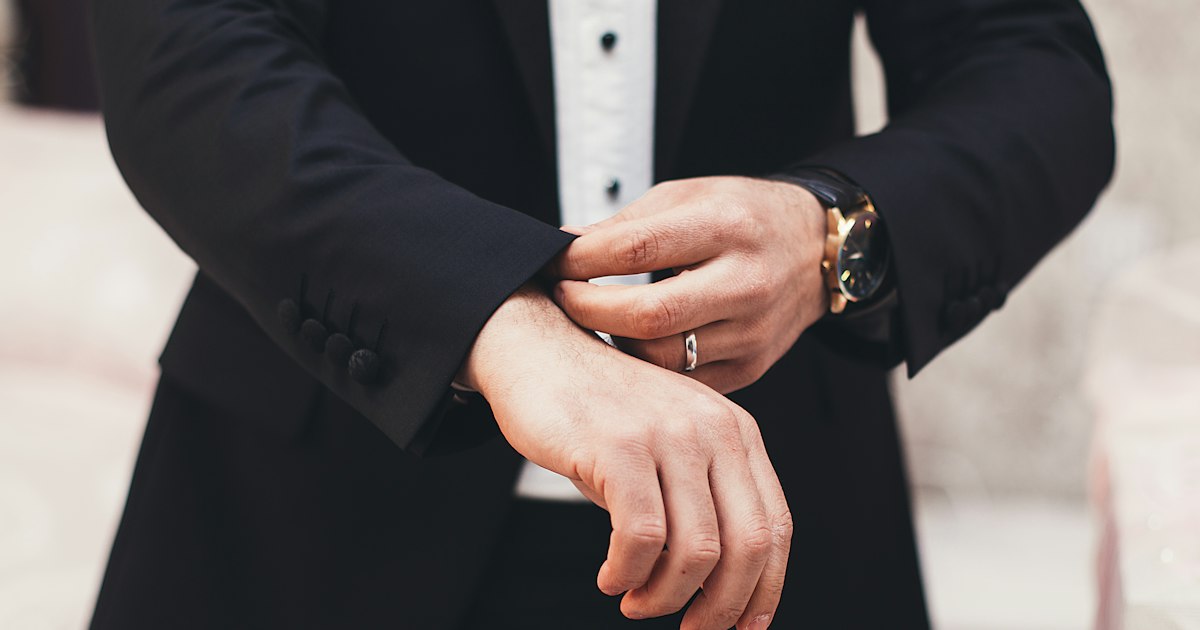
A men’s mourning suit in Japan is specifically: a plain black suit (no pinstripe, no sheen, single-breasted, notch lapel), a plain white dress shirt, a plain black tie with no pattern or shine, black socks, and plain black leather shoes with no visible buckles or decoration. A black belt is expected. Everything metal — tie bar, cufflinks, watch, belt buckle — should be minimal and matte, not shiny gold or silver. A black suit you’d wear to a normal business meeting is usually fine as a backup, but true mourning suits (sometimes labeled “ブラックフォーマル” or “礼服” in shops) are cut slightly differently and come with the matching shirt, tie, and accessories as a packaged set, which is the fastest way to get everything right at once.
Common mistakes foreign visitors make: wearing a double-breasted suit (reads as too formal/different register), brown or two-tone shoes, a tie with any texture or pattern, or a wedding-ring-style shiny watch. Another frequent issue is sizing — Japanese chain stores carry up to around XL/EL in-store, but larger builds (very tall, or above roughly 110cm chest) may need to call ahead to confirm stock or go to a “big size” specialty branch, since not every location carries the full range.
If You’re Arriving From Overseas on Short Notice
If you’re flying in specifically for the funeral and landing with only travel clothes, build in time to shop before the wake, not after. If your flight has a long layover or arrives with hours to spare, a lounge with a shower can make the difference between arriving presentable or not — see our comparison of Priority Pass and airport lounge access in Japan if you need to freshen up before heading straight to a suit store or the venue. You’ll also likely need a condolence money envelope (kouden) with the correct amount and folding style — a different custom from New Year’s otoshidama envelopes, but if you want a sense of how seriously Japan treats cash-gift envelope etiquette in general, our piece on otoshidama cash envelopes is a useful parallel — ask your hotel concierge or the funeral staff for the exact kouden amount and envelope style expected for your relationship to the deceased, since getting this wrong is noticed more than a slightly imperfect suit.
Budget, Mid-Range, and Splurge at a Glance
- Budget (~¥9,900–¥15,000): Buy an entry-level black suit at AOKI, Aoyama, Konaka, or Haruyama; pair with a konbini-bought white shirt and black tie if needed.
- Mid-range (~¥7,000–¥12,000): Full rental set (suit, shirt, tie, shoes, socks) via a rental platform with next-day delivery to your hotel.
- Splurge (~¥13,000–¥18,000+): Same-day rush-delivery rental set, or a made-to-fit purchase with same-day alterations at a department store men’s formal floor.
Whichever route you take, the goal is the same: plain, matte, black, and unremarkable. In this one case, blending in completely is exactly the point.