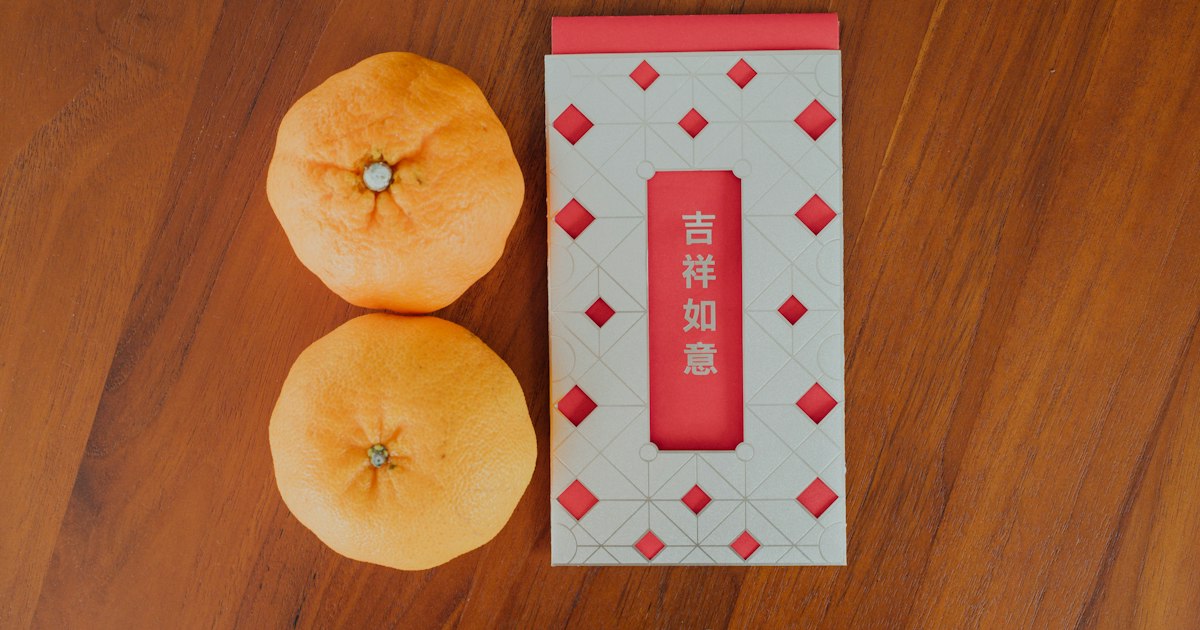
Photo by CHUTTERSNAP on Unsplash
If you’re in Japan around New Year and visiting relatives, friends, or a homestay family with children, you may suddenly find yourself expected to hand over a small decorated envelope stuffed with cash. That’s otoshidama (お年玉), Japan’s New Year tradition of giving money to kids, and getting the amount and etiquette right matters more than you’d think. Here’s what it is, how much people actually give, and how to avoid the common mistakes foreign visitors make.
What Is Otoshidama?
Otoshidama is cash given to children by parents, grandparents, aunts, uncles, and family friends during the New Year holiday (shogatsu), typically January 1–3. The money is presented inside a small, often brightly printed envelope called a pochibukuro (ポチ袋), never handed over loose or in a plain envelope. The custom traces back to New Year mochi offerings given to children as a blessing for the year ahead; cash replaced the rice cakes sometime in the postwar period, and it’s now one of the most consistent financial habits in Japanese family life — many Japanese adults can tell you exactly how much they received as kids and from whom.
If you’re a foreign visitor staying with a Japanese family, dating into a Japanese family, or simply close enough to local friends to be included in New Year’s gatherings, you may be expected to participate. Nobody will demand it, but showing up with pochibukuro ready signals that you understand and respect the custom.
How Much to Give, by Age
There’s no fixed national rate, but surveys of Japanese households converge on fairly consistent brackets. As a visitor giving to a host family’s children, these are safe reference points:
- Toddlers / preschool (0–5): ¥1,000 or sometimes nothing (some families skip very young children, or give a token ¥500–¥1,000)
- Elementary school (6–12): ¥1,000–¥3,000, usually scaled up with grade — younger grades closer to ¥1,000, upper grades (5th–6th) closer to ¥3,000–¥5,000
- Junior high (13–15): ¥3,000–¥5,000
- High school (16–18): ¥5,000–¥10,000
- University students (19+): some families continue with ¥5,000–¥10,000, though many stop giving once a child starts earning
A few practical rules locals follow: amounts almost always end in a round number (¥1,000, ¥3,000, ¥5,000, ¥10,000), close relatives generally give more than distant ones, and siblings close in age usually receive the same or very similar amounts to avoid hurt feelings. If you’re a guest rather than family, it’s completely acceptable to give on the lower end of the bracket, or just ¥1,000 per child as a friendly gesture — the thought and the correct presentation matter more than the sum.
The Envelope Matters as Much as the Cash
Never hand over New Year cash bare or in a random envelope — it reads as careless. Pochibukuro are sold everywhere in Japan from early-mid December through early January: 100-yen shops (Daiso, Seria), convenience stores, stationery shops like Loft and Tokyu Hands, and department stores all stock them, typically in packs of 3–5 for ¥100–¥500. Designs range from simple red-and-gold prints to character tie-ins (Pokémon, Studio Ghibli, Sanrio) that let you match the envelope to the child’s age and interests — a toddler gets a cute cartoon design, a teenager gets something more minimal.
A few notes on the bills themselves: Japanese New Year gift-giving convention strongly prefers crisp, new, unfolded banknotes. Convenience store ATMs often dispense worn bills, so if possible, get fresh notes from a bank counter or a bank ATM in the days before New Year — bank branches get busy with this exact request in late December, so don’t leave it to December 31st. Fold the bills neatly into thirds (face-up, following the envelope’s fold lines) before sealing, which is the standard way pochibukuro are packed.
Common Mistakes Visitors Make
A few missteps come up often enough to flag specifically:
- Giving coins or large/worn bills. Coins read as cheap regardless of value, and crumpled bills look like an afterthought.
- Writing the child’s name on the front in the wrong spot. Pochibukuro typically have a space for the recipient’s name on the front and the giver’s name on the back — if you’re unsure, leave it blank rather than guess wrong.
- Giving otoshidama to someone else’s children you’ve just met. It’s a family and close-relationship custom; giving cash to a stranger’s child, even with good intentions, can feel awkward or presumptuous. Reserve it for children of your host family, close friends, or relatives.
- Giving money to a company superior’s children, or receiving it from a boss. Otoshidama is strictly a family/close-friend custom in one direction (adult to child) — it isn’t used in workplace or formal-gift contexts the way, say, year-end gifts (oseibo) are.
- Timing it outside the window. Otoshidama is a New Year’s Day custom — giving it well before December 31 or well after the first few days of January feels off. If you’ll miss the family entirely over New Year, it’s fine to give it slightly early with a quick acknowledgment that it’s “for New Year.”
Timing Your Trip Around It
If you’re planning a Japan trip specifically to spend New Year with family or friends, know that this is one of the most heavily traveled periods domestically — flights, shinkansen, and hotels around December 28–January 3 book up and price up well in advance, and accommodation tax still applies in cities like Tokyo, Kyoto, and Osaka during this stretch (see our guide to Japan’s hotel accommodation tax for what to expect on your bill). Airports get correspondingly busy too, so if you have a long layover or early flight bookending the holiday, it’s worth checking lounge access options at Narita, Haneda, and Kansai to wait out the crowds comfortably.
Many families also build a day trip or activity into the New Year visit to keep kids entertained between the formal parts of the holiday — an outdoor rink works well in the cold, and our guide to ice skating rinks with rental skates covers tourist-friendly options. If you’re in the Tohoku region over the holidays, riding the coal-heated Stove Train in Aomori is a memorable midwinter detour that pairs naturally with a New Year itinerary.
Quick Reference: What to Bring
If you want to arrive prepared, pick up a small pack of pochibukuro (¥100–¥500 for several designs) at any konbini or 100-yen shop a week or so before New Year, withdraw or exchange for crisp new bills at a bank in advance, and budget roughly ¥1,000–¥5,000 per child depending on their age and how closely you’re related to the family. Fold the bills into thirds, slip them into the envelope, and hand it over with both hands on or just after January 1st — that’s the entire ritual, and it’s one of the easiest ways to show a Japanese host family that you understand their customs rather than just observing them from the outside.