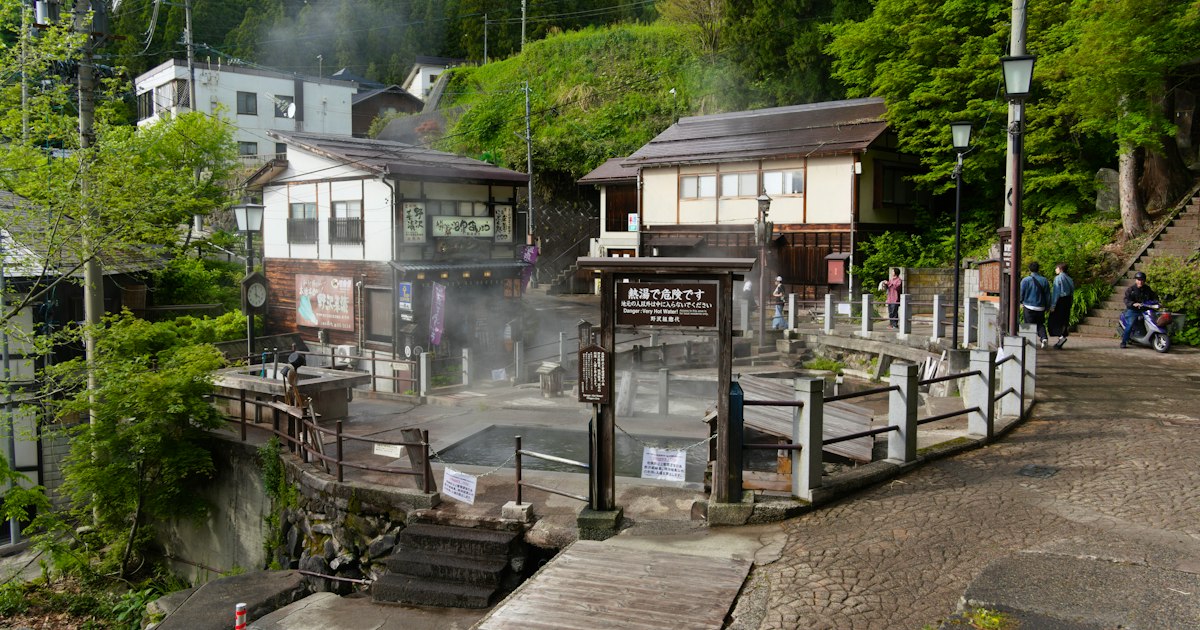
Photo by waa towaw on Unsplash
Gero Onsen has been ranked among Japan’s “Three Famous Springs” (Nihon San Meisen) alongside Arima and Kusatsu since the Edo period, when a traveling monk supposedly followed a wounded white heron to the healing waters. Today it’s a compact riverside town in the Gifu mountains where you can soak in a dozen free footbaths in a single afternoon, eat grilled Hida beef skewers in your yukata, and be back in Nagoya in time for dinner if you only want a day trip. Here’s how to actually plan the visit.
How to get there
Gero is on the JR Takayama Line, and the fastest approach is by limited express train. From Nagoya, the Wide View Hida limited express takes about 90 minutes to Gero Station and costs roughly ¥6,000–6,500 one way (reserved seat); there are usually 4–5 departures a day, so check the timetable before you build your schedule. From Osaka or Kyoto, you’ll typically connect via Nagoya, adding another 50 minutes and cost on top. If you’re driving, it’s about 2 hours from Nagoya via the Tokai-Hokuriku Expressway, but parking in town is limited and most ryokan charge for overnight parking, so the train is usually the easier call. The station itself is small — you’ll walk across the river into the town center in under 10 minutes.
The free footbath (ashiyu) circuit
This is Gero’s signature experience and it costs nothing. The town maintains roughly a dozen free ashiyu footbaths scattered along the Hida River and its back streets — most are open 24 hours, though a few close late at night or in winter for maintenance. Bring a small towel (many convenience stores and souvenir shops sell a thin one for a few hundred yen if you forget), since there’s no staff to hand you one. A reasonable self-guided loop takes about 1.5–2 hours and covers:
- Sainokawara Park footbath — the largest and most scenic, set right on the river with a Jizo-lined backdrop.
- Station-area footbaths near the Gero Onsen Gassho-mura side, convenient if you’ve just arrived by train.
- Riverside baths along the main shopping street, where you can combine soaking with snack stops.
Pick up the free footbath map at the tourist information office next to the station — it’s only available in person, and the numbered points are easier to follow on paper than by guessing. Mornings and early evenings are the least crowded times, especially outside peak autumn foliage season.
Best time to visit
Gero works year-round because the appeal is indoor/outdoor bathing rather than a single seasonal sight, but a few windows stand out. Late October to mid-November brings autumn foliage along the Hida River gorge and in nearby mountain areas — book ryokan well ahead, since this is the town’s busiest stretch. Winter (December–February) is genuinely excellent for onsen bathing: steam rising off an outdoor bath while snow falls is the postcard moment most visitors come for, and this is also when the Gero Onsen Gohyaku Rakan light-up and the winter illumination events run in the evenings. Summer is quieter and cheaper but humid; spring brings cherry blossoms along the river but less foliage drama than autumn. Avoid Japanese Golden Week (late April–early May) and New Year’s unless you’ve booked months ahead, as both send room rates up sharply and sell out small ryokan first.
Where to stay: budget to splurge
Accommodation is really the main event in Gero, since most ryokan and hotels offer their own indoor and outdoor baths along with the public footbaths.
- Budget (¥8,000–13,000/person with breakfast): Smaller family-run ryokan and business hotels near the station. You trade river views for price, but you’re still a 5–10 minute walk from the footbath circuit.
- Mid-range (¥15,000–25,000/person with half board): Riverside ryokan with private outdoor baths (rotenburo) and kaiseki dinners featuring Hida beef — this is the sweet spot for most first-time visitors and covers the bulk of Gero’s hotel stock.
- Splurge (¥35,000+/person): Larger established ryokan with multiple bath styles, private in-room baths, and premium Hida beef courses. Worth it if you want a proper ryokan night rather than a quick soak.
Many ryokan also sell day-use bathing (higaeri onsen) for roughly ¥500–1,500, which is the move if you’re doing Gero as a day trip and want a proper indoor/outdoor bath beyond the free footbaths. If this is your introduction to Japanese inn culture, it’s worth knowing the house rules in advance — our guide to quiet hours at Japanese ryokan covers when baths and common areas expect silence, and futon weight differences by season explains what you’ll actually be sleeping under depending on when you visit.
Common mistakes to avoid
A few things trip up first-time visitors. Don’t bring a full-size towel into the footbaths expecting it to work as a bath towel elsewhere — it’s purely for drying your feet, and most ryokan baths require you to be towel-free in the water itself per standard onsen etiquette. Don’t skip the tourist information center map thinking you’ll just stumble onto the footbaths — several are tucked down side streets and easy to miss without it. Don’t plan a same-day return from Osaka without checking the last Wide View Hida departure from Gero, since evening trains back toward Nagoya thin out and missing one means an expensive taxi or an unplanned overnight. And don’t assume every ryokan accepts walk-ins for day bathing — call ahead or check at the front desk, since some reserve rotenburo access for overnight guests only during busy seasons.
Beyond the baths
If you have an extra half-day, Gero Onsen Gassho-mura is an open-air museum of relocated thatched-roof farmhouses a short bus or walk from the station, and it’s a good rainy-day option when soaking outdoors loses its appeal. The town’s main shopping street also has plenty of stalls selling Hida beef nigiri and croquettes for a few hundred yen each — reasonable for an onsen-town lunch while you work through the footbath loop. For travelers mapping out a wider Gifu or Chubu itinerary, Gero pairs naturally with Takayama further up the same JR Takayama Line, making a two-stop mountain-and-onsen route out of a single rail pass.