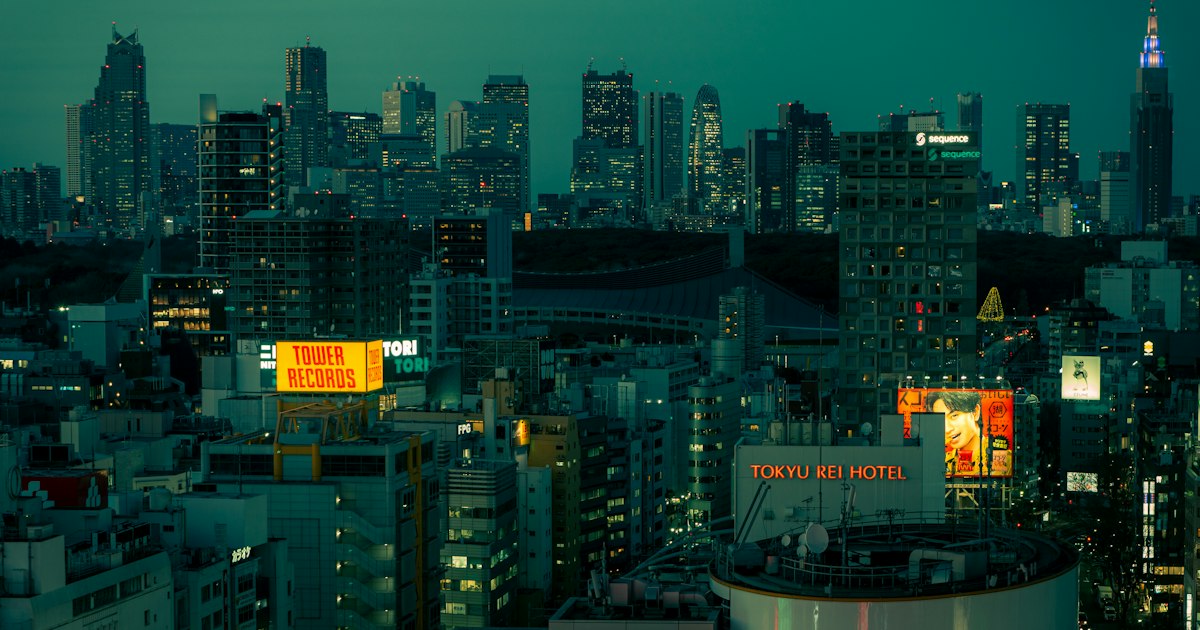
Tokyo at night looks nothing like Tokyo by day, and seeing the city’s illuminated landmarks — Rainbow Bridge lit up in blue and white, the Tokyo Tower spire glowing orange, the Marunouchi and Roppongi winter light displays — is one of the easiest ways to feel like you’ve “done” Tokyo after dark without walking yourself into exhaustion. You don’t need a car, and you shouldn’t try to get one: driving in Tokyo at night as a visitor means unfamiliar signage, parking that costs more than the tour itself, and zero view of the skyline because you’re the one watching the road. A guided night bus tour solves all of that. Here’s how to actually book one, what it costs, and what trips first-timers.
Who Runs These Tours and What You Actually Get
The two operators visitors run into most often are Hato Bus, Tokyo’s oldest sightseeing bus company (operating since 1948), and SKY Bus Tokyo, which runs open-top double-decker buses. Hato Bus’s night courses are enclosed, seated coach tours, usually with a Japanese-language narration and an English pamphlet or audio option on the more tourist-oriented routes; some pair the drive with a short riverboat cruise or a dinner stop. SKY Bus Tokyo’s night course is a shorter, open-top loop — no narration needed because the point is simply to look up at Tokyo Tower, the Diet Building, and Ginza’s neon from a double-decker with no roof in the way. Hinomaru Limousine also runs occasional night sightseeing charters, mostly aimed at group bookings rather than solo travelers.
None of these require a car, a Japanese driver’s license, or any Japanese ability to book — just a credit card and, for the English-narrated courses, a reservation made a day or two ahead in peak season.
Best Season and Time of Night to Book
Tokyo’s winter illumination season, roughly mid-November through mid-February, is the best stretch to do this. Sunset falls as early as 4:30 PM in December, so evening tours departing around 6:00–7:00 PM hit full darkness almost immediately, and you get the bonus of seasonal displays at Marunouchi, Caretta Shiodome, Roppongi Hills Keyakizaka, and Odaiba’s illuminated Ferris wheel and Rainbow Bridge along the route. In summer, the same tour departs into a still-bright sky and you lose the first 30–40 minutes to dusk, so if you have a choice of dates, winter wins. Christmas week and New Year’s Eve/Day sell out fastest — book at least a week ahead for those dates, 2–3 days ahead otherwise.
Where Tours Depart From and How to Get There
Hato Bus night tours depart from the Hamamatsucho Bus Terminal, on the ground floor of the World Trade Center Building, a 3-minute walk from JR Hamamatsucho Station (Yamanote or Keihin-Tōhoku Line) or Daimon Station (Toei Asakusa or Oedo Line). SKY Bus Tokyo departs from the Marunouchi side of Tokyo Station, near the Mitsubishi Building, about a 5-minute walk from the Marunouchi South Exit. Both are straightforward on foot once you’re at the right station exit, but Tokyo’s larger stations have multiple exits that look similar at night — plug the terminal address into a transit app built for Japan’s rail network rather than guessing from a station map, since it will tell you the exact exit number, not just the station name. Arrive 15–20 minutes before departure; most operators close check-in 10 minutes before the bus leaves and do not hold seats for latecomers.
What It Costs: Budget, Mid-Range, and Splurge
- Budget (~1,600–2,200 yen): SKY Bus Tokyo’s night course, around 60–90 minutes, open-top, no meal, no narration — just the skyline. Good if you want the view without committing an entire evening.
- Mid-range (~4,000–6,500 yen): Hato Bus standard night illumination courses, roughly 2–2.5 hours, enclosed coach, often including a stop at an observation deck or a short cruise segment. This tier is where English-support tours concentrate.
- Splurge (~9,000–15,000 yen and up): Night courses bundled with a seated dinner at a tower restaurant or a dinner cruise on Tokyo Bay, or private/small-group charters through Hinomaru Limousine. These run 3+ hours and are the better pick if you want one bus trip to double as your evening meal.
Prices fluctuate by season and by whether a meal or cruise is bundled in, so treat these as planning ranges rather than quotes — always check the current fare on the operator’s own booking page before paying.
How to Book From Abroad
Both Hato Bus and SKY Bus Tokyo take reservations online in English, by credit card, from outside Japan — you don’t need a Japanese phone number or address. Book under the name on the passport you’ll be carrying that evening, since some tours ask to see ID at check-in to match the reservation. Print or screenshot your confirmation; Wi-Fi at the departure terminals is not guaranteed, and staff will want to see a booking reference, not just your word that you paid.
If your course includes a stop at a souvenir or duty-free shop (a few of the longer Hato Bus itineraries do), keep any tax-free paperwork attached to your passport rather than loose in a bag — if a receipt gets separated or damaged before you leave Japan, it can get flagged at the airport, and fixing a rejected tax-free receipt at departure eats into time you’d rather spend at the gate.
Common Mistakes to Avoid
- Booking a “sightseeing bus” without checking it actually runs at night. Many hop-on-hop-off day passes stop service by early evening; the dedicated night illumination courses are separate bookings with their own schedule page.
- Assuming full English narration. Several mid-range Hato Bus courses narrate in Japanese with a translated pamphlet rather than a live English guide — fine for the views, less so if you want running commentary. Check the course description for “English guide” or “English support” specifically before booking if that matters to you.
- Dressing for the subway, not for an open-top bus. SKY Bus Tokyo’s night course has no roof. Wind chill at 7 PM in January is sharp even if the forecast says mild — bring a real coat, not just the layer you wore around the city all day.
- Cutting it close on the last train home. Tokyo’s trains stop around midnight to 1 AM depending on the line, and a 3-hour dinner-and-cruise tour that starts at 6 PM can end right as your last connection is leaving. Check your return route before you book, not after the bus drops you off.
- Not reserving ahead in illumination season. Walk-up seats exist on quieter weeknights, but November through February weekends regularly sell out a tour entirely, especially the dinner-inclusive ones.
Done right, a guided night bus is a two-to-three-hour way to see more of illuminated Tokyo than you’d manage on foot or by taxi, without needing to navigate a single unfamiliar road yourself.