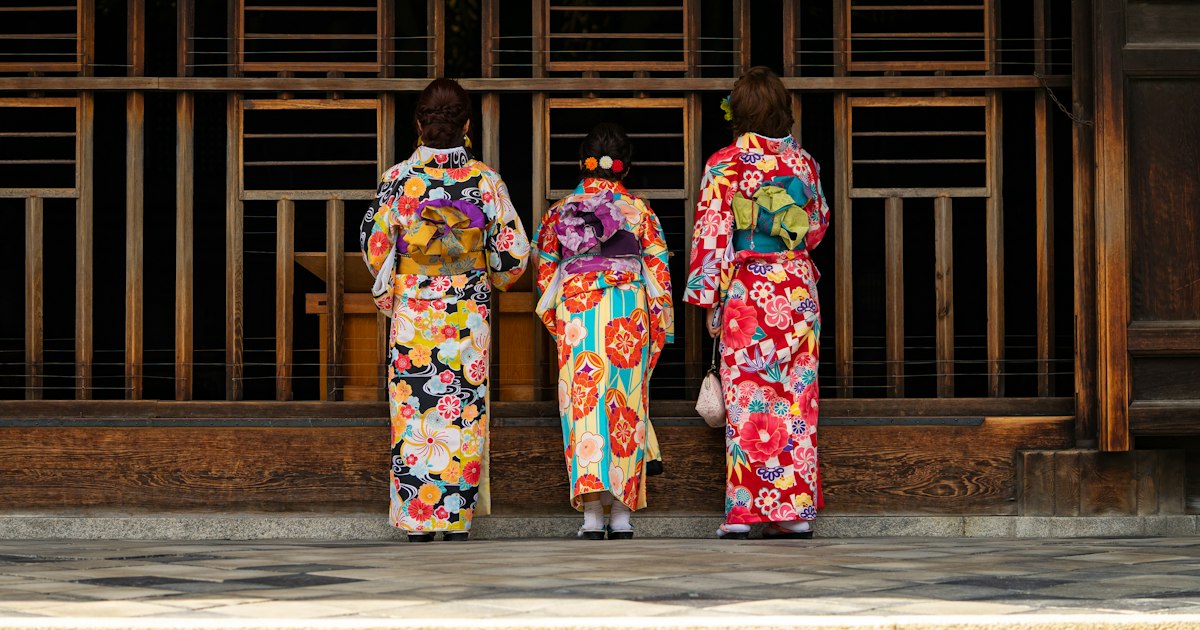
Photo by Damian Hutter on Unsplash
You’ve booked a kimono rental and a photographer in Gion or Asakusa, and then it hits you: your hair is five centimeters long, freshly bleached, or you just shaved it for comfort on a long trip. Traditional kimono hairstyles — the piled-up shimada or maru-mage buns tucked with ornamental combs — need volume and length that a lot of visitors simply don’t have. The good news is that nearly every kimono rental studio aimed at tourists in Kyoto, Tokyo, and Osaka has solved this problem already, because it comes up constantly with international guests. Wig rental is a standard add-on, not a special favor, and most studios can have you camera-ready in under an hour.
Who actually needs this, and who doesn’t
If your hair is shoulder-length or longer, most studios can style it into a passable traditional look with hairpieces (called katsura accessories) rather than a full wig — this is cheaper and faster. A full wig becomes the practical choice if you have a pixie cut, buzzed or shaved head, very curly or textured hair that resists updos, or hair that’s been recently colored in a way you don’t want hidden under hairspray and pins. Men booking samurai or hakama photoshoots with topknot styling run into the same issue and are offered wigs just as often as women are.
Worth knowing before you book: wig rental is almost always an optional add-on priced separately from the kimono set, not something bundled in automatically. If a studio’s website quotes a single all-in price, that price usually assumes you’re using your own hair.
What it costs
Prices vary by studio tier, but here’s the realistic range as of this year:
- Budget (¥1,000–¥2,000 add-on): Simple synthetic wigs at high-volume tourist studios near Kiyomizu-dera, Kinkakuji, or Senso-ji. Styling is quick, often a fixed set style with limited adjustment.
- Mid-range (¥2,000–¥4,000 add-on): Studios that include a staff member dedicated to wig fitting and styling, with a choice of a few traditional updo shapes and comb/kanzashi accessories matched to your kimono color.
- Splurge (¥5,000–¥10,000+, sometimes bundled into a premium plan): Higher-end studios, often in Kyoto’s Gion or Arashiyama, using better-quality wigs with natural hairlines, plus a longer styling session and photography-conscious finishing (so the wig holds up under flash and wind for an hour-long outdoor shoot).
A few studios also rent wigs as a standalone service without the kimono, useful if you already own or rented a kimono elsewhere and just need the hair sorted.
Where to actually go
Kyoto has by far the most options because kimono tourism is concentrated around Kiyomizu-dera, Gion, and Arashiyama. Studios here are used to a high volume of foreign visitors and typically have English-language signage and staff. Look for studios explicitly listing “wig” (not just “hair styling”) in their plan details — this is the easiest way to filter online before you arrive, since not every studio stocks them in every size.
Tokyo options cluster around Asakusa (near Senso-ji) and, to a lesser extent, Harajuku, which also does more fashion-forward kimono-and-wig combinations if you want a less classical look for photos. Asakusa studios tend to be slightly cheaper than Kyoto’s Gion-area shops for comparable service.
Osaka has fewer dedicated kimono studios than Kyoto or Tokyo, but Dotonbori and the area around Osaka Castle have a handful that offer wig rental, usually at prices closer to the Tokyo end of the range.
Getting between your hotel and these districts is straightforward by subway, but if you’re hopping between a rental studio and a separate photo location (a shrine, a bamboo grove, a specific backstreet), it helps to plan the route in advance since wig-and-kimono outfits make last-minute transit changes awkward. A transit app that accounts for walking time and platform transfers properly is worth having open — see our notes on why locals use Yahoo! Norikae Annai and NAVITIME over Google Maps for routing that handles Japan’s transit quirks better than the default map app.
Booking and timing
Reserve at least a few days ahead for weekends and any date near spring cherry blossoms (late March–early April) or autumn foliage (mid-November, which is right now if you’re reading this in season) — these are peak photoshoot windows and wig stock runs out before kimono stock does, since studios own fewer wigs than kimono sets. Weekday mornings have the shortest wait and the most relaxed styling sessions; weekend afternoons can mean a 30–45 minute queue even with a reservation.
Plan for the whole process — kimono dressing plus wig fitting and styling — to take 45–90 minutes, longer than kimono-only rental. If your photoshoot has a fixed-light window (golden hour at a specific temple, for instance), book your studio slot early enough to leave buffer time; wig styling is the step most likely to run long if the stylist is also handling a walk-in group ahead of you.
Common mistakes to avoid
- Not bringing a hair net or asking for one. Wigs sit more securely and comfortably over slicked-back hair under a thin net; studios usually provide this, but if you have very thick or long hair underneath, ask explicitly so it doesn’t bulk out the wig’s silhouette.
- Choosing a wig shade without asking to see it against your skin tone first. Budget studios often stock just two or three shades. If none match well, a mid-range studio with more stock is worth the extra ¥1,000–¥2,000.
- Forgetting sunscreen and makeup timing. Wig styling with combs and pins happens after hair and makeup, not before — don’t apply heavy forehead products right before your appointment, as it can affect how the wig’s front edge sits.
- Underestimating heat. Full wigs over your own hair plus a kimono’s layers get genuinely hot in summer. If you’re shooting in July or August, ask about lighter synthetic options or schedule for early morning.
- Assuming all studios take walk-ins for wigs specifically. Even studios that take walk-in kimono customers may require advance notice for wig sizing, since not every head shape fits every wig without adjustment pins.
If you’re shooting bridal-style or formal photos
Couples doing a formal kimono photoshoot — pre-wedding portraits, a vow renewal, or simply a dressed-up anniversary shoot — have slightly different needs: the wig has to hold a more elaborate style for a longer session and often pairs with rented hair ornaments that need to coordinate with a montsuki or furisode. A few studios that specialize in formal and bridal kimono photography also work alongside jewelry shopping trips; if rings or accessories are part of your Japan trip too, our guide to bridal ring shopping in Ginza’s engagement and wedding jewelry district covers a nearby stop worth combining with a Tokyo-based shoot.
If you end up buying anything during your kimono-and-wig day — a hair ornament, a small fan, a souvenir obi clip — remember that tax-free eligibility has rules about same-day purchase totals and keeping receipts intact until departure. It’s a small thing that trips up a surprising number of visitors; see how to fix a rejected tax-free receipt in Japan if your purchase gets flagged at the airport.
A simpler alternative worth considering
If a full traditional updo isn’t essential to your photos, some visitors skip the wig entirely and instead do a more relaxed, modern styling with their own short hair plus a kimono or the more casual samue-style traditional wear, which doesn’t demand the same hairstyle conventions and photographs well in a more candid, everyday way. It’s a reasonable fallback if wig slots are fully booked on your travel dates or if you’d rather spend that ¥2,000–¥5,000 elsewhere.