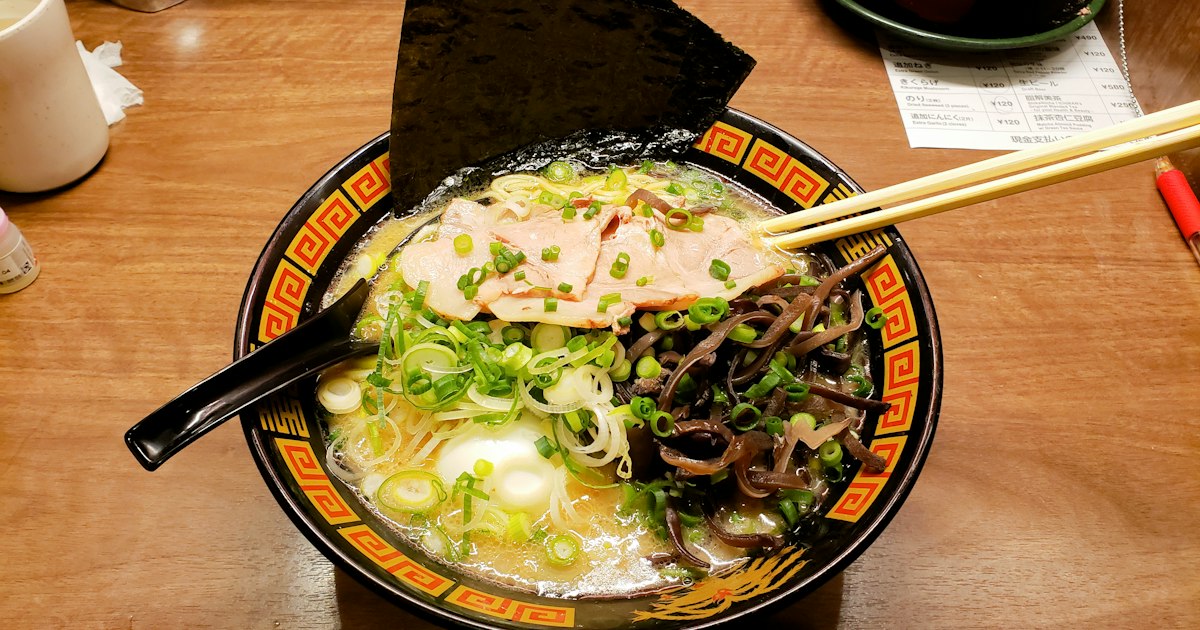
Photo by Crystal Jo on Unsplash
Most visitors planning a ramen crawl in Japan head straight for Hakata, Sapporo, or Kyoto’s tonkotsu shops. Wakayama rarely makes the list, which is exactly why it’s worth the detour. This small city south of Osaka has its own regional ramen style — a dark, pork-and-soy broth locals just call “chuka soba” — and a genuinely odd custom that surprises first-time visitors: a plate of sushi sitting on the counter that you’re expected to eat while you wait, on an honor system, with nobody checking how many pieces you’ve taken.
What Makes Wakayama Ramen Different
Wakayama ramen is built on a tonkotsu-shoyu base — pork bones simmered for hours, then finished with a soy sauce that gives the broth a deep brown color and a savory-sweet edge rather than the cloudy white richness of Hakata tonkotsu. There are two recognized schools within the city. The older “Ide” lineage, associated with the long-running Ide Shoten, produces a thicker, fattier broth with a stronger pork backbone. The lighter “garage” or Kakinohadani lineage, said to trace back to shops near the old city bus depot, leans more on the soy sauce and keeps the broth comparatively clean. Both use thin, straight noodles rather than the thicker curly noodles seen elsewhere in Japan, and a basic bowl — usually topped with chashu, menma, and scallions — runs about 600 to 900 yen. It’s unpretentious food, closer to a Showa-era diner dish than a chef-driven bowl, and that’s the appeal.
The Free Sushi Counter Tradition Explained
The real novelty is what sits next to the napkins: small plates of pressed sushi, usually saba-zushi (pressed mackerel) or inari-zushi, left out for customers to take while their ramen is cooking. Nobody hands you a menu for it and nobody tallies it at the table. Instead, staff count your empty plates or the toothpicks left on them when you pay at the register, and you’re billed per piece — typically 100 to 150 yen each. It’s entirely self-policed, and locals treat it as completely normal rather than a loophole.
The custom exists because many of Wakayama’s ramen shops didn’t start as ramen shops at all — they began as sushi stalls or bento counters serving dock and market workers quick food, and added ramen later as a hot complement to the cold sushi they were already making. Over time the sushi stayed on the counter as a side offering rather than disappearing from the menu. For visitors, the etiquette is simple: take what you’ll actually eat, don’t stack up plates “to look later,” and be honest when you pay — the system only works because everyone plays along.
Where to Eat It: Shops Worth the Trip
Ide Shoten is the name most ramen fans recognize first, credited as the originator of the thick tonkotsu-shoyu style and still cited as a benchmark bowl in Wakayama. Masaru and Aoi Marushin are two other long-standing names frequently mentioned in local ramen-shop rankings, each with its own small variation on the broth balance. These are almost all small, counter-seat operations — expect 10 to 20 seats, cash-friendly pricing, and a lunch rush that can mean a short wait even on a weekday. Because hours vary shop by shop (many close for a few hours in the mid-afternoon, and quite a few shut for the day once the broth runs out), it’s worth checking current opening times before you go rather than assuming standard restaurant hours.
Getting to Wakayama City
Wakayama is an easy day trip from Osaka and a reasonable one from Kyoto. The fastest option is the JR Kisei Line limited express “Kuroshio,” which runs from Shin-Osaka and Tennoji to JR Wakayama Station in roughly 65 to 75 minutes. The alternative is the Nankai Main Line from Namba Station to Nankai Wakayama-shi Station, which takes about 60 to 80 minutes depending on whether you catch a limited express or a rapid service and is usually the cheaper of the two. The two stations are on opposite sides of the city center, about 2 km apart, so it’s worth deciding your route home before you start eating your way around town. Once you’re in the city, many of the well-known ramen shops cluster within walking or short-bus distance of one of the two stations, and a rental bicycle is a popular way to hop between a few in one visit — just be mindful of where you park it, since Wakayama City enforces bicycle parking rules and impounds bikes left in no-parking zones (see this guide on avoiding bicycle impoundment fines in Japan before you grab a rental).
Best Time to Go and Common Mistakes
Ramen doesn’t have a strong seasonal angle, but Wakayama is pleasant as a day trip in spring and autumn when you can pair it with Wakayama Castle’s cherry blossoms or the nearby coastline. Summer is humid, and a hot bowl of chuka soba at midday in August is a harder sell than it sounds. The most common mistake visitors make is turning up outside lunch hours expecting the shop to be open — many of these are family-run operations with irregular afternoon breaks, so a late-lunch plan built around a 2:30 p.m. arrival can easily end in a locked door. The second mistake is over-ordering sushi out of curiosity and then being surprised by the bill; at 100–150 yen a piece it adds up quickly if you grab five or six “just to try.” The third is assuming every shop in the city follows the free-sushi custom — it’s common but not universal, so look at the counter before you sit down rather than asking for it.
Budget, Mid-Range, and What to Order
On a tight budget, a basic bowl plus two pieces of sushi comes to roughly 900–1,100 yen, which is standard fast-casual pricing anywhere in Japan. For a slightly bigger meal, ordering the “chuka soba” with an extra chashu topping (around 150–250 yen more) plus three or four sushi pieces puts you closer to 1,300–1,500 yen and gives a fuller sense of the broth’s range. There isn’t really a “splurge” tier here in the way there is with wagyu or kaiseki — part of the charm of Wakayama ramen is that it has stayed cheap, fast, counter food even as it’s become locally famous. If you’re building out a broader Japanese noodle itinerary around this trip, it’s worth comparing the pork-soy richness of Wakayama ramen against Japan’s other noodle traditions, including the wheat-based side of things covered in this look at touring a Japanese udon flour mill. And if you arrive between meal windows and find your target shop closed, a konbini onigiri is a perfectly respectable stopgap — this guide to reading onigiri wrapper labels will help you pick a filling you’ll actually like.