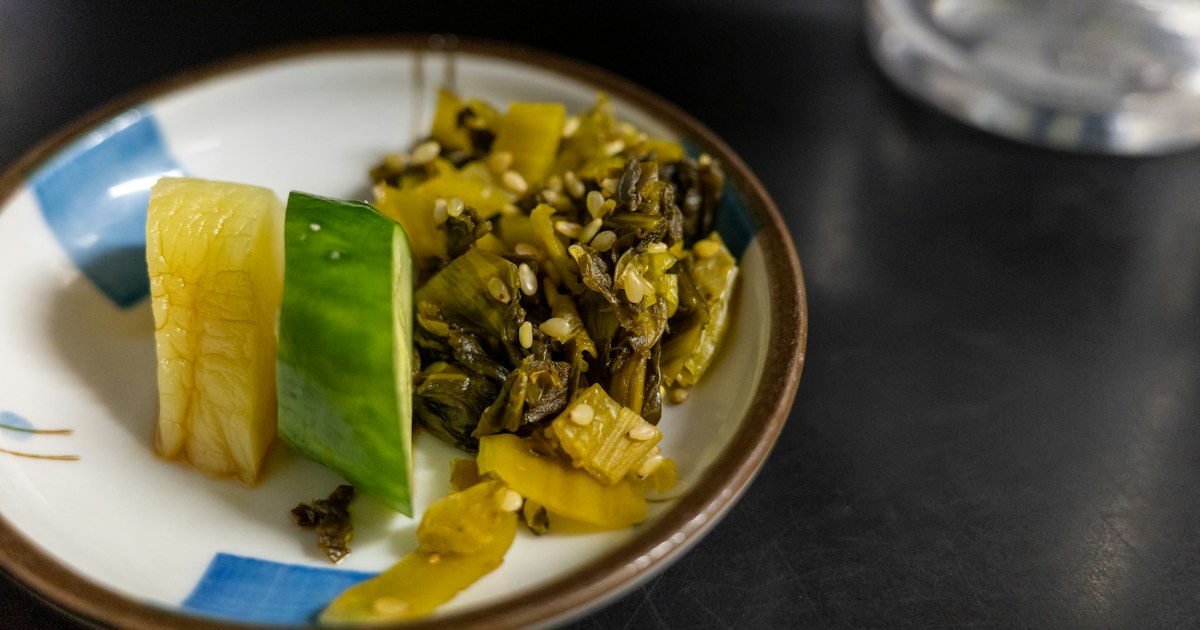
Photo by Kouji Tsuru on Unsplash
If you’ve picked up a convenience store bento in Japan and noticed a small pile of matchstick-thin, reddish-brown roots glazed in a glossy sauce, you’ve met kinpira gobo. It’s one of the most common side dishes in the country — found in home kitchens, train station bento boxes, izakaya small-plate menus, and department store food halls alike — yet most visitors never learn its name or what it’s actually made of. This guide covers what kinpira gobo is, where to find good versions at different price points, and how to avoid the mistakes that make it taste bitter or mushy.
What Kinpira Gobo Actually Is
Gobo is burdock root, a long, dirt-brown root vegetable that looks a bit like a thin, woody carrot. Kinpira refers to the cooking method: the root is cut into thin julienne strips (sometimes shaved into curls with a peeler), sautéed briefly in sesame oil, then simmered down in a mixture of soy sauce, mirin, sugar, and sake until the liquid reduces to a sticky glaze. Julienned carrot is almost always added for color and sweetness, and the dish is finished with toasted white sesame seeds. Some versions add a pinch of dried chili (togarashi) for a faint background heat, but kinpira is not a spicy dish by default — the name comes from Kintaro, a legendary strongman of Japanese folklore, as a nod to the dish’s robust, hearty character, not its spice level.
The texture is the whole point: good kinpira gobo has a distinct crunch, not a soft braise. Burdock holds its bite even after simmering, which is part of why it’s valued in Japanese home cooking — it’s one of the few vegetables that stays textured rather than going limp.
Budget Option: Convenience Stores and Supermarkets
The easiest and cheapest way to try kinpira gobo is at any 7-Eleven, Lawson, or FamilyMart. Look in the refrigerated side-dish (sozai) section near the bento boxes — a small plastic tub runs roughly ¥150–258. It’s a reliable, if unspectacular, introduction: usually a bit sweeter and softer than a home or restaurant version, since it’s made for shelf stability. Supermarket deli counters (sozai corners in stores like Life, Seiyu, or Ito-Yokado) tend to have a slightly better version, often sold by weight, for around ¥300–450 per 100g tub. It’s also a very common component in pre-made bento boxes and ekiben (station bento) sold at train stations, so if you’re traveling by Shinkansen, check the side-dish compartment of your bento before you even order — there’s a decent chance kinpira is already in there.
Mid-Range: Izakaya and Teishoku Restaurants
At an izakaya, kinpira gobo usually appears as a small cold or room-temperature appetizer, priced around ¥380–580. It’s a good low-commitment order while you wait for grilled items to come out, and it pairs well with beer or sake since the sesame-soy flavor is rich without being heavy. At teishoku-ya (set-meal restaurants) and shokudo (casual diners), it often comes included as one of the small side dishes in a set meal priced ¥900–1,300, alongside rice, miso soup, and a main like grilled fish or tonkatsu — you won’t order it separately, but it’s worth noticing it on the tray and comparing versions as you eat your way around different restaurants. If you’re already building a day around a sit-down Japanese set meal, this is the most natural place to taste a well-made version without seeking it out specifically.
For a similar category of classic, inexpensive Japanese side dishes worth tracking down on the same trip, satsuma-age and sunomono both show up on the same izakaya and teishoku menus and make a good side-by-side comparison of textures and flavors.
Splurge: Depachika Food Halls and Kaiseki Meals
Department store basement food halls (depachika) — the ones at Isetan Shinjuku, Takashimaya, or Daimaru — have deli counters selling artisanal kinpira gobo by weight, typically ¥600–900 per 100g, made with higher-grade sesame oil and sometimes thicker-cut heirloom burdock. These are worth a stop if you’re already in the basement of a department store deciding on a picnic lunch; ask for a small amount if you just want to taste it, since staff will cut portions to order.
At the higher end, kinpira gobo shows up as one of the small simmered dishes (nimono) in a kaiseki-style multi-course dinner at a ryokan. It’s a minor player on a kaiseki tray rather than a headline dish, but it’s a good marker of a kitchen’s attention to detail — a rushed kitchen oversimmers it into mush, while a careful one keeps the crunch intact even in a refined presentation. If you’re deciding between meal plans for a ryokan stay, our guide to onsen ryokan meal plans explains when a kaiseki-included plan is worth the extra cost — kinpira and other small nimono dishes are exactly the kind of detail that plan unlocks.
Seasonal and Regional Notes
Standard burdock root is available year-round, but there are two seasonal windows worth knowing. Shin-gobo (“new burdock”), harvested in late spring to early summer (roughly May–July), is thinner-skinned, milder, and more tender — kinpira made with it in early summer has a noticeably lighter character. Mature, fully developed burdock peaks in late autumn and winter (November–February), with a deeper, earthier flavor that holds up better to the soy-mirin glaze. If you’re traveling in winter, this is actually the better season for kinpira specifically, even though it’s a humble side dish rather than a seasonal showpiece.
Regionally, Kyoto cooks prize Horikawa gobo, a thick, hollow heirloom variety traditionally grown in the city and sold in small quantities at Nishiki Market and specialty greengrocers — worth asking about if you’re shopping there, though it’s typically used in other preparations more than kinpira. Aomori Prefecture in northern Tohoku is Japan’s largest burdock-growing region and a reliable source if you see “Aomori gobo” called out on a menu or package.
Common Mistakes and What to Check For
Burdock root oxidizes and browns quickly once cut, and it carries a mild bitterness in its skin — home cooks soak the julienned strips in water with a splash of vinegar for a few minutes before cooking to fix both problems. A version that tastes muddy or overly bitter was likely skinned and cut too far in advance without that step. The other common failure is texture: if the kinpira on your plate is soft and slightly slimy rather than crisp, it’s been overcooked, which is more common in mass-produced convenience store versions than in fresh-made restaurant or depachika versions. When comparing a few versions on a trip, crunch is the easiest quality marker to judge by eye and bite, even if you can’t read the ingredient label.
One extra thing worth knowing if you’re buying it to eat later rather than immediately: because of the sugar and soy content, kinpira gobo keeps well in a sealed container for a few days, even unrefrigerated for a few hours, which makes it a practical add-on to a self-assembled station platform lunch or a day-trip packed meal.