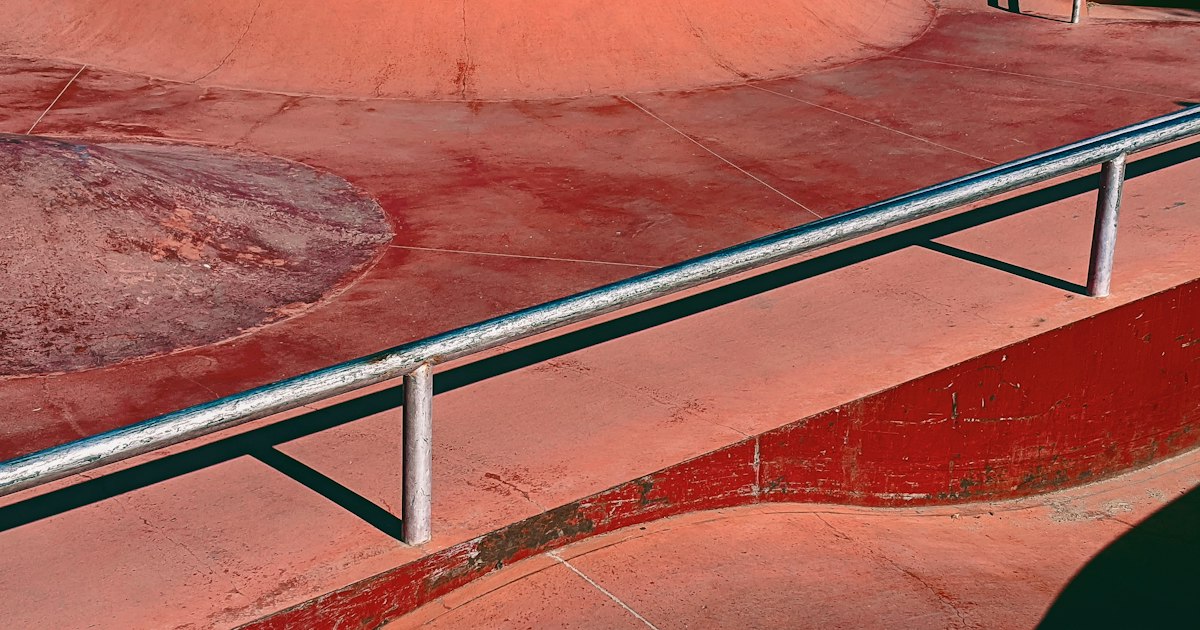
Photo by Vadim Babenko on Unsplash
Japan’s skate scene punches well above its weight: the country has produced some of the sport’s biggest Olympic names, yet finding a legal place to actually skate can be confusing for a visitor who only knows the famous spots from video clips. Street skating is heavily restricted in most cities, so the real action — and the warmest welcome for out-of-towners — happens at a small number of purpose-built public parks. Here’s where to go, what it costs, and how to avoid wasting a travel day on a closed gate.
Murasaki Park Osaka: the biggest course most travelers will visit
Murasaki Park Osaka, inside Nanko Minami Park in Suminoe Ward, is the park most serious skaters plan a Japan trip around. It’s an Olympic-style street course — ledges, stairs, rails, a bank-to-bank section — big enough that it has hosted Street League Skateboarding’s Japan events and drawn pros from the US and Brazil for training camps. It’s named after Murasaki Sports, Japan’s long-running skate and snow retail chain, which also runs a shop near the entrance where you can pick up grip tape, bearings, or a replacement deck if something breaks mid-session.
Entry runs roughly ¥300–¥600 for a multi-hour adult session, with discounted rates for students and children; helmets are required for anyone under 18 and strongly recommended for everyone else. The park typically runs from around 9:00 to early evening, but it closes for scheduled maintenance days and occasionally shuts to the public entirely for pro contests, so check the official Murasaki Park social media account for that week’s hours before making the trip out — Nanko is a 30–40 minute haul from central Osaka via the Nanko Port Town line, not a quick taxi hop.
Ariake Urban Sports Park: Tokyo’s Olympic-legacy venue
Tokyo’s equivalent is Ariake Urban Sports Park in Koto Ward, built for the Tokyo 2020 Games, where skateboarding made its Olympic debut. Post-Games, the facility reopened to the public with scheduled open sessions for skateboarding, BMX, and 3×3 basketball rather than unrestricted walk-in access, so visiting skaters need to check the current booking calendar before arriving — turning up without confirming a session slot is the single most common mistake travelers make here. The park sits a short walk from Kokusai-Tenjijo Station on the Rinkai Line, making it one of the more convenient options logistically, especially combined with a day around Odaiba.
Regional parks worth the detour
Outside the two big cities, Hokkaido’s Murasaki Park Hiroo is the standout — a well-built course in a small coastal town that punches far above its size, built and sponsored by the same Murasaki Sports network as the Osaka park. It’s free or very low-cost to use and far less crowded, but it’s a genuinely remote destination (Hiroo is roughly 3 hours from Obihiro by bus), and like most outdoor parks in Hokkaido, it’s effectively unusable from December through March under snow. Several other mid-size cities run smaller municipal skate plazas attached to regular sports parks; these rarely have English signage or websites, so your best bet is asking at the tourist information counter in that city, or checking local skate-shop social accounts, which tend to post session reports and closures faster than official pages do.
Best time of year to go
Spring (March–May) and autumn (October–November) are the sweet spot nationwide — comfortable temperatures and dry concrete. Avoid the tsuyu rainy season in June and early July, when sessions get cancelled on short notice, and be prepared for brutal humidity at outdoor parks through August. Early morning slots, before the midday heat and before school groups and local skaters flood in after 3pm, are consistently the best window for a focused session as a visitor.
Getting there without a car
Most of Japan’s best parks were built on cheap land at the edge of a city, which usually means a train plus a bus, or a train plus a rented bike. If you’re cycling in from the nearest station, remember that Japan enforces bicycle parking rules strictly — leaving a rental or shared bike outside a designated zone near a station can get it impounded within hours, so it’s worth reading up on how bicycle parking impoundment works in Japan before you lock up near Nanko or Ariake. If mobility is a concern, it’s also worth checking how to book a wheelchair-accessible taxi in Japan, since several of these parks sit far enough from a station that taxi booking apps are genuinely the most practical option.
Rules, etiquette, and where not to skate
Street skating is off-limits in far more places in Japan than first-timers expect. Station plazas, shrine and temple grounds, and well-known spots like the area around Shibuya Scramble Square are actively policed, with signage posted specifically banning skateboards — local ordinances treat it as a noise and safety nuisance, and repeat offenders risk more than a verbal warning. Treat any ledge or set of stairs you didn’t pay to use as off-limits unless you see other locals already skating it and nobody objecting. Inside the official parks, the big cultural adjustment is the liability waiver: nearly every municipal sports facility in Japan, skateparks included, requires a signed indemnity form before you’re allowed on the course, the same way booking a public tennis court by the hour requires paperwork at the counter. Bring ID, expect a short wait while staff process it, and don’t assume the form will be in English — a translation app photo of the kanji saves time.
Budget, mid-range, and splurge options
On a budget, a day pass at any municipal park rarely exceeds a few hundred yen, and Murasaki Park Hiroo in Hokkaido is close to free. Mid-range travelers get the most value from Murasaki Park Osaka’s full-day pass plus a gear top-up at the attached shop. If you want the splurge version of a Japan skate trip, time it around a pro contest weekend at Murasaki Park Osaka or Ariake — tickets to watch SLS or domestic pro events are inexpensive by international standards, and it’s the best way to see the park’s features used the way they were designed, right before or after you get your own session in.