Photo by Alex Knight on Unsplash
Off the tip of the Chita Peninsula, a 40-minute boat ride from the mainland, sits an island so small you can walk its entire coastline in an afternoon — and so thoroughly branded with octopus imagery that you’ll start seeing tentacles in the clouds. Himakajima (日間賀島), in Aichi Prefecture’s Mikawa Bay, is a working fishing island that has turned its two biggest catches, octopus and fugu (pufferfish), into its entire identity. Almost nobody outside the Nagoya area has heard of it, which is exactly why it’s worth the trip.
Where Himakajima Is, and Why It’s “Octopus Island”
Himakajima belongs to Minami Chita Town, at the southern tip of the Chita Peninsula, roughly equidistant from Nagoya and the Atsumi Peninsula on the opposite shore. The island is small — about 1.6 km long and under a square kilometer in total — and locals have long promoted its outline, seen from above, as resembling an octopus curled around the bay. Whether or not you buy the shape comparison, the branding commitment is total: octopus statues at the port, octopus manhole covers, an octopus-shaped slide at the island’s playground, and octopus crackers, buns, and skewers sold at every shop along the main street. The island’s unofficial mascot, a round, pink, big-eyed octopus character locally known as Takopon, shows up on banners, vending machines, and souvenir packaging all over the island.
Getting There: Ferries from Morozaki and Utsumi
There’s no bridge — Himakajima is ferry-only, operated by Meitetsu Kaijo Kanko (Meitetsu Marine Transport). The shortest and most frequent crossing is from Morozaki Port, at the very tip of the peninsula, with a crossing time of around 20 minutes. A slightly longer service also runs from Utsumi Port, a bit further up the peninsula. Fares are modest — budget roughly ¥1,000–¥1,500 one-way per adult, cheaper with a round-trip ticket — but confirm the current timetable and price before you go, since sailings thin out considerably outside peak tourist season and on weekday afternoons.
To reach the ports from Nagoya, take the Meitetsu Chita Line/Kowa Line toward Utsumi Station (roughly 70–80 minutes from Nagoya Station), then a connecting bus to Morozaki Port if you want the shortest crossing, or walk to the ferry terminal at Utsumi itself. All told, plan for about two hours of travel each way from central Nagoya. There’s also a less frequent inter-island route connecting Himakajima with neighboring Shinojima and Irako Port on the Atsumi Peninsula side, useful if you’re coming from the Toyohashi direction instead.
Best Time to Visit
Himakajima has two distinct seasonal personalities. In summer (July–August), it’s a swimming and beach destination — Nishihama Beach fills with day-trippers from Nagoya, beach huts open for the season, and octopus and seafood BBQ stalls do brisk business. In winter (roughly December–February), the island shifts entirely to fugu: this is one of the few places where you’ll see fugu chochin, lanterns made from inflated, painted pufferfish skins, strung along the streets and hanging outside restaurants — a genuinely strange and photogenic sight unique to a handful of fugu-fishing towns in Japan. Spring and early autumn are the sleeper option: mild weather, thinner crowds, and lower ferry and lodging prices, with plenty of octopus on the menu year-round since it’s caught locally in all seasons.
What to Eat: Octopus, Fugu, and the Rest of the Catch
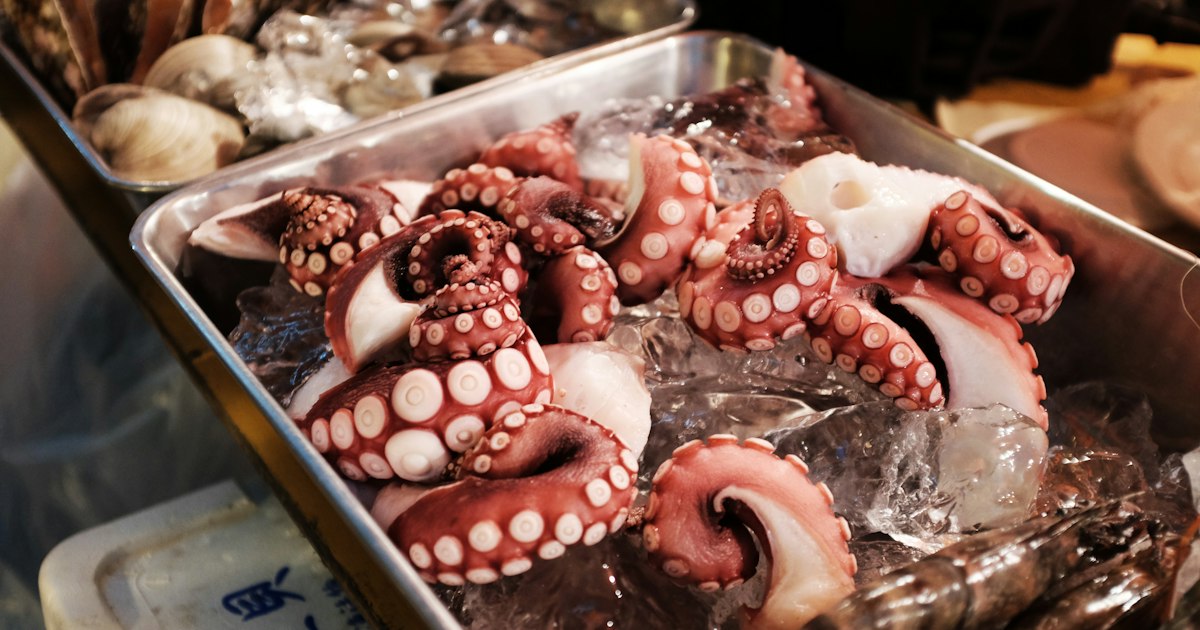
Octopus here isn’t a novelty item, it’s the default. Look for tako senbei — a whole small octopus flattened and pressed into a crisp, savory cracker, sold as a souvenir at nearly every shop near the port — along with tako don (octopus rice bowls), tako tempura, and grilled octopus skewers from street stalls. In winter, fugu chiri (pufferfish hot pot) and tessa (paper-thin fugu sashimi) are the specialty, usually served as part of a set course at island restaurants and minshuku rather than ordered à la carte. Fresh seafood in general is excellent and cheap relative to mainland prices, since most of it comes off boats docked a few hundred meters from where you’re eating it.
If you’re stocking up on Aichi-region souvenirs before you leave Nagoya, it’s worth knowing that some snack flavors are only sold in specific prefectures — our guide to hunting down region-exclusive Kit Kat and snack flavors covers how to track those down if you want to combine the trip with some omiyage shopping.
What to Do on the Island
Himakajima rewards slow travel more than a checklist. Rental bicycles are available near the port for a few hundred yen an hour and are the easiest way to loop the island’s coastal road in under two hours, stopping at the octopus monument, small shrines, and viewpoints over the bay. Tako Koen (Octopus Park), with its giant octopus-shaped slide, is a quick, free stop even if you don’t have kids in tow, if only for the photo. Fishing charters and squid-jigging trips can be arranged through local minshuku in season. If you enjoy small, structured outdoor activities while exploring somewhere new, the island’s compact size also makes it a decent fit for casual geocaching — there’s little traffic and nothing to get lost in, so it’s a low-stakes place to try it if you haven’t before.
Where to Stay
Himakajima works as a day trip, but staying overnight gets you the better experience, since most restaurants wind down early and the evening fugu or octopus kaiseki course at a minshuku is the island’s real culinary highlight. On a budget, simple tatami-room minshuku with shared baths run roughly ¥6,000–¥9,000 per person including dinner and breakfast. Mid-range options add private bathrooms and better ocean views, typically ¥10,000–¥15,000 per person. At the splurge end, a handful of inns specialize in elaborate seasonal fugu or octopus course dinners with premium sake pairings, running ¥18,000 and up per person — worth it in winter fugu season specifically, less so in summer when the menu is simpler.
Common Mistakes to Avoid
The single biggest mistake is underestimating the ferry schedule: sailings can be sparse outside summer weekends, and missing the last boat back means an unplanned overnight stay. Check the return timetable before you leave the mainland, not after you arrive. Second, don’t assume restaurants stay open late — many close by early evening once the day-tripper crowd clears out, so if you’re not staying overnight, eat lunch on the island rather than planning dinner there. Third, cash matters more than you’d expect: smaller minshuku and food stalls on the island may not take cards, so bring enough yen. Finally, if you’re visiting purely for the octopus mascot photos, go in summer when shops and stalls are fully open; in the off-season, parts of the island feel noticeably quieter and some souvenir shops reduce their hours.
Himakajima isn’t a bucket-list landmark — it’s a small, slightly eccentric fishing community that leaned all the way into its octopus branding, and the payoff is a genuinely relaxing, affordable day or two away from Nagoya’s crowds. Pair it with other offbeat countryside excursions, like a guided firefly-watching walk if your trip extends into early summer, and you’ll have seen a side of the Chubu region most visitors never bother with.