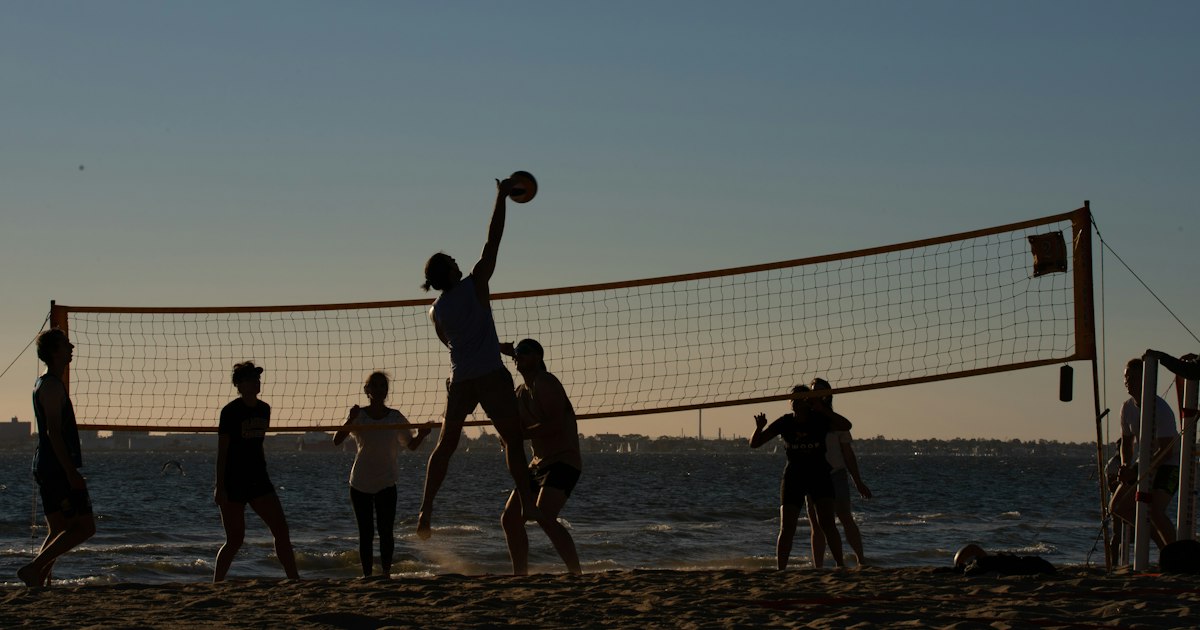
Photo by Mitchell Luo on Unsplash
Japan isn’t the first country that comes to mind for beach volleyball, but it has a surprisingly active scene — Olympic-legacy courts in Tokyo, a decades-old pickup culture in Shonan, warm-water resort nets in Okinawa, and a city in Kyushu that national teams use as a winter training base. None of it requires booking weeks in advance. Here’s where the sand courts actually are, when the nets go up, and how a visitor with no local contacts can end up in an actual game.
Why Japan Has a Real Beach Volleyball Scene
Three things built this: the 2020 Tokyo Olympics put a permanent beach volleyball venue in the capital; Shonan’s surf-and-beach subculture (centered on Kamakura and Enoshima) has embraced volleyball alongside surfing since the 1980s; and Miyazaki’s mild winters made it a go-to training ground for Japan’s national and collegiate teams, which created local infrastructure and a tournament calendar that ordinary visitors can watch or sometimes join. None of these scenes are huge by California or Brazilian standards, but they’re real, mostly free, and more accessible to outsiders than most Japanese amateur sports leagues.
Tokyo: Shiokaze Park, Odaiba’s Free Olympic-Legacy Courts
Shiokaze Park (潮風公園) in Odaiba hosted the Tokyo 2020 Olympic beach volleyball competition, and the park kept its sand courts afterward as public recreation space. They’re free, unreserved, and run on a first-come basis — no permit, no fee, no booking site. Nets go up for the warm season, roughly May through September depending on weather, and get taken down outside of that window, so don’t show up in January expecting a game.
Getting there is simple: take the Yurikamome line to Daiba or Odaiba-Kaihinkoen Station and walk about 5–10 minutes along the waterfront. Bring your own ball — the park doesn’t rent equipment — and expect company only on weekend afternoons; weekday mornings the courts are often empty, which is great for practicing but not for finding a pickup game. If you need a ball or knee pads before you go, Alpen or Sports Depo stock cheap beach volleyballs and sand-friendly footwear.
Shonan: Kamakura and Enoshima’s Summer Pickup Scene
Shonan is where Japan’s actual beach-volleyball culture lives, and it overlaps heavily with the region’s surfing identity. Zaimokuza Beach and Yuigahama Beach in Kamakura set up volleyball nets every summer during the official “umibiraki” (beach-opening) season, which typically runs from early July through the end of August — the same window when lifeguards are stationed and beach shacks (umi no ie) are open. Outside that window the nets usually come down, so July and August are genuinely the only reliable months here.
Access from central Tokyo is about an hour: take the JR Yokosuka Line or Shonan Monorail to Kamakura Station, then it’s a 15–20 minute walk or a short bus ride to either beach. Weekend afternoons (roughly 2–6pm) are when informal groups form — mixed casual games with loose, rotating teams rather than organized leagues. A few municipal and private operators along the Shonan coast rent sand courts by the hour, generally in the ¥1,000–4,000 range per court (split among players), with a ball usually included; ask at the beach shack or park office nearest the net, since availability isn’t centrally listed online.
Okinawa: Year-Round Sand and Resort Courts
Okinawa’s warm water means volleyball nets stay up far longer than on the mainland, often April through October and sometimes year-round at resort beaches. Many hotel beaches in areas like Chatan (home to American Village) and along the Onna coast set up free-to-use nets for guests, and some will let non-guests play if the court is empty — it’s worth asking politely rather than assuming. This is also a reasonable base if you’re combining volleyball with other outdoor activities; the Cape Manzamo cliffs are a short drive from several of these resort beaches and make an easy half-day add-on.
Budget option: public beaches with no hotel attached sometimes have community-installed nets with no formal access rules at all — bring your own ball and you’re set. Splurge option: a handful of resorts run bookable beach-volleyball sessions with an instructor or staff-led mixer for guests, usually priced as part of an activity package rather than a standalone fee, so check directly with the property.
Miyazaki: Japan’s Unofficial Beach Volleyball Capital
Miyazaki Prefecture, on Kyushu’s Pacific coast, is where Japan’s national and university beach volleyball teams go for winter training camps because the climate stays mild when the rest of the country is too cold for sand courts. Aoshima Beach and the broader Miyazaki City coastline host training sessions and tournaments through the cooler months, and the city has leaned into the identity with dedicated courts and periodic competitions open to spectators. It’s less of a casual drop-in scene than Shonan — more teams and training groups than loose pickup games — but it’s the best place in Japan to watch serious players, and the beaches themselves are worth the trip regardless. Miyazaki Airport has direct flights from Tokyo (Haneda) and Osaka, making it more reachable than it looks on a map.
How Visitors Can Actually Join a Game
Japan doesn’t have an organized drop-in culture like you’d find on a California beach — there’s no app or sign-up sheet at the net. In practice, the way visitors get into a game is by showing up at a known hotspot (Zaimokuza or Yuigahama on a summer weekend afternoon, or Shiokaze Park on a sunny Saturday), watching for a group that’s short a player or rotating teams, and simply asking “入れますか?” (“ireru masu ka,” roughly “can I join?”) or gesturing toward the net. Casual Japanese players are generally welcoming to an extra body, especially for mixed, uneven-team games where one more player evens things out.
Searching Instagram or X for the hashtag #ビーチバレー (beach volleyball) around the dates of your trip sometimes surfaces informal meetup announcements from local groups, particularly in Shonan. If you’d rather not rely on chance, a paid drop-in clinic or lesson — offered by some Shonan-area operators during summer — guarantees you a game and usually includes equipment, typically for a few thousand yen per session.
Gear, Costs, and Common Mistakes
The courts themselves are almost always free; the only real cost is gear if you didn’t pack any. A basic ball costs around ¥2,000–4,000 at a sporting goods chain. The most common visitor mistake is timing: showing up at Shonan or Odaiba outside the July–August beach-opening window and finding bare sand with no net. The second most common mistake is forgetting sun protection — Japanese beach sand reflects heat intensely in midsummer, and shade is scarce at most of these courts. Bring water, reef-safe sunscreen, and footwear you don’t mind getting sandy; most courts don’t allow bare feet on the hot sand near the net lines in peak summer. Finally, don’t assume reservations are required — for the public courts covered here, they generally aren’t, which is part of what makes this one of the easier niche sports in Japan for a visitor to just walk up and try, similar in spirit to how pickleball courts or public ping-pong tables work elsewhere in the country.