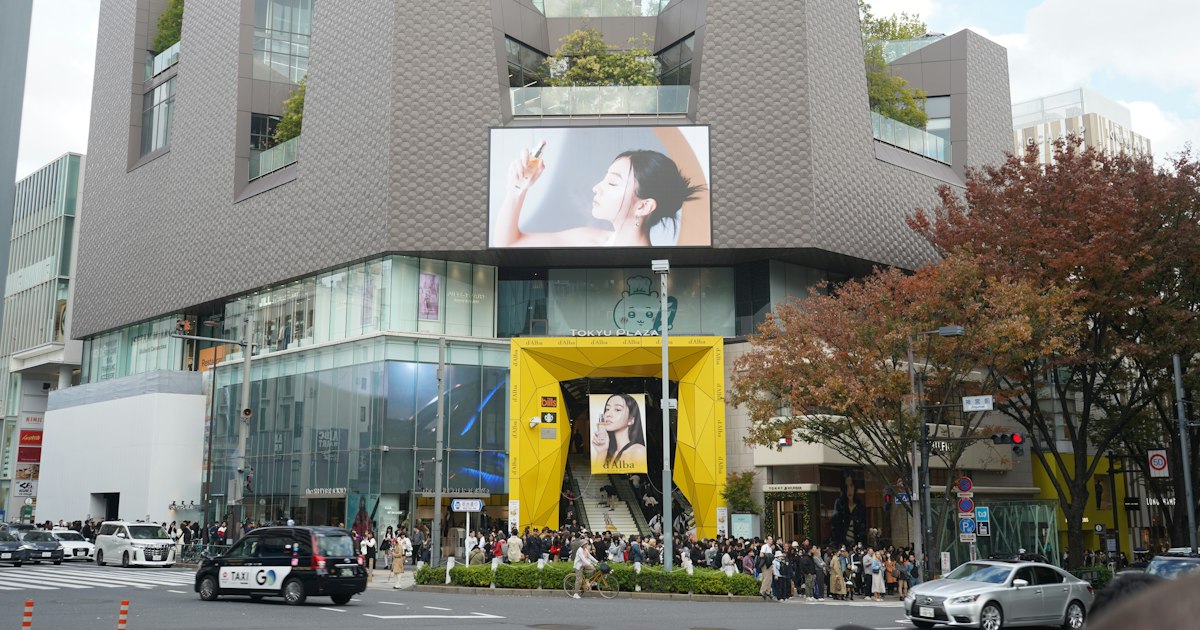
Photo by Yosuke Ota on Unsplash
CBD is sold openly in drugstores, boutiques, and vending machines across Japan — but the legal line between a legitimate wellness purchase and a serious criminal problem is thinner here than in most countries where you’ve shopped for CBD before. Japan’s rules are not about CBD itself; they’re about THC, and the gap between “legal CBD oil” in your home country and “legal CBD oil” in Japan has gotten foreign travelers detained at customs. Here’s what’s actually allowed, what to avoid, and where to shop once you’re on the ground.
What’s Legal and What’s Not
Japan’s Cannabis Control Act (大麻取締法) does not ban CBD as a compound. What it bans is THC (tetrahydrocannabinol) and any part of the cannabis plant other than mature stalks and seeds. In practice, that means CBD extracted from hemp stalks or seeds — with no detectable THC — is legal to sell, buy, and possess in Japan. CBD derived from leaves or flowers, which is how most CBD oil is made in North America and Europe, is not.
A major 2023 amendment to the law, which took effect in stages through December 2024, made using THC itself a criminal offense for the first time (previously only possession and cultivation were explicitly punishable, a quirk that had let some THC use slide through a legal gap). The same reform also introduced the country’s first quantifiable legal threshold for trace THC in hemp products, replacing the old “non-detect” standard. The practical upshot for shoppers: the ceiling is still extremely low, and any product with meaningfully detectable THC remains illegal regardless of how it’s labeled or marketed.
Why Overseas CBD Products Are a Real Risk
This is the part that trips up visitors. A CBD oil, vape cartridge, or gummy that’s perfectly legal in the US, Canada, or much of Europe is often made from whole-plant hemp extract and can carry trace THC — frequently within limits that are fine at home but not fine under Japanese law. Japanese customs and police have detained and prosecuted travelers over CBD vape liquid and oil carried in from abroad, even when the traveler believed it was “just CBD.” Packaging that says “THC-free” on a US label is not proof of Japanese legality; Japan tests for its own threshold, not the one on the bottle.
The simplest rule: don’t pack CBD products from home into your Japan luggage. Buy what you want once you’re here, from a shop that can show you testing documentation, and leave anything questionable at home.
What You’ll Actually Find in Japanese Stores
Japan’s domestic CBD market has grown fast, and the range runs from convenience-store-adjacent to genuinely upscale.
- Budget (¥1,500–2,500): CBD gummies in 10–20 count bags at drugstore chains like Matsumotokiyoshi, Tomod’s, and Don Quijote, usually shelved in the supplements or wellness section near the register.
- Mid-range (¥4,000–8,000): CBD oil tinctures (300–1,000mg concentration) from specialty boutiques, typically sold with a QR code linking to a certificate of analysis (COA).
- Splurge (¥8,000–15,000): Japanese-formulated CBD skincare — facial oils and serums blended with ingredients like yuzu or green tea — aimed as much at the beauty market as the wellness one.
If you’ve never dealt with a Japanese drugstore counter as a foreign visitor, the language and over-the-counter conventions can feel unfamiliar even for something as simple as a gummy bag; our guide to navigating Japanese pharmacies as a visitor covers tips on communicating with staff that apply well beyond its original topic.
Where Tourists Can Shop
Tokyo’s biggest cluster of CBD specialty shops sits around Harajuku and Omotesando, particularly along Cat Street, where several boutiques carry English-speaking staff and English product labeling — handy since ingredient panels elsewhere are Japanese-only. Most keep shop hours of roughly 11:00 or 12:00 to 20:00, closed irregularly rather than on a fixed weekday. Shibuya has a similar, smaller scattering within walking distance of Shibuya Station’s Hachiko exit.
In Osaka, Amerikamura (America-mura), a 5-minute walk from Shinsaibashi Station, has a handful of CBD and head-shop-adjacent stores alongside its streetwear boutiques. For budget options nationwide, any major drugstore chain works — these stay open later than specialty shops, often until 21:00 or 22:00, and need no special searching since they’re on nearly every shopping street in central Tokyo and Osaka.
There’s no real seasonal timing to worry about — these are retail shops, not weather-dependent attractions — but it’s worth buying early in your trip rather than on your last day, so you have time to deal with any customs questions on departure rather than rushing through security with an unfamiliar product in your bag.
Shopping Safely: Labels and Common Mistakes
A few habits keep you out of trouble:
- Look for a COA (certificate of analysis) or a label stating THC was not detected — reputable Japanese CBD retailers display this prominently, often via a QR code on the packaging.
- Don’t assume “hemp-derived” automatically means legal — the law cares about which part of the plant it came from, and leaf/flower-derived extract is illegal regardless of THC content.
- Don’t order CBD from overseas online retailers for delivery to your Japan address or hotel; customs can and does seize shipments that don’t meet the domestic standard.
- If a shop clerk can’t answer basic questions about sourcing or testing, treat that as a reason to skip the purchase, not push past it.
Before You Fly Home
Keep your receipt and, if the shop provided one, the COA for anything you’re carrying out — some destination countries’ customs officers appreciate documentation even for products that are legal everywhere involved. It’s also worth checking your home country’s own CBD import rules before you leave, since they vary as much as Japan’s do.
If you’re already thinking about what else to pack home from a Japan shopping trip, CBD skincare pairs well with other compact, easy-to-pack finds — see our guide to portable travel bidets for another small Japanese product that’s worth the suitcase space. And if you end up with leftover coins on your way out through Narita or Haneda, our piece on airport charity coin boxes is a quick read for the gate.